
Views: 222 Author: Edvo Publish Time: 2025-10-29 Origin: Site


Content Menu
● Understanding Foot Arches and Their Importance
● What Arch Support Really Does
● Where Should Your Insole Support Your Arch?
>> Medial Arch (Main Support Zone)
>> Transition Under the Ball of the Foot
>> Integration with the Heel Cup
● Why Correct Support Placement Is Essential
>> Improved Postural Alignment
>> Enhanced Comfort During Long Wear
● How to Know If Your Insole Fits Your Arch Properly
>> Step 1: Visualize the Arch Line
>> Step 3: Observe Wear Patterns
>> Step 4: Foot Comfort After a Full Day
● Material Engineering Behind Effective Arch Support
>> EVA Foam
>> Memory Foam
● The Science of Foot Pressure Distribution
● Custom OEM Insoles: Precision Meets Comfort
>> Customization Services Include:
● Identifying Misaligned Arch Support
● Maintenance and Replacement Best Practices
● Matching Insoles to Footwear Categories
>> For Sports and Running Shoes
>> For Casual and Fashion Footwear
>> For Medical and Orthopedic Shoes
● Environmental Innovation in Insole Manufacturing
>> 1. What happens if insoles don't align with the arch?
>> 2. How do I know which arch type I have?
>> 3. Can custom arch support improve athletic performance?
>> 4. How often should insoles be replaced?
>> 5. Can insoles be customized for brand-specific footwear lines?
Foot comfort begins with proper alignment—and that starts with your arch. The question Where should your insole support your arch? shapes how we design and manufacture our insoles for international markets. Whether for running shoes, work boots, or fashion footwear, the correct arch support insole determines stability, posture, and long-term comfort.
As a leading Chinese insole manufacturer, our OEM/ODM services cater to global shoe brands, wholesalers, and producers who demand precision, customized ergonomics, and consistent quality. This article explores how insole arch placement impacts biomechanics and what manufacturers can do to optimize comfort for every foot type.
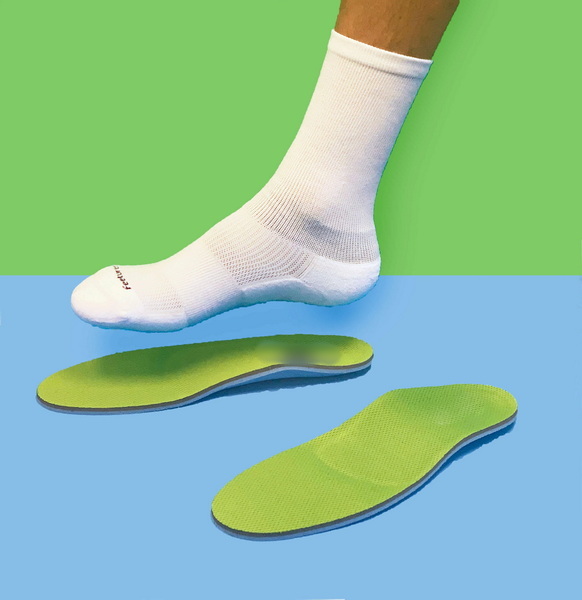
The human foot is a masterpiece of engineering, composed of 26 bones, 33 joints, and more than 100 tendons and ligaments. Among all these structures, the foot arch is the true foundation that sustains our body's weight and enables natural motion.
- Low Arch (Flat Foot): Characterized by little to no visible curve. People with low arches tend to overpronate, meaning their feet roll inward. Extra midfoot support keeps alignment stable.
- Normal Arch: The arch appears moderately curved, providing balanced distribution of weight between heel and forefoot. Moderate cushioning and structural support usually suffice.
- High Arch: The arch lifts higher than usual, creating less surface contact. These feet require softer, raised support to absorb shock effectively.
When designing insoles, each arch type demands a unique support contour and density level to ensure long-term comfort.
Arch support is more than added padding—it's a biomechanical structure that maintains proper alignment from heel to toe. The insole's job is to hold your foot in its natural shape and minimize strain during motion.
Without adequate support:
- Your arch collapses with each step.
- The plantar fascia (a connective tissue along the foot's bottom) becomes overstretched.
- Pain develops in the heel, arch, and even lower back due to imbalance.
Properly placed support, however, reduces impact, stabilizes the ankle, and enhances total walking efficiency. For manufacturers, precision in mold cutting and density layering determines whether the insole will deliver genuine support or mere cushioning.
Insoles should support the central portion of the medial longitudinal arch—the inner curve that runs from the heel toward the ball of the foot. Correct placement begins just after the heel cup and continues up to the midfoot.
Support should be strongest under the medial arch, helping maintain the natural curve while preventing overpronation. If the support presses too far forward, it feels unnatural; if positioned too far back, the arch collapses.
Support must gradually taper before reaching the ball of the foot. The goal is smooth load transfer—not pressure points. This ensures a balanced toe-off during walking or running.
The heel cup stabilizes the entire structure. Combined, heel and arch support function like a single system to maintain alignment through each gait cycle.
In essence, the insole's support should start just behind the ball, peak at the midfoot, and anchor into the heel.
Arch support placement affects your entire body's balance chain. Misaligned insoles can alter gait patterns and cause discomfort extending to knees, hips, and spine. Here's how the right placement makes a difference:
With your arches properly elevated, the body's center of gravity remains balanced. This alignment reduces fatigue across muscles and joints.
Correct insole geometry minimizes accumulated strain—especially important for workers, athletes, and frequent travelers.
Overpronation or underpronation often leads to issues such as plantar fasciitis, Achilles tendonitis, and knee pain. The correct arch contour minimizes these stress points.
When the arch is well-supported, less effort is required to maintain stability. Your steps feel lighter and more controlled, making walking or running more efficient.
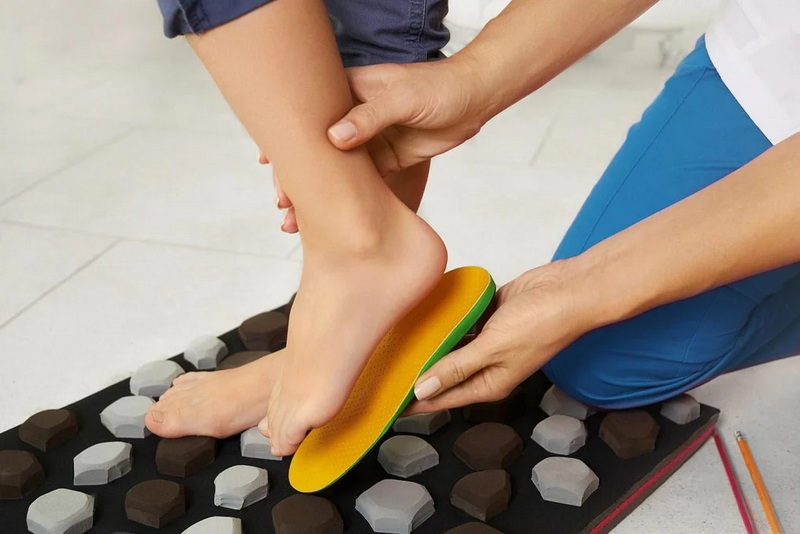
Testing insole effectiveness doesn't need specialized tools—you can assess it through a few simple steps.
Stand naturally and look at your foot's curve. Your insole's arch should mirror this shape—not exaggerate or flatten it.
When you step onto the insole, the arch should feel like gentle reinforcement, not a hard lump. The contact should remain consistent throughout walking or running motion.
After several weeks of use, inspect the insole. Even wear indicates correct pressure distribution. Uneven flattening, especially on the inner side, suggests misalignment.
If your arches or heels feel sore after long wear, your insole placement or stiffness may need adjustment. Fatigue-free comfort is a clear sign of proper support.
An insole's material composition determines how it behaves under pressure. Our research-based OEM manufacturing approach uses multi-layer materials engineered for precise support.
Ethylene Vinyl Acetate (EVA) is lightweight, flexible, and ideal for medium arch support. It suits casual and athletic footwear alike.
A highly durable, responsive material offering firm structure for work shoes or safety boots.
Contours perfectly to the user's foot shape, delivering personalized comfort. It adapts well to moderate arch needs.
In high-impact footwear, gel-based insoles absorb shock effectively and distribute force throughout the midfoot region.
Often integrated under the arch zone to create a firm base, supporting weight without collapsing under pressure.
Each material offers distinct benefits. Our R&D team optimizes these combinations based on OEM applications—balancing comfort, flexibility, and lifespan.
When walking, around 60% of the load falls on the heel strike, 30% on the midfoot, and 10% on the forefoot during toe-off. Properly positioned arch support redistributes these forces smoothly, protecting joints.
Misalignment—like a collapsing arch—shifts weight toward the inner heel and ankle. Over time, this imbalance contributes to leg fatigue, poor posture, and muscle strain. Thus, arch support placement isn't merely aesthetic; it's structural physiology in action.
For brands developing performance or orthopedic footwear, integrating accurate support mapping through computer-aided design (CAD) can drastically enhance comfort ratings and product reputation.
Our factory specializes in custom insole development for global partners across Europe, the United States, and Asia-Pacific. Each project begins with arch morphology data, which determines the optimal curvature angle and material combination.
- Adjustable arch heights for low, neutral, and high feet
- Breathable, moisture-wicking fabric layers
- Antibacterial surface treatments
- Laser-cut precision molds for bulk OEM production
- Personalized branding and packaging
Manufacturers working with us can quickly adapt insoles for different user profiles—from sporting footwear that demands firm midfoot control to lifestyle shoes focusing on daylong comfort.
Even premium insoles can fail if alignment is slightly off. Common misplacement indicators include:
- Pressure or pain in the ball of the foot
- Arch irritation or soreness after basic activities
- Foot sliding inside the shoe due to improper curve height
- Heel instability during movement
- Toe numbness caused by forward over-support
Correcting alignment may involve adjusting arch height, shifting the medial rise backward, or increasing surface curvature at the heel junction.
Even the highest-quality insoles lose effectiveness after months of daily use. Proper care extends their comfort and performance.
- Clean regularly: Wipe with mild soap and air dry.
- Avoid machine drying: Heat can warp structural compounds.
- Rotate pairs: Reduces material fatigue and odor accumulation.
- Replace periodically: Every 6–9 months for daily users or 3–4 months for athletes.
Sustainability-conscious brands now choose recyclable EVA or bio-based PU formulations, supporting both performance and environmental goals.
Dynamic insoles combine firm medial arch shells and responsive cushioning for quick energy return.
PU-built insoles with reinforced heel cups resist compression and provide necessary shock absorption on hard surfaces.
Slimmer insoles use lightweight foam or cork to blend comfort with design aesthetics.
Customized insoles with controlled arch height corrections relieve foot stress and accommodate orthotic adjustments.
Proper pairing significantly affects comfort performance across all applications.
Myth 1: Everyone needs high arch insoles.
Truth: Overly high insoles may stress the arch. Support should match natural curvature, not exaggerate it.
Myth 2: Soft equals better comfort.
Truth: Ultra-soft materials alone lack stability. The best insoles combine soft cushioning with firm internal structure.
Myth 3: Insoles are only for foot pain.
Truth: Preventive use supports posture and joint health long before pain appears.
Myth 4: One insole fits all shoe types.
Truth: Different shoes serve different biomechanical purposes. Custom matching ensures consistent comfort.
By dispelling these misconceptions, brands and consumers alike can make informed choices about support design and usage.
Modern consumers increasingly value sustainability. As part of our OEM philosophy, we develop eco-conscious insole solutions without compromising comfort or performance.
- Bio-based foams from renewable plant oils
- Water-based adhesives replacing traditional chemical glues
- Recyclable TPU blends for long product life cycles
- Energy-efficient manufacturing lines reducing carbon footprint
This commitment allows our partners to market their footwear as both ergonomic and environmentally responsible—a growing advantage in today's global market.
Proper arch support defines the comfort, posture, and biomechanics of every step you take. The ideal insole should cradle the medial arch, extend toward the heel, and taper smoothly before the ball of the foot. Correct placement relieves strain, balances pressure, and prevents long-term injuries.
As one of China's leading OEM insole manufacturers, we design products that deliver scientific support, advanced materials, and sustainable quality. Whether you're creating athletic, work, or fashion footwear collections, our customizable insole solutions strengthen brand performance and wearer satisfaction.

Improper placement may cause arch strain, plantar fasciitis, and lower limb stress, eventually leading to gait imbalance.
You can perform a simple wet test—the imprint shape reveals whether your arches are low, normal, or high. Manufacturers often use 3D scanning for accuracy.
Yes. Proper support improves energy transfer, balance, and shock absorption, enhancing both comfort and endurance.
Depending on usage, insoles typically retain support for 6–9 months. Heavy-duty use may require earlier replacement.
Absolutely. Our OEM production allows unique arch profiles, branding, and materials to match your market's exact needs.


