
Views: 248 Author: 3BU Technology Publish Time: 2026-07-23 Origin: Site


Content Menu
● Why This Comparison Matters in 2026
● What Bio-based EVA Really Means
● What Traditional PU Still Does Well
● Performance Comparison Table
● Does Sustainability Sacrifice Performance?
● Where Traditional PU Still Leads
● FAQ
Bio-based EVA and traditional PU are no longer a simple "green versus strong" debate. In 2026, the real question for footwear brands and OEM buyers is which insole material delivers the best balance of comfort, durability, sustainability, and manufacturability for the target market.
For a China-based OEM insole manufacturer like 3BU Technology, this comparison matters because overseas brands, wholesalers, and manufacturers now ask for evidence, not slogans. The winning material is the one that passes performance testing, supports sustainability claims, and fits production goals without creating quality risk.
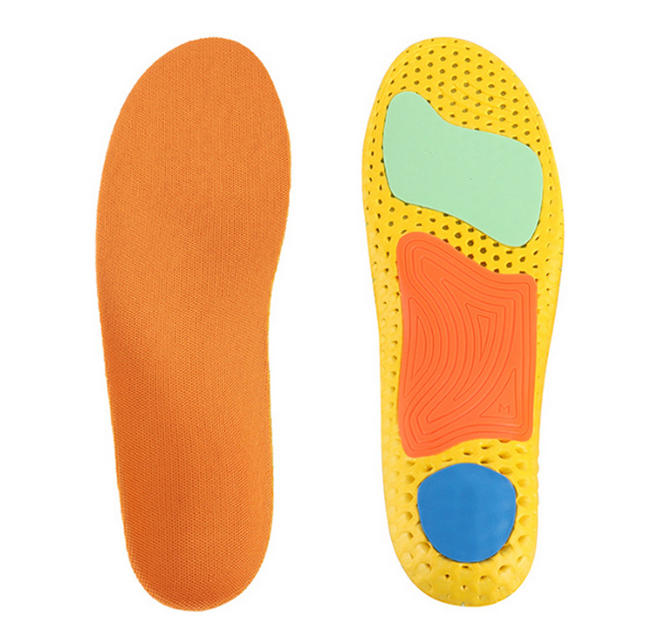
Sustainability has moved from a marketing angle to a purchasing requirement, especially in footwear and performance inserts. Industry commentary in 2026 highlights a strong shift toward bio-based foams, recycled inputs, and traceable material stories across the footwear supply chain.
At the same time, OEM buyers still care about the basics:
- Cushioning.
- Compression recovery.
- Long-term shape retention.
- Weight.
- Cost stability.
- Production consistency.
That is why bio-based EVA vs traditional PU is not just a material debate. It is a commercial decision that affects brand positioning, customer satisfaction, warranty risk, and carbon messaging.
Bio-based EVA is still EVA in functional form, but part of the feedstock comes from renewable sources instead of fully petroleum-based inputs. In practice, brands use it to reduce fossil reliance while keeping the familiar lightweight, cushioned feel that EVA is known for.
For footwear brands, the appeal is simple:
- Lower dependence on virgin fossil feedstocks.
- Easier sustainability storytelling.
- Familiar processing behavior in many foam applications.
- Strong relevance for mass-market comfort products.
However, "bio-based" does not automatically mean biodegradable, zero-impact, or best-in-class for every use case. The percentage of bio-content, additives, and manufacturing energy all matter. That is why strong product writing should avoid overselling the term and instead focus on verifiable performance and documentation.
Traditional PU remains a serious material in insoles because it is known for excellent cushioning, resilience, and formulation flexibility. Research on polyurethane foam for footwear applications shows that PU systems can be tuned for density, hardness, cushioning energy, and compression set, which makes them highly adaptable for semi-flexible insole use.
That flexibility is one reason PU is still common in premium comfort products, work footwear, and performance inserts. In manufacturing terms, PU can be engineered for:
- Better load response.
- More controlled rebound behavior.
- Specific hardness targets.
- Better multi-zone structures in some applications.
The weakness is sustainability perception. Traditional PU is typically associated with petroleum-derived chemistry, which makes it harder to position as a low-impact material unless it uses bio-based or recycled content.
| Factor | Bio-based EVA | Traditional PU |
|---|---|---|
| Weight | Very light | Light to moderate, depending on formulation |
| Cushioning feel | Soft, familiar, springy | Strong cushioning with tunable support |
| Compression set resistance | Good in many consumer uses, but formulation-sensitive | Often strong when properly engineered |
| Durability | Good for many casual and lifestyle products | Often better suited to demanding or premium applications |
| Sustainability story | Stronger renewable-material narrative | Weaker unless bio-based or recycled inputs are used |
| Cost predictability | Can vary with bio-feedstock sourcing | Mature supply chain, often stable at scale |
This table shows the key truth: bio-based EVA usually wins on sustainability messaging, while PU often wins on technical flexibility and demanding performance tuning.
The short answer is: not necessarily, but trade-offs still exist. In 2026, better material science means a sustainability upgrade does not automatically mean a performance downgrade. Bio-based EVA can deliver excellent comfort and market-ready durability for many everyday footwear and insole products.
But there are limits. If the end product must survive heavy load, long wear cycles, or strict compression-set requirements, PU often offers more formulation headroom. Research on PU foams for insoles shows that mechanical performance can be highly optimized for cushioning energy and shape retention.
So the real answer is:
- For lifestyle, casual, and eco-positioned products, bio-based EVA is often enough.
- For premium, technical, or long-wear performance products, PU may still be the safer engineering choice.
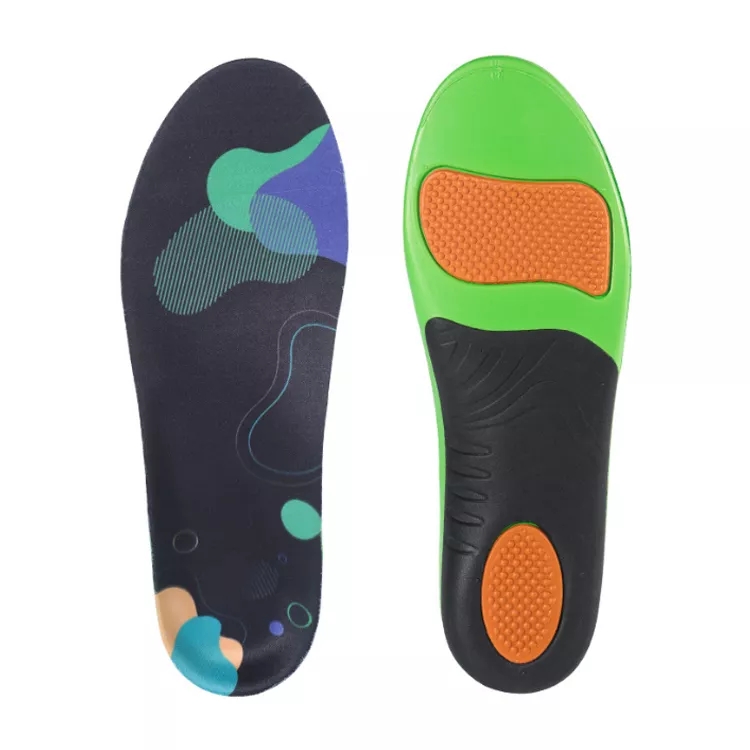
Bio-based EVA is strongest when the buyer wants a clean, modern, and scalable sustainability story. It is especially attractive for brands selling:
- Everyday sneakers.
- Travel shoes.
- Slippers.
- Comfort sandals.
- Entry-level to mid-range insoles.
It also works well when:
- Weight reduction matters.
- The customer expects soft step-in comfort.
- The product is designed for moderate wear.
- Marketing needs a credible renewable-material angle.
For many export-focused brands, that combination is enough to justify switching or at least testing. The material can support a more responsible brand narrative without forcing a major redesign of the product line.
Traditional PU remains hard to replace in use cases where structure matters as much as softness. It is often a better choice for:
- High-density orthotic or support-focused insoles.
- Heavy-duty work footwear.
- Products needing stronger engineered rebound.
- Longer wear-cycle applications.
PU is also useful when the buyer wants precise tuning of cushioning energy and compression behavior. Research suggests these properties can be optimized through formulation and morphology control, which is valuable for brands with strict comfort specs.
This is why many OEM programs do not "replace PU" outright. Instead, they segment the portfolio: bio-based EVA for sustainability-led products, PU for technical or premium performance lines.
One of the biggest 2026 changes is that buyers are asking for more than "eco-friendly" language. They want proof, traceability, and measurable impact. Industry coverage in 2026 emphasizes transparent material sourcing, regenerative inputs, and performance validation as core buying criteria.
For insole makers, this means product development now needs three layers:
1. Material story.
2. Performance data.
3. Manufacturing consistency.
Brands that can show all three are more likely to win OEM contracts. This is especially true in export markets where sustainability claims can trigger customer scrutiny, compliance checks, and retailer audits.
For buyers working with an OEM like 3BU Technology, the best way to choose between bio-based EVA and PU is to start from the product need, not the material preference. A practical selection process looks like this:
1. Define the product segment.
2. Set the target comfort profile.
3. Identify sustainability goals.
4. Test compression set and rebound.
5. Review durability under real wear conditions.
6. Confirm cost and supply consistency.
This framework reduces trial-and-error and prevents greenwashing. It also helps brands avoid choosing a material that looks good in a brochure but fails in the field.
From an OEM strategist's point of view, the best material is rarely the "most sustainable" or the "most technical" in isolation. It is the one that matches the product promise. A fashion comfort brand may get stronger results from bio-based EVA, while a performance or support brand may need PU engineering to protect user experience.
From a manufacturing perspective, the smartest 2026 strategy is often a dual-material portfolio. That means offering both bio-based EVA and PU options so brand clients can choose based on positioning, price point, and performance target.
For 3BU Technology, this approach strengthens both sales and trust. It positions the company as a solution provider rather than a one-material supplier.
If the brand priority is sustainability-first storytelling with solid everyday performance, bio-based EVA is the stronger choice. If the priority is technical cushioning, long-term support, and tunable mechanical performance, traditional PU still has a clear advantage.
So, does sustainability sacrifice performance in 2026? Not always. The real answer is that sustainability now demands better engineering, better testing, and better communication.
If your brand is developing a new insole line, the most effective next step is to request material samples, compression-set data, and OEM customization advice before choosing between bio-based EVA and PU. That is the fastest way to align sustainability goals with real-world performance.
1. Is bio-based EVA better than PU for insoles?
Bio-based EVA is usually better for lightweight comfort and sustainability messaging, while PU is often better for technical performance and long-term support.
2. Is traditional PU always less sustainable?
Traditional PU is generally less sustainable in its fossil-based form, but bio-based or optimized PU formulations can improve its environmental profile.
3. Which material has better compression resistance?
PU often has the edge in tunable compression behavior and long-wear engineering, especially when the application needs precise performance control.
4. Can bio-based EVA work for premium footwear?
Yes, but only if the product specs match its strengths. It works best when premium positioning depends more on comfort, lightness, and sustainability than on heavy-duty support.
5. What should OEM buyers test first?
Buyers should test compression set, rebound, density, wear durability, and consistency across production batches before scaling a material choice.
1. Aybroad, "Footwear Trends 2026: The Global Evolution of Ergonomics, Material Science, and Sustainability," [https://www.aybroad.com/en/blog/footwear-trends-2026-the-global-evolution-of-ergonomics,-material-science,-and-sustainability.ht...]
2. Reflawn, "Sustainability Trends in Footwear to Watch in 2026," [https://reflawn.com/articles/sustainability-trends-in-footwear-to-watch-in-2026/305]
3. Fashion for Good, "The Next Stride: Bio-based Materials for Footwear Soles," [https://www.fashionforgood.com/case-study/the-next-stride/]
4. PubMed Central, "Nanocomposite Foams with Balanced Mechanical Properties ...," [https://pmc.ncbi.nlm.nih.gov/articles/PMC9968182/]
5. Harvard ADS, "Biodegradable polyurethane foam as shoe insole to reduce footwear waste: Optimization by morphological physicochemical and mechanical properties," [https://ui.adsabs.harvard.edu/abs/2020ApSS..49943966M/abstract]


