
Views: 222 Author: 3BU Technology Publish Time: 2026-07-14 Origin: Site


Content Menu
● Understanding Custom-Moldable Orthotic Support
>> Why Custom-Moldable Insoles Matter in Orthopedic Recovery
● Thermo-Plastic Orthotic Insoles: Properties, Use Cases, and Advantages
>> Key Performance Characteristics of Thermo-Plastic Insoles
>> Clinical and Lifestyle Use Cases for Thermo-Plastic Insoles
● Carbon Fiber Orthotic Insoles: Rigid Control, Energy Return, and Joint Protection
>> Mechanical and Biomechanical Advantages of Carbon Fiber Insoles
>> Limitations and Patient Selection Considerations
● Side-by-Side Comparison: Thermo-Plastic vs Carbon Fiber for Orthopedic Recovery
● Latest Evidence and Industry Trends in Orthopedic Insoles
>> Clinical Research on Orthopedic Insoles
>> OEM / ODM Considerations for Footwear Brands
● Practical Selection Guide: Matching Material to Patient and Product Strategy
>> When to Choose Thermo-Plastic Insoles
>> When to Choose Carbon Fiber Insoles
● Expert Insight: Designing Hybrid Systems with a Chinese OEM Partner
● Step-by-Step: How Clinicians and Brands Can Evaluate Material Choice
>> Clinical Evaluation Checklist
>> OEM / Brand Evaluation Checklist
● Action-Oriented UX: Helping Users Choose the Right Insole
● Call to Action: Partnering on Evidence-Based, Custom-Moldable Insoles
● FAQs
Thermo-plastic and carbon fiber insoles both offer custom-moldable support for orthopedic recovery, but they solve different problems and suit different patient profiles and footwear brands. [aideastep]
For clinicians, brand owners, and OEM partners, choosing between thermo-plastic orthotic insoles and carbon fiber orthotic insoles is no longer a simple material decision—it is a strategic choice that directly impacts patient outcomes, product positioning, and long-term brand equity. [aideastep]
As a consultant working with international orthopedic and sportswear brands, I see thermo-plastic used as a highly adaptable platform for staged correction and comfort, while carbon fiber has become a performance-grade, rigid support solution aimed at energy return and joint protection. [vertebra]

Custom-moldable insoles are designed to adapt to the unique anatomy and biomechanics of each patient rather than forcing the foot to conform to a generic shape. [e-medicalbroker]
In modern practice, flat semi-finished orthotic blanks containing thermoplastic layers are heat-activated and molded directly on the patient's foot, producing a comfortable insole that normalizes spring, support, and balancing functions of the foot. [pmc.ncbi.nlm.nih]
Orthopedic recovery rarely follows a straight line; swelling, pain levels, and gait patterns change week by week. Custom-moldable insoles allow practitioners to adjust arch profiles and pressure distribution over time, which is critical in conditions such as flatfoot, plantar fasciitis, hallux rigidus, and post-traumatic deformities. [vertebra]
Studies on orthopedic insoles for flatfoot and lower limb kinematics show that structured support can reduce excessive rearfoot eversion and improve alignment, confirming that properly designed insoles are not mere comfort products but medical devices that influence motion patterns. [pmc.ncbi.nlm.nih]
From a material science perspective, thermo-plastic insoles are built on polymers such as thermoplastic polyurethane (TPU) or thermoplastic rubber (TPR), chosen for their ability to soften under heat, then solidify while preserving a newly molded shape. [szfrx123.en.made-in-china]
Clinically, this translates into insoles that can be heat-molded and re-molded directly on the foot in 20–30 minutes, enabling rapid customization in outpatient settings and in retail environments where brand partners offer on-the-spot fitting services. [aideastep]
1. High degree of customization
Thermo-plastic insoles can be molded multiple times, allowing podiatrists to fine-tune arch height, posting, and metatarsal support as the patient's condition evolves. [aideastep]
For OEM brands, this means one base platform can serve multiple patient categories with minimal SKU complexity, simply by varying thickness, durometer, and molding protocols. [szfrx123.en.made-in-china]
2. Balanced support and cushioning
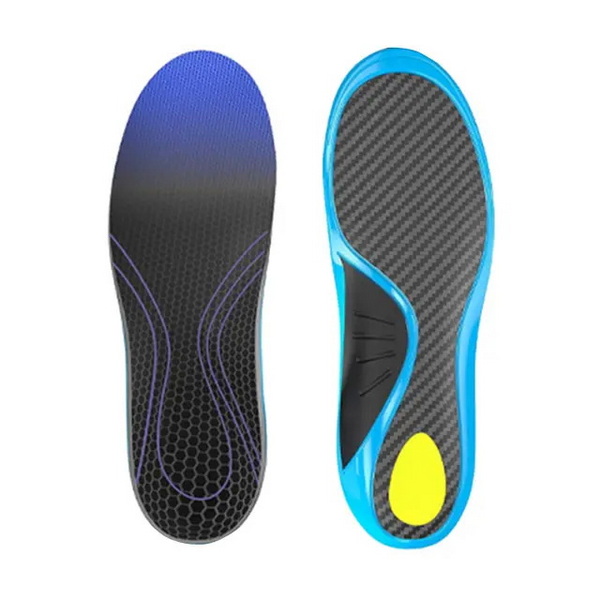
Thermo-plastic constructions often combine rigid cores with softer cushioning areas, delivering support and shock absorption in a single device. [e-medicalbroker]
They distribute static and dynamic loads evenly across the foot, reducing risk of arch pain, overpronation, and localized pressure points. [aideastep]
3. Durability and re-moldability
These materials maintain structural integrity under repeated loading while retaining the custom-formed geometry, which is crucial for long-term orthopedic programs. [aideastep]
Unlike foam-only insoles that collapse quickly, thermo-plastic cores preserve corrective geometry, keeping gait correction consistent over months of use. [e-medicalbroker]
Thermo-plastic insoles are widely used to correct longitudinal–transverse flatfoot, reduce load on supporting joints, and support staged correction in severe deformities, particularly in children and adults with complex foot structures. [vertebra]
They are also recommended for patients with diabetes, rheumatoid arthritis, gout, and reactive arthritis where pressure redistribution and cushioning help minimize pain and protect compromised tissue. [pmc.ncbi.nlm.nih]
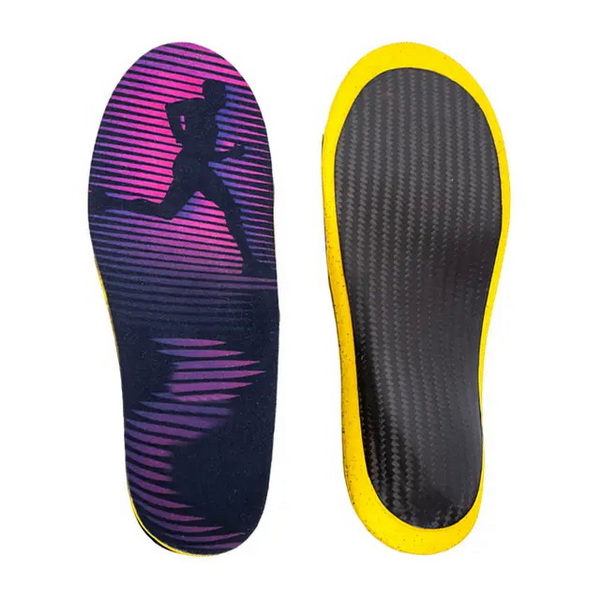
Carbon fiber orthotic insoles are engineered as mechanical support systems, using woven carbon fibers embedded in a resin matrix to create a thin yet exceptionally rigid platform. [aideastep]
In practice, these devices stabilize the foot, control excessive motion, and can enhance energy transfer—making them popular in both medical treatment (e.g., metatarsophalangeal arthritis) and sports performance products. [youtube]
1. Rigid offloading for forefoot and toe joints
Randomized controlled trials on flexible carbon fiber insoles for first metatarsophalangeal arthritis demonstrate significant pain reduction and high compliance, as the rigid plate limits painful dorsiflexion while still allowing functional gait. [medrxiv]
Clinicians often use full-length or forefoot carbon plates to protect sesamoids, stress fractures, and arthritic joints by spreading forces over a larger area. [michiganfootdoctors]
2. Energy return and performance orientation
For athletes, carbon fiber insoles and plates can contribute to energy-efficient push-off, providing a spring-like effect that complements modern midsole geometries. [aideastep]
Sports podiatrists increasingly integrate carbon elements into performance orthotics, particularly for sprinting, jumping, and field sports where explosive propulsion matters. [youtube]
3. Thin profile, stability, and antimicrobial features
Because carbon fiber delivers high stiffness at low thickness, insoles can stay slim enough to fit inside regular footwear without resizing, while maintaining strong midfoot and forefoot control. [orthopaedicentremalta]
Some carbon fiber insoles incorporate odor control and antimicrobial features, making them suitable for users who spend long hours in closed footwear and need both hygienic protection and structural stability. [orthopaedicentremalta]
Despite its mechanical superiority, carbon fiber is less forgiving than thermo-plastic when it comes to fine-tuned, multi-stage molding. [medrxiv]
Patients with high sensitivity, fluctuating edema, or complex deformities may find a rigid plate uncomfortable unless combined with soft top covers and carefully contoured footbeds. [michiganfootdoctors]
Below is an expert-level comparison of thermo-plastic vs carbon fiber insoles from the perspective of clinicians, patients, and OEM footwear brands. [aideastep]
| Attribute | Thermo-Plastic Orthotic Insoles | Carbon Fiber Orthotic Insoles |
|---|---|---|
| Custom-moldable fit | Heat-moldable directly on the foot, re-moldable for staged correction (vertebra) | Limited contour change; geometry mainly fixed from manufacturing (aideastep) |
| Support profile | Balanced support and cushioning; ideal for general orthopedic recovery (aideastep) | Highly rigid support; ideal for joint protection and performance (michiganfootdoctors) |
| Typical indications | Flatfoot, plantar fasciitis, arch pain, diabetes, rheumatoid arthritis (vertebra) | 1st MTP arthritis, sesamoid injuries, stress fractures, sports performance (michiganfootdoctors) |
| Adjustability over time | High—can be reheated and reshaped as symptoms change (aideastep) | Low—modification mainly via top covers and posting additions (aideastep) |
| Thickness and shoe fit | Typically 2–3 mm cores; fits casual and model shoes, even with heels (vertebra) | Very thin but rigid plates; excellent for performance and dress footwear (aideastep) |
| Shock absorption | Often integrated via multi-zone cushioning and elastic bases (aideastep) | Depends on surrounding midsole; plate itself is rigid, not cushioning (aideastep) |
| Patient comfort | High, especially for sensitive or high-risk feet requiring pressure management (vertebra) | Depends on pathology; excellent for pain reduction in specific joints but can feel stiff globally (michiganfootdoctors) |
| OEM/ODM flexibility | Extremely versatile platform for different brands and indications (aideastep) | Strategic material for premium performance or medical lines (aideastep) |
Recent research into orthopedic insoles for flatfoot confirms that properly designed devices can correct medial arch collapse, rearfoot eversion, and forefoot abduction, improving overall lower limb kinematics. [pmc.ncbi.nlm.nih]
Randomized controlled trials using flexible carbon fiber insoles for first metatarsophalangeal arthritis show measurable reductions in pain and high patient compliance, validating carbon fiber's role in joint-protective orthotic strategies. [medrxiv]
From a practical standpoint, the combination of thermo-plastic custom molding for overall foot alignment and targeted carbon fiber plates for forefoot joint protection is emerging as a hybrid approach in advanced clinics and brands. [youtube]
For international retailers and brands collaborating with leading Chinese insole manufacturers, thermo-plastic platforms offer an efficient way to scale customizable comfort across categories—sports, workwear, casual, and medical. [szfrx123.en.made-in-china]
Carbon fiber, on the other hand, serves as a premium feature for performance footwear and specialized medical lines, where thin, rigid inserts can be marketed as energy-return plates or joint-protection technology. [rsorthotic.co]
Key OEM design decisions typically include:
- Selecting thermo-plastic durometer and thickness for target user groups. [aideastep]
- Deciding whether to integrate full-length or partial carbon fiber plates for specific pathologies or sports. [rsorthotic.co]
- Defining top cover materials (EVA, PU, memory foam, natural leather) to tune comfort and breathability. [orthopaedicentremalta]
- Establishing standardized heat-molding protocols to ensure consistent fit across clinics and retail partners. [vertebra]
Clinically, thermo-plastic insoles are preferred when progressive correction and comfort are primary goals:
- Patients with flexible flatfoot who need arch support and dynamic load redistribution. [e-medicalbroker]
- Individuals with systemic conditions (diabetes, rheumatoid arthritis) requiring sensitive pressure management and cushioning. [vertebra]
- Children and adults undergoing staged correction of complex deformities, where re-molding over time is necessary. [aideastep]
For brand owners, thermo-plastic platforms offer:
- A highly marketable "heat-moldable" feature that enhances in-store UX. [aideastep]
- Flexible SKU design, with one core serving multiple foot profiles via custom molding. [szfrx123.en.made-in-china]
Carbon fiber is the material of choice when rigid control, pain relief, and performance are the main priorities:
- Patients with first MTP arthritis or sesamoid injuries who need reduced joint motion and targeted offloading. [michiganfootdoctors]
- Athletes seeking improved energy return and lateral stability within high-performance footwear. [aideastep]
- Users with specific forefoot pathologies where a thin yet stiff plate must fit inside existing shoes. [rsorthotic.co]
From a product strategy perspective, carbon fiber supports:
- Differentiated performance narratives around propulsion and joint protection. [youtube]
- Premium pricing tiers for advanced insoles in sports, medical, and occupational segments. [footwind]
Working with a leading Chinese insole OEM such as 3BU Technology, international brands increasingly request hybrid constructions that leverage thermo-plastic and carbon fiber together. [aideastep]
In these designs, a thermo-plastic base is heat-molded to the patient's arch to correct overall foot alignment, while strategically placed carbon fiber inserts create rigid zones under the first ray or the midfoot to protect vulnerable joints and improve propulsion. [medrxiv]
From a UX and SEO perspective, this kind of product story is powerful:
- It connects evidence-based orthopedic benefits with tangible user outcomes such as pain reduction, stability, and energy return. [medrxiv]
- It supports educational content that explains why specific materials appear in different zones of the insole, boosting trust and perceived expertise. [aideastep]
1. Define the primary clinical goal (pain relief vs alignment vs performance). [michiganfootdoctors]
2. Assess patient sensitivity, presence of systemic conditions, and tolerance for rigid devices. [e-medicalbroker]
3. Map pressure hotspots and motion restrictions using gait analysis or in-shoe pressure measurement. [pmc.ncbi.nlm.nih]
4. Choose thermo-plastic cores when multi-stage correction and broad comfort are needed. [aideastep]
5. Add carbon fiber plates when specific joints require motion restriction or performance enhancement. [michiganfootdoctors]
1. Clarify target segment: medical, sports, daily comfort, or hybrid. [footwind]
2. Decide on customization level (fully heat-moldable vs semi-custom vs prefab). [vertebra]
3. Align material choice with brand narrative (comfort, performance, recovery). [aideastep]
4. Work with your Chinese OEM to co-develop testing protocols for durability, energy return, and clinical efficacy. [szfrx123.en.made-in-china]
5. Plan educational content explaining thermo-plastic and carbon fiber roles in the product, supporting E-E-A-T and user trust. [aideastep]
From a user experience standpoint, people need clear, confidence-building guidance to select between thermo-plastic and carbon fiber support:
- Use simple decision aids (e.g., "Do you feel sharp pain in your big toe joint?") to route users toward joint-protective carbon fiber solutions. [michiganfootdoctors]
- Provide visual explanations of arch support and pressure redistribution to justify thermo-plastic recommendations for flatfoot and generalized pain. [e-medicalbroker]
- Offer personalized fitting services where heat-moldable thermo-plastic insoles are shaped on-site, ideally combined with clear aftercare instructions. [vertebra]
For brands working with OEM manufacturers like 3BU Technology, this UX layer is where clinical science meets storytelling, turning material decisions into tangible value that users can feel with every step. [aideastep]
If you are a footwear brand, orthopedic distributor, or sports retailer looking to build a differentiated insole line, now is the ideal time to explore custom-moldable thermo-plastic platforms and carbon fiber performance inserts with a specialized OEM partner. [szfrx123.en.made-in-china]
By combining thermo-plastic flexibility, carbon fiber rigidity, and clinically informed design, you can create products that support orthopedic recovery, enhance athletic performance, and strengthen your brand's authority in the market. [youtube]
Start by defining the patient profiles and use cases you want to serve, then collaborate with your manufacturing partner to design insoles that translate evidence-based biomechanics into everyday comfort and protection.
Q1: Are thermo-plastic insoles suitable for everyday use, or only for medical patients?
Thermo-plastic insoles are widely used both as medical aids and as everyday comfort solutions because they combine customized arch support with cushioning, fitting into casual, sports, and even heeled shoes. [aideastep]
Q2: Do carbon fiber insoles always feel hard and uncomfortable?
Carbon fiber plates are rigid by design, but when combined with soft top covers and appropriate posting, they can simultaneously reduce joint pain and maintain acceptable comfort for daily or athletic use. [orthopaedicentremalta]
Q3: Can thermo-plastic insoles be reshaped if my foot condition changes over time?
Yes, many thermo-plastic insoles can be reheated and remolded, allowing clinicians to adjust arch height and pressure distribution in line with progressive treatment plans. [e-medicalbroker]
Q4: Are there clinical studies supporting the use of carbon fiber insoles?
Randomized controlled trials have shown that flexible carbon fiber insoles can significantly reduce pain and achieve high compliance rates in patients with first metatarsophalangeal arthritis. [medrxiv]
Q5: How should brands decide whether to invest in thermo-plastic, carbon fiber, or hybrid insole collections?
Brands should evaluate target users, desired clinical or performance outcomes, and differentiation goals, then work with their OEM to prototype thermo-plastic, carbon fiber, and hybrid designs and test them for durability, fit, and user satisfaction. [aideastep]
1. Ideastep – *The benefits of thermoplastic insoles*. [aideastep]
https://www.aideastep.com/the-benefits-of-thermoplastic-insoles/
2. Vertebra – *Orthopedic insoles and thermoplastic molding technique*. [vertebra]
https://vertebra.ua/en/metodyi-lecheniya/ortorpedicheskie-stelki.html
3. Ideastep – *What is heat moldable orthotic insoles?*. [aideastep]
https://www.aideastep.com/what-is-heat-moldable-orthotic-insoles/
4. Michigan Foot Doctors – *Carbon fiber insole benefits and uses*. [michiganfootdoctors]
https://www.michiganfootdoctors.com/carbon-fiber-insole-benefits/
5. Ideastep – *Carbon fiber orthotic insoles: benefits and applications*. [aideastep]
https://www.aideastep.com/carbon-fiber-orthotic-insoles-benefits-and-applications/
6. Centro Ortopedico Aliotta – *Carbon fiber insoles overview*. [orthopaedicentremalta]
https://www.orthopaedicentremalta.com/carbon-fiber-insoles/
7. RS Orthotic – *Carbon fibre orthotic custom insoles*. [rsorthotic.co]
https://rsorthotic.co.uk/products/carbon-fibre-orthotic-insoles
8. Medi – *Footsupport active sport thermoplastic insoles*. [e-medicalbroker]
https://www.medi.de
9. MedRxiv – *Using flexible carbon fiber insoles for 1st metatarsophalangeal arthritis*. [medrxiv]
https://www.medrxiv.org/content/10.1101/2021.04.05.21253422v1.full.pdf
10. PMC – *Effect of orthopedic insoles on lower limb motion kinematics in flatfoot*. [pmc.ncbi.nlm.nih]
https://pmc.ncbi.nlm.nih.gov/articles/PMC11273083/
11. Made-in-China – *Thermoplastic rubber (TPR) for orthopedic insoles*. [szfrx123.en.made-in-china]
https://szfrx123.en.made-in-china.com


