
Language
Views: 209 Author: 3BU Technology Publish Time: 2026-07-03 Origin: Site


Content Menu
● How to Evaluate Energy Return Insole Suppliers
● Why China Leads in Energy Return Insoles
● Selection Criteria for the Top 10 List
● Top 10 Energy Return Insoles Manufacturers in China
>> 1. 3BU Technology (Dongguan, Guangdong)
>> 2. Foamwell Sports Technology Co., Ltd. (Dongguan, Guangdong)
>> 3. FootMaster / Henan Bangni Biological Engineering Co., Ltd. (Henan)
>> 4. Dongguan Jiuhui Industrial Limited (Dongguan, Guangdong)
>> 5. Wenzhou Future Shoe Material Co., Ltd. (Wenzhou, Zhejiang)
>> 6. Ningbo Kangbeien Health Tech Co., Ltd. (Ningbo, Zhejiang)
>> 7. Qingdao Huayang Biotechnology Co., Ltd. (Qingdao, Shandong)
>> 8. Dongguan Topinsole Commodity Limited (Dongguan, Guangdong)
>> 9. Jinjiang Taiyuan Shoes Material Co., Ltd. (Jinjiang, Fujian)
>> 10. Suzhou Sunmed Co., Ltd. (Suzhou, Jiangsu)
● Comparison Table: Capacity, MOQ and Certifications
● Buyer's Guide: Sourcing Energy Return Insoles from China
>> Verifying Certifications and Legal Status
>> Sample and Golden Sample Process
>> Payment Terms and Logistics
● Industry Pain Points and How to Avoid Them
● Insider "Avoid‑Pit" Guide (Rarely Discussed)
● FAQ: High‑Difficulty Questions Procurement Teams Ask
For procurement managers, "energy return" insoles are not just a comfort product; they are performance-critical components that directly affect athlete efficiency, workplace ergonomics and end‑user satisfaction. Evaluating suppliers therefore requires a structured framework rather than simply comparing quotations. [lhcarbonsolutions]
Key evaluation dimensions include:
- Factory certifications and compliance
Prioritise manufacturers with valid ISO 9001 (quality management) and, for medical or high‑risk applications, ISO 13485, with scopes explicitly covering insoles or footwear components. For EU and North American exports, check CE, RoHS and REACH compliance for chemical safety and product conformity. [chinamakershub]
- R&D and engineering capability
Strong energy return performance stems from material science and design expertise: multi‑density EVA/PU constructions, carbon‑fiber or TPU plates, rebound‑grade foams, and pressure‑mapping driven design. Factories with in‑house mold development, biomechanical testing and sampling teams are better positioned to co‑develop proprietary products. [lhcarbonsolutions]
- Quality control and process discipline
Effective suppliers run incoming material inspection, in‑process checks, and pre‑shipment inspections, with golden samples and documented work instructions to prevent material downgrading (e.g., lower‑density foams or undocumented recycled content). [lhcarbonsolutions]
- Capacity, scalability and lead‑time stability
For long‑term OEM programmes, look at workshop size, number of workers, monthly output, and historical on‑time delivery rates (e.g., 95%+ for established export factories). [lhcarbonsolutions]
- Commercial and communication flexibility
High‑value partners offer transparent tooling costs (typically around USD 200–500 for EVA/PU insole molds), reasonable MOQs, English‑speaking sales engineers, and support for design iteration rather than transactional "price‑only" engagement. [lhcarbonsolutions]

China is the world's largest exporter of footwear parts, with around USD 3.98 billion of footwear component exports annually, providing a deep ecosystem for insole manufacturing. Within this ecosystem, foot orthotic and comfort‑performance insoles are a rapidly growing segment; for example, the Chinese foot orthotic insoles market is projected to reach about USD 698.5 million by 2033 at a CAGR of 8.9%. [lhcarbonsolutions]
Industrial clusters amplify this advantage:
- Guangdong (especially Dongguan)
Dongguan and the broader Guangdong region host more than 1,500 footwear factories and over 2,000 component suppliers, with Dongguan alone producing roughly 65% of the world's high‑end footwear. This concentration enables fast sampling, diverse material options, and access to advanced molding and lamination technologies suited to energy return designs. [lhcarbonsolutions]
- Fujian (Jinjiang) and Zhejiang (Wenzhou)
Jinjiang, known as the "Shoe Capital of China", concentrates athletic‑footwear brands and performance component makers, which supports sports‑oriented energy return insoles. Wenzhou and other clusters provide cost‑competitive capacity and a mature supply chain for mid‑range insoles and value segments. [lhcarbonsolutions]
For buyers, this cluster dynamic translates into shorter development cycles, competitive pricing, and better access to specialised materials (high‑rebound EVA, TPU plates, carbon fibre laminates, etc.). [lhcarbonsolutions]
The manufacturers below were selected based on criteria aligned with global procurement expectations for energy return insoles:
- Compliance and certification: Valid ISO 9001 (and ISO 13485 where applicable), plus CE/RoHS/REACH for regulated markets. [chinamakershub]
- Proven OEM/ODM track record: Documented cooperation with international brands and ability to support custom energy‑return constructions (carbon plates, high‑rebound foams, multi‑layer designs). [lhcarbonsolutions]
- Capacity and MOQs: Ability to support both pilot runs and scaling (typically 500–5,000+ pairs custom MOQs) while maintaining stable lead times. [lhcarbonsolutions]
- Technical depth: Experience in orthotic, sports or occupational insoles where energy return and shock attenuation are core performance attributes. [lhcarbonsolutions]
- Transparency and buyer‑friendliness: Clear tooling policies, honest communication on compliance, and support for sample‑based validation and QC processes. [lhcarbonsolutions]
3BU Technology is a specialised insole manufacturer founded in 2012 in Dongguan, operating a 5,000 m² facility with more than 100 skilled workers dedicated exclusively to insole R&D and production. The company supports individual insole brands globally, including long‑term cooperation with world‑class brands such as Sidas, Footlogistics and VKTRY. [sourcingwill]
For energy return products, 3BU's strengths lie in multi‑density EVA/PU constructions, carbon‑fiber performance insoles and high‑rebound comfort insoles, produced using advanced 120‑cavity press molds with monthly capacity around 200,000 pairs. The factory focuses on accessible MOQs and flexible OEM/ODM services: free insole design from sketches or images, free samples from existing lines, and partial mold‑fee refunds when cumulative orders hit agreed volume thresholds (typical mold fees around USD 250 for EVA/PU). [sourcingwill]
Lead times are optimised for small to mid‑size brands: roughly 7 days to complete sample molds and about 3 weeks for bulk production, enabling rapid iteration of energy‑return designs. 3BU is particularly suited to emerging performance and comfort brands that require close engineering cooperation, responsive communication, and competitive first‑tier pricing rather than mega‑factory scale. [sourcingwill]
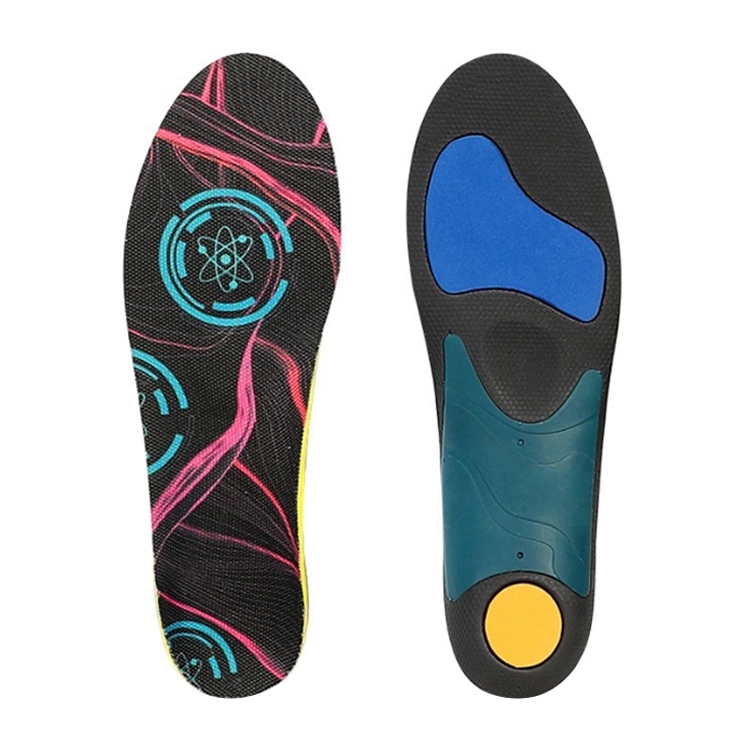
Foamwell, established in 2006 in Dongguan, employs roughly 250–500 workers focused on insoles and is widely recognised for orthotic and customised comfort insoles. Its core competence is advanced foam formulations and multi‑density constructions that combine shock absorption with rebound, suitable for energy return and fatigue‑reduction applications. [foam-well]
Foamwell emphasises eco‑friendly materials and has pursued relevant certifications aligned with sustainability requirements from European and North American buyers. With mature production lines and comprehensive testing protocols for compression set, rebound and durability, Foamwell is a good fit for brands targeting "green" performance insoles where rebound and environmental credentials both matter. [lhcarbonsolutions]
FootMaster is known for its gel‑based and biomechanically engineered insoles, with particular emphasis on cushioning and energy return through tuned gel formulations. The company has invested heavily in automated gel injection and precision molding systems, ensuring consistency across large production batches for athletic and everyday comfort products. [lhcarbonsolutions]
For energy return insoles, FootMaster's combination of gel pods, EVA carriers and anatomical design supports high impact‑energy absorption and push‑off assistance, making it suitable for running, training and work‑boot applications. Export experience with both domestic and overseas OEM clients helps procurement teams integrate FootMaster products into multi‑market portfolios. [lhcarbonsolutions]
Jiuhui positions itself as a comprehensive insole solutions provider, offering full‑size comfort and performance insoles with shock‑absorption and rebound technologies across EVA, PU, gel and composite constructions. Located in Dongguan, the company leverages close proximity to material suppliers and tooling partners to deliver cost‑effective yet technically diverse products. [lhcarbonsolutions]
Multiple production lines dedicated to different product categories allow Jiuhui to run comfort‑oriented, performance and occupational energy‑return insoles in parallel. For buyers with multi‑SKU insole programmes (e.g., sports, casual, work), Jiuhui's material diversity and cluster location offer an efficient one‑stop solution. [lhcarbonsolutions]
Future Shoe Material operates in Wenzhou, one of China's major footwear centres, and differentiates itself through a focus on advanced comfort and performance materials rather than basic shoe parts. The company develops lightweight foam compounds and breathable fabric combinations that balance cushioning, energy return and moisture management. [lhcarbonsolutions]
By pairing mid‑range cost structures typical of Wenzhou with higher‑end material innovation and relevant certifications (such as CE/RoHS for certain applications), Future Shoe Material serves value‑driven brands that still need measurable performance characteristics. It is a suitable partner for mid‑market sports, outdoor and occupational brands seeking competitive pricing with credible comfort and rebound performance. [lhcarbonsolutions]
Kangbeien operates at the intersection of comfort insoles and health technology, focusing on therapeutic and wellness‑oriented products. Its R&D teams work on pressure distribution, orthopedic support structures and materials tuned for conditions such as plantar fasciitis, over‑pronation and diabetic foot care. [lhcarbonsolutions]
The facility uses biomechanical testing and pressure‑mapping equipment to inform insole designs, which can include energy‑return layers that assist gait while protecting vulnerable areas. For buyers in the medical, pharmacy retail or professional healthcare channels, Kangbeien combines energy‑return functionality with medically aligned product positioning and appropriate quality standards. [lhcarbonsolutions]
Huayang distinguishes itself through biotechnology‑driven materials, focusing on antibacterial and moisture‑management features in comfort and performance insoles. Its insoles integrate antimicrobial treatments and ventilation structures to address hygiene and odour – key factors for all‑day wear in work and sports settings. [lhcarbonsolutions]
Energy return is achieved by pairing these hygienic surfaces with rebound‑grade foam cores and tuned geometries. Huayang collaborates with material‑science institutions to develop proprietary compounds that balance comfort, durability and washability, targeting premium segments where technical material stories support higher price points. [lhcarbonsolutions]
Topinsole is a specialist private‑label insole manufacturer based in Dongguan, known for its flexibility in order quantities and design variations. Its business model supports rapid switching between SKUs and specifications, enabling brand owners to roll out multiple energy‑return concepts in parallel (e.g., running, hiking, workboot lines). [lhcarbonsolutions]
Strong relationships with foam and composite suppliers allow Topinsole to access emerging rebound materials and sustainable options. For e‑commerce brands and multi‑SKU programmes, Topinsole's agile production systems and private‑label OEM focus can shorten launch cycles and facilitate continuous assortment testing. [lhcarbonsolutions]
Taiyuan, located in Jinjiang's athletic‑footwear cluster, specialises in sports and performance insoles with energy‑return and stability features. Drawing on local expertise in running and training footwear, the company produces insoles incorporating EVA/PU foams, stabilising heel cups and sometimes TPU or composite plates to boost propulsion. [lhcarbonsolutions]
For global sports brands and private labels seeking regionally validated performance constructions, Taiyuan offers product concepts tailored to high‑impact use and can combine cushioning, motion‑control and energy return within athletic price brackets. [lhcarbonsolutions]
Sunmed focuses on medical‑grade and orthopedic insoles, operating under stricter compliance regimes, often including ISO 13485 and relevant medical certifications. Its products feature documented material traceability, clean‑room processes for sensitive components and comprehensive QA documentation suitable for healthcare audits. [lhcarbonsolutions]
Energy return in Sunmed products is typically integrated into corrective or therapeutic designs, combining arch‑support geometries with tuned rebound layers to reduce patient fatigue. For procurement teams in medical and orthotic‑device segments, Sunmed is a strategic partner where regulatory compliance and clinical performance are primary drivers. [lhcarbonsolutions]
Below is a simplified comparison based on publicly available and typical data referenced in industry sources; actual figures should be confirmed directly with each supplier during RFQ. [sourcingwill]
| Manufacturer | Typical MOQ (custom) | Capacity/Scale (indicative) | Key Certifications / Focus |
|---|---|---|---|
| 3BU Technology | 500–3,000 pairs | ~200,000 pairs/month, 5,000 m² workshop (lhcarbonsolutions) | ISO 9001, comfort & performance insoles, OEM/ODM (sourcingwill) |
| Foamwell | 1,000–5,000 pairs | 250–500 workers, multiple foam lines (lhcarbonsolutions) | ISO 9001, eco‑focused, orthotic comfort (lhcarbonsolutions) |
| FootMaster | 1,000–5,000 pairs | Large gel/foam facilities (lhcarbonsolutions) | ISO 9001, gel biomechanics, sports comfort (lhcarbonsolutions) |
| Dongguan Jiuhui | 1,000–5,000 pairs | Multi‑line EVA/PU/gel operations (lhcarbonsolutions) | ISO 9001, multi‑material comfort/performance (lhcarbonsolutions) |
| Future Shoe Material | 1,000–5,000 pairs | Regional mid‑to‑large capacity (lhcarbonsolutions) | CE/RoHS (selected lines), value innovation (lhcarbonsolutions) |
| Ningbo Kangbeien | 1,000–5,000 pairs | Health‑tech focused plant (lhcarbonsolutions) | ISO 9001, medical/therapeutic standards (lhcarbonsolutions) |
| Qingdao Huayang | 1,000–5,000 pairs | Premium biotech materials focus (lhcarbonsolutions) | ISO 9001, antimicrobial testing (lhcarbonsolutions) |
| Dongguan Topinsole | 500–3,000 pairs | Flexible, multi‑SKU lines (lhcarbonsolutions) | ISO 9001, private‑label OEM (lhcarbonsolutions) |
| Jinjiang Taiyuan | 1,000–5,000 pairs | Sports cluster factory (lhcarbonsolutions) | ISO 9001, athletic performance (lhcarbonsolutions) |
| Suzhou Sunmed | 2,000–10,000 pairs | Medical‑grade operations (lhcarbonsolutions) | ISO 13485, medical orthotics (lhcarbonsolutions) |
Verifying ISO and product‑specific certifications is a non‑negotiable part of due diligence:
- ISO 9001 / ISO 13485
Request full certificates with issue/expiry dates, scope and issuing body, then cross‑check via accredited databases (e.g., IAF CertSearch) or the certification body's website. Confirm that the company legal name matches business‑licence records and that the scope covers insoles or related components. [chinamakershub]
- CE, RoHS, REACH
For EU‑bound energy‑return insoles, ask for test reports from recognised labs (SGS, Intertek, Bureau Veritas) confirming compliance with RoHS and REACH for the relevant materials, and ensure any PPE or medical‑device classification is clearly documented. [chinamakershub]
- Factory vs trading company
To avoid the "trading company trap", request a copy of the business licence showing manufacturing activities, inspect on‑site production (or hire third‑party auditors), and check that all certifications and invoices carry the same registered entity name. [chinasourcinggroup]
Energy‑return performance is highly sensitive to material density, rebound characteristics and geometry; these can be subtly downgraded in mass production if not properly controlled. [lhcarbonsolutions]
Best practices include:
- Golden samples
Develop and sign off on a golden sample, sealed and retained by both buyer and factory, explicitly referenced in contracts and QC checklists. [lhcarbonsolutions]
- Production‑line samples
Request samples taken from actual production runs using final molds and processes, rather than hand‑made or "show" samples. [lhcarbonsolutions]
- Third‑party inspection and material testing
Commission pre‑shipment inspections, including foam‑density measurements, thickness checks and rebound tests, especially for the first 2–3 orders. [chinasourcinggroup]
Energy return insoles typically require dedicated molds for midfoot plates, heel cups and multi‑density layering:
- Tooling costs
EVA/PU insole molds usually cost USD 200–500 per set depending on complexity and cavity count; 3BU, for example, often charges around USD 250 per set and may refund fees once agreed volumes are reached. [sourcingwill]
- Ownership and IP control
Contracts should clearly specify whether molds belong to the buyer, how they're stored and maintained, and under what conditions they may be transferred to other factories. Include clauses on exclusive use for your brand and non‑disclosure of design drawings, especially when carbon‑plate geometries or proprietary foam profiles are involved. [lhcarbonsolutions]
- Payment and risk management
Standard terms are 30–50% deposit with balance against inspection or shipping documents; avoid 100% upfront payments, and consider trade‑assurance or letters of credit for high‑value orders. Confirm bank details by phone to avoid email‑fraud rerouting. [pocketchina.co]
- Logistics lead times
Typical first‑order timelines for custom insoles are 60–80 days end‑to‑end: 7–10 days for sample mold, 3–5 days sampling, 21–28 days bulk production, inspection, then 21–35 days sea freight to Europe/North America. Plan around Chinese New Year, which can extend lead times by several weeks. [pocketchina.co]
Common pitfalls when sourcing energy‑return insoles from China include:
- Material downgrading and hidden substitutions
Factories may reduce foam density, switch to cheaper compounds or add recycled content without disclosure to save costs. Use golden samples, specified foam grades, named material suppliers and inspection protocols to prevent this. [chinasourcinggroup]
- Supplier mis‑classification (trader vs factory)
Working with a trading company posing as a factory can cause pricing mark‑ups, weaker accountability and communication gaps. Verify factory registration and insist on transparency about production equipment and capacity. [chinasourcinggroup]
- "Certification aging"
Authentic certificates may have expired; some manufacturers continue to display them online. ISO certificates typically have three‑year validity with surveillance audits. Always check current validity and request recent audit reports. [chinamakershub]
- Under‑specified technical requirements
Vague briefs ("good energy return", "comfortable") lead to inconsistent results. Provide clear rebound targets, hardness ranges (Shore A), thickness tolerances and in‑shoe fit parameters. [alibaba]
One insider issue seldom mentioned online is the "pilot‑line vs mass‑line shift":
Many factories use dedicated pilot lines with their most experienced technicians to create impressive initial samples and first small batches. Once the product is approved, subsequent mass orders are shifted to less experienced lines or contractors, where process control is weaker and material changes are more likely. [lhcarbonsolutions]
To mitigate this:
- Contractually define production lines or equipment for your product, especially for high‑performance energy‑return insoles with tight tolerances. [lhcarbonsolutions]
- Require batch‑to‑batch test reports on rebound, hardness and compression set, not just visual checks. [lhcarbonsolutions]
- Schedule periodic factory audits focused on line‑staff skill levels, training records and adherence to documented work instructions for your SKUs. [lhcarbonsolutions]
This layered control significantly reduces performance drift over the lifecycle of an OEM programme.
1. How can I verify if a Chinese manufacturer's ISO 9001 certificate is current and not forged?
Use IAF CertSearch or the certifying body's online database, input the certificate number and company name, and confirm validity dates, accreditation marks (e.g., CNAS, UKAS) and scope. Cross‑check with business‑licence details, and request recent surveillance audit reports for certificates near expiry. [sourcingwill]
2. How do I confirm that an energy‑return insole really meets my rebound and compression‑set requirements?
Define numeric targets (e.g., rebound percentage, hardness, compression‑set after specific cycles) in your specification, and require test reports from accredited labs (SGS, Intertek) for both development samples and mass‑production batches. Include these metrics in contracts and inspection checklists, not just marketing descriptions. [alibaba]
3. How can I ensure that my proprietary carbon‑plate design will not be reused for other brands?
Sign a bilingual NDA and tooling/IP clause that grants you exclusive rights to specific molds and CAD files, prohibits reuse for other clients, and provides legal remedies for breach. Store critical CAD files on your side and supply only manufacturing‑ready drawings, and periodically scan marketplaces for copycat designs. [alibaba]
4. What is the practical process to check if ISO 13485 claims for medical insoles are legitimate?
Request full ISO 13485 certificates and scope statements, then verify them with the issuing body's database or via email. Confirm that the scope includes medical devices or orthotic insoles, and ask for regulatory approvals or registrations (e.g., CE medical device registration) in target markets where applicable. [chinamakershub]
5. How do I structure sampling to compare multiple Chinese energy‑return insole suppliers objectively?
Shortlist 3–5 factories, provide identical technical specifications and target price brackets, and ask each to supply at least 3 production‑line samples. Evaluate rebound, fit, finish, smell, and packaging, then perform blinded wear‑tests with representative users. Use a scoring matrix (performance, compliance, communication, cost) to avoid over‑weighting price in final selection. [pocketchina.co]
- China Foot Orthotic Insoles Market & Sports Shoe Insoles Outlook (Grand View Research, 2022–2025, including projections to 2033) – market size and CAGR for China's insoles segment. [lhcarbonsolutions]
- China Footwear Parts Export Data – OEC World, showing China's USD 3.98B footwear parts exports and category breakdown. [lhcarbonsolutions]
- ISO Certifications for China Manufacturers – ChinaMakersHub guide explaining ISO scopes, verification and product‑specific certifications (CE, RoHS, REACH). [chinamakershub]
- Alibaba Seller Guides – verification of ISO‑certified suppliers and practical sourcing tips for Chinese OEMs. [seller.alibaba]
- Sourcing risk guides – ChinaSourcingGroup and PocketChina coverage of common pitfalls (supplier mismatch, weak contracts, skipping inspections). [pocketchina.co]


