
Views: 222 Author: Edvo Publish Time: 2026-01-04 Origin: Site


Content Menu
● Key Characteristics of High Arch Insoles
>> 1. Thermoplastic Orthotic Insoles
>> 2. EVA Foam Insoles with Raised Arch Support
>> 3. Memory Foam Contoured Insoles
>> 4. Cork and Leather Orthopedic Insoles
>> 5. Carbon Fiber and TPU Reinforced Insoles
● Manufacturing Factors that Influence Arch Height
● How to Identify Insoles with the Highest Arch
● Common Foot Problems Solved by High-Arch Insoles
● OEM and ODM Customization for High Arch Insoles
● Tips for Choosing the Best High Arch Insole
● The Importance of Material Density and Layering
● The Role of Technology in Modern Insole Design
● Sustainability in Insole Manufacturing
● FAQ
>> 1. What arch height is considered high?
>> 2. Are high arch insoles suitable for everyone?
>> 3. How often should I replace high arch insoles?
>> 4. Can OEM manufacturers customize arch height and structure?
>> 5. Which materials provide the most durable high arch support?
Foot comfort is a crucial factor in footwear performance, whether for casual wear, sports, or specialized orthopedic use. One of the most important yet often overlooked components of any shoe is the arch insole, especially when it comes to supporting the arch of the foot. People with high arches need specific insoles that provide elevated and stable support to prevent pain, fatigue, and imbalance during walking or running.
For footwear professionals, understanding which insoles have the highest arch support is key to developing better products and meeting consumer expectations. As a leading insole manufacturer and OEM supplier in China, we provide custom high-arch insole solutions for global brands, helping them design ergonomically optimized products with premium comfort and long-term durability.

The foot arch is a structural curve formed by bones, ligaments, and muscles, designed to absorb shock and distribute body weight evenly. It functions as a natural spring that cushions every step. There are three main arch types:
- Low or flat arch: The foot sits almost entirely on the ground.
- Medium arch: Balanced support and flexibility.
- High arch: The midfoot has a significant gap from the ground.
Individuals with high arches tend to roll outward when walking (supination), which places extra stress on the heel and ball of the foot. Without proper insoles, this can lead to ankle strain, shin splints, or chronic pain in the lower back and knees. Therefore, choosing the right insole design isn't just about comfort — it's about preserving long-term foot health.
The level of arch support inside a shoe determines how pressure is distributed across the foot. For people with high arches, most of the pressure is concentrated on two points — the heel and the ball. This poor distribution can cause soreness, instability, and faster fatigue.
When an insole includes a higher arch, it helps fill the space under the midfoot, bringing several benefits:
1. Enhanced balance and stability: The insole supports the midfoot and reduces stress on the forefoot.
2. Shock absorption: Cushion layers lessen the impact during active movement or long walking sessions.
3. Improved posture and alignment: By stabilizing the arch, it prevents over-supination and keeps the body aligned.
4. Reduced pain: High arch insoles relieve pressure on pain points and help prevent conditions such as plantar fasciitis.
To identify insoles with the highest arch, several features need to be considered beyond appearance:
- Arch height: Measured by the thickness and raised mid-section of the insole.
- Material rigidity: High arch insoles need materials that resist flattening under pressure.
- Heel cup depth: A deep heel cup stabilizes foot placement and reduces rolling motions.
- Midfoot curvature: Smooth transitions between the heel and toe area increase comfort and reduce stress zones.
- Breathability: Materials with perforations or airflow channels prevent moisture accumulation.
For OEM and private-label customers, these features can be fine-tuned based on regional footwear standards and target consumer preferences.
Different materials and manufacturing processes produce varying levels of arch elevation. Below are the most common insole categories designed for high arch users.
Thermoplastic orthotic insoles are often used in medical, sports, or corrective footwear. They usually have the highest arch profiles because their structure can be finely adjusted during molding.
Key benefits:
- Rigid and responsive construction.
- Long-term shape retention and minimal compression.
- Highly customizable for individual arch height and foot shape.
These insoles are commonly used in orthopedic shoes, ski boots, and professional athletic footwear. For OEM customization, thermoplastics allow exact control over midfoot contouring and arch lift.
EVA (ethylene-vinyl acetate) is an extremely versatile foam that provides flexibility and cushioning. High-arch EVA insoles contain additional molded volume in the arch area, which supports comfort while keeping weight low.
Advantages:
- Soft feel with shock absorption.
- Excellent cost-performance ratio for mass production.
- Adaptable to both casual and sports shoes.
EVA foam remains one of the most widely used base materials in global insole manufacturing due to its versatility, affordability, and durability.
Memory foam insoles conform to the user's foot shape, creating a personalized level of comfort. High-arch models include precision-molded bases that mimic natural arch curves.
Features:
- Excellent cushioning for long hours of standing or walking.
- Adaptive fit for various foot shapes.
- Enhanced softness with pressure-point relief.
However, memory foam can compress over time. Combining it with a TPU or cork reinforcement layer ensures that the arch retains its height for longer use.
Ideal for premium shoe collections, cork and leather insoles combine traditional materials with modern ergonomic design. Cork gradually adapts to the foot contour while maintaining firm arch support.
Highlights:
- Natural antimicrobial and moisture-wicking properties.
- Durable construction suitable for long-term wear.
- Luxurious tactile comfort ideal for formal footwear.
These are commonly found in handcrafted footwear and orthopedic sandals that require both elegance and function.
When focusing on high-performance applications such as running or hiking, carbon fiber and thermoplastic polyurethane (TPU) reinforcements provide unmatched stability and durability.
Benefits:
- Lightweight yet structurally strong.
- Resistant to deformation and compression.
- Perfect for demanding sports footwear designs.
These insoles usually feature a dual-layer combination — a soft foam top layer for comfort and a rigid base plate for elevation stability.
The height and performance of an insole's arch are determined not only by design but also by production technology. Here are major influencing factors:
- Compression molding defines the precision of insole contours.
- Material density selection affects firmness and resilience.
- Layer bonding process ensures the arch curvature remains intact after long-term wear.
- 3D scanning and CNC shaping allow for anatomical accuracy in customized insoles.
- Post-processing finishes like anti-slip surfaces, perforations, or odor-control fabrics enhance usability.
As a manufacturing partner, we integrate these processes under strict quality control to guarantee consistency for OEM and ODM clients across different footwear segments.
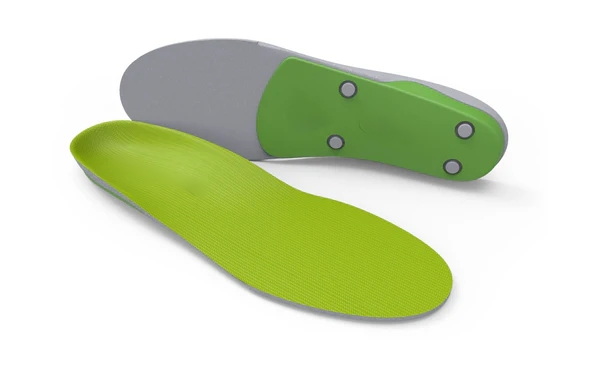
When evaluating which insole offers the highest arch support, look for these indicators:
- Visible curvature: The insole shows a definitive midfoot rise that doesn't flatten easily.
- Arch stiffness test: A simple press test reveals whether the material resists compression.
- Insole labeling: Many high-end manufacturers mark arch level indicators (low, medium, high).
- Professional fitting measurement: Some sports stores use scanners to measure arch profile.
- Long-term shape retention: A high-quality insole should maintain its contour after months of use.
OEM partners can also request prototypes in various arch heights to determine which model best matches regional footwear sizing and customer comfort preferences.
Beyond comfort, proper high-arch insoles help address several biomechanical and orthopedic issues:
- Plantar fasciitis: Extra arch support reduces stress on the plantar fascia ligament.
- Supination control: Properly balanced arch height keeps the foot from rolling outward.
- Forefoot pain: Redistributes pressure evenly to reduce metatarsal pain.
- Heel pain and Achilles strain: Deep heel cups stabilize the rearfoot and limit tension.
- Lower back or knee discomfort: Correct arch alignment positively affects total body posture.
These corrective properties make high-arch insoles a valuable addition for both medical and mainstream footwear markets.
As a Chinese OEM manufacturer, we leverage our expertise to help brands design and produce personalized insoles that meet their performance and branding objectives.
- Material variety: EVA, PU foam, gel pads, TPU shells, carbon fiber composites, cork, and leather.
- Layer structure design: Multi-density combinations for pressure control and comfort.
- 3D anatomical contour modeling: Ensures ergonomic accuracy based on consumer data.
- Arch height grading: Different models available for low, medium, and high-arch customers.
- Brand identity customization: Private label logos, customized printing, and specialized packaging.
By aligning design, function, and production capability, we ensure every insole fulfills both user comfort and brand differentiation goals.
Finding the ideal insole depends on personal preference, shoe type, and intended use. Consider these recommendations:
1. Daily wear: Choose lightweight EVA or memory foam insoles with medium-firm arch structure for balanced comfort.
2. Sports activities: Opt for TPU or carbon-fiber reinforced designs that deliver stability and performance.
3. Medical corrective purpose: Rigid thermoplastic insoles provide precise alignment support.
4. Formal or luxury footwear: Cork or leather orthotic insoles combine aesthetics with comfort.
5. Heavy-duty work shoes: Multi-layer insoles with shock-absorption and reinforced arch areas provide both protection and longevity.
Additionally, ensure the chosen model fits properly inside the shoe, leaving no gaps or excessive tightness. Insoles should be replaced every 6–12 months or whenever cushioning is visibly compressed.
Material density directly affects arch stability. Softer foams provide comfort but may flatten quickly under weight, while firmer layers offer better structural support. A multi-layer approach often delivers optimal results:
- Top layer: Breathable microfiber or mesh fabric to prevent odor and moisture.
- Middle layer: Memory foam or PU foam for cushioning.
- Base layer: TPU or thermoplastic shell providing structure and arch lift.
This layered design balances both comfort and functionality, ideal for premium shoe collections or athletic footwear lines.
Modern insole production combines biomechanics with advanced technology. CNC engineering, digital pressure mapping, and 3D printing have made it possible to design insoles that precisely match human anatomy.
For OEM clients, access to these technologies ensures maximum product differentiation. High-arch insoles can now be designed digitally to match a specific target market—whether for North America, Europe, or Asian regions, where foot shape data may vary significantly.
Our R&D team continually develops new models with improved heat resistance, anti-slip surfaces, and shock-diffusion geometry, giving brands the tools they need to win in competitive footwear markets.
As environmental awareness grows, sustainable design plays a significant role in OEM partnerships. High-arch insoles can now be made from:
- Recycled EVA materials with low carbon footprint.
- Bio-based polyurethane foams for eco-friendly cushioning.
- Natural cork and bamboo composites for premium sustainability appeal.
These materials not only meet ecological standards but also improve brand reputation among environmentally conscious consumers.
Selecting the right high-arch insole is about more than comfort — it's about improving performance, preventing foot disorders, and enhancing posture and alignment. Thermoplastic orthotics, TPU-reinforced bases, and multi-layer hybrid foams deliver the highest arch levels available on the market, each suited for different footwear applications.
For professional footwear brands, wholesalers, and OEM clients, collaborating with an experienced manufacturer ensures precise control over design, material, and performance quality. Our manufacturing expertise allows global partners to create custom high-arch insoles that offer life-changing comfort and durability for end users. With the right technology, craftsmanship, and innovation, we help brands across the world step forward with confidence and support.
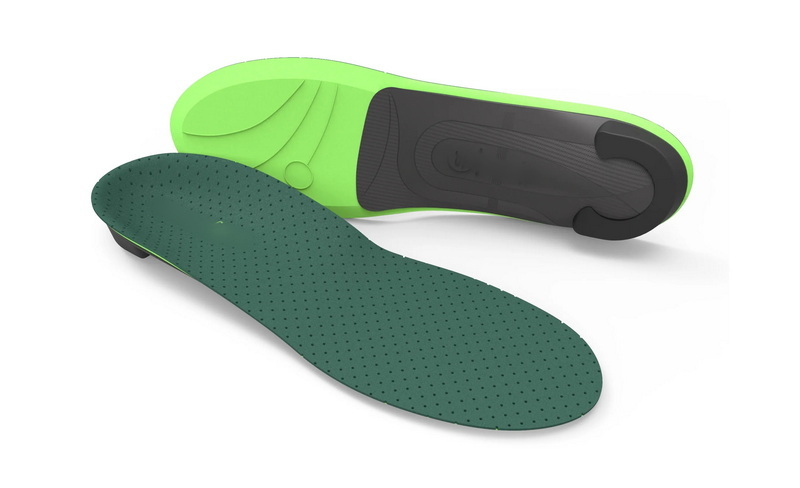
High arches typically create a clear gap between the midfoot and ground. Most insoles designed for high arches feature a visibly raised contour to fill that space comfortably.
Not always. They are ideal for users with naturally high arches, but people with flat or medium arches may find them uncomfortable or unstable.
Depending on activity level and material quality, insoles should be replaced every 6 to 12 months for consistent arch support and hygiene.
Yes. Professional OEM factories can develop custom arch heights, densities, shapes, and materials for different shoe categories and regional preferences.
Thermoplastic, TPU, and carbon fiber materials maintain their shape longer than soft foams, making them ideal for insoles that require long-term structural integrity.


