
Views: 227 Author: 3BU Technology Publish Time: 2026-06-27 Origin: Site


Content Menu
● Why Compression Set Ratios Matter in OEM Insole Programs
● EVA vs PU: Lab Data on Compression Set and Practical Implications
>> Typical Compression Set Ranges for EVA and PU Insoles
>> How Compression Set Translates Into User Experience
>> EVA vs PU Compression Set: Summary Table for Sourcing Teams
● Real‑World Use Cases: When Global Brands Choose EVA, PU, or Hybrids
>> Athletic and Lifestyle Footwear: EVA‑Dominant Setups
>> Safety, Work, and Industrial Footwear: PU‑Dominant or Hybrid Setups
● OEM Manufacturing Considerations: How 3BU Technology Engineers Compression Set Performance
>> Material Selection and Formulation Control
>> Process Control: Molding, Die‑Cutting, and Quality Assurance
● Building a Compression Set Specification for B2B Insole Sourcing
>> Step‑by‑Step Framework for Sourcing Managers
>> Translating User Reviews Into Technical Requirements
● Sustainability, Material Innovation, and Compression Set
>> Recycled and Bio‑Based EVA in OEM Programs
>> Future Trends: Smart Insoles and Advanced Foam Systems
● Practical Checklist: How to Choose Between EVA and PU for Your Next OEM Insole Project
● OEM Partner Spotlight: Why Global Brands Source EVA and PU Insoles from 3BU Technology
● Clear Call to Action: Plan Your Next EVA or PU Insole Program with 3BU Technology
● FAQs: EVA vs PU Compression Set and OEM Insole Sourcing
When you scale bulk shoe insole sourcing, the choice between EVA and PU materials is no longer a simple comfort question—it becomes a strategic decision about compression set performance, lifecycle cost, and OEM manufacturing reliability. As a leading China‑based insole manufacturer, 3BU Technology has watched global brands change their material mix as data on compression set, durability, and sustainability becomes more visible in procurement decisions. [4spepublications.onlinelibrary.wiley]
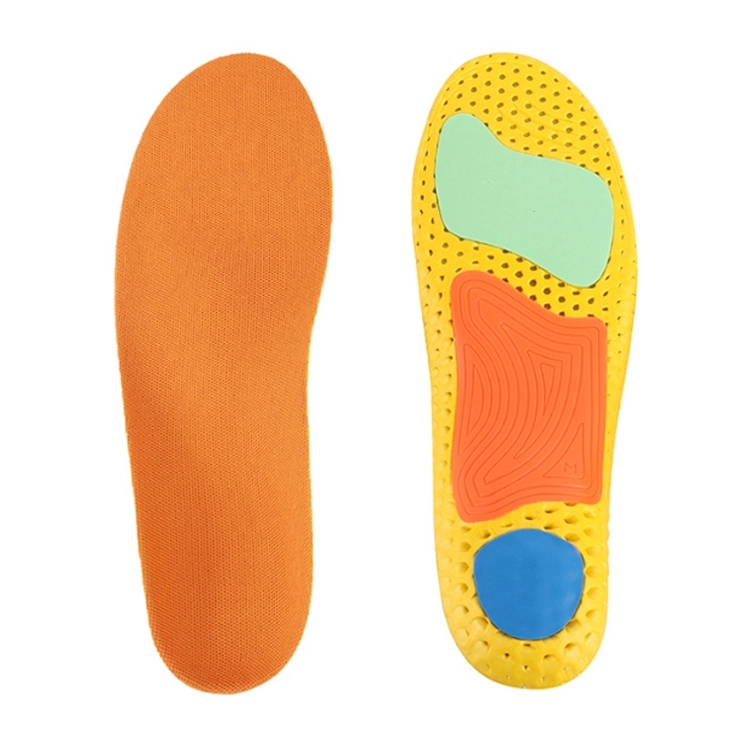
Compression set is the percentage of deformation a foam retains after being compressed for a defined time and temperature, and it directly affects how quickly an insole "packs out" under real‑world use. In simple terms, lower compression set means the foam springs back closer to its original thickness, while higher compression set signals faster flattening and loss of cushioning over the product's life. [fxfootwear]
From an OEM perspective, compression set ratios are not just lab numbers; they are risk indicators tied to warranty claims, star ratings in online reviews, and reorder volumes from retail partners. When brands ask 3BU Technology to run wear tests on pilot batches, compression set is often the first data point procurement teams compare across EVA, PU, and hybrid constructions. [insolemaker]
Independent foam studies consistently show EVA foams achieving *lower* compression set ratios than conventional PU foams under standardized testing. In one widely cited dataset, pure EVA foam reports a compression set around 15–16%, while PU foam sits closer to 25% under similar conditions. When EVA and PU are blended, performance tends to fall between these values, giving sourcing managers a tunable balance of rebound and resilience. [journals.indexcopernicus]
From my own experience reviewing OEM lab reports, entry‑level EVA insoles used in casual footwear often show real‑world compression set in the 65–75% band over extended wear, while higher‑rebound EVA formulations and advanced PU grades can narrow that gap. For brands, the key is matching test data to the actual use case instead of chasing a single "best" number in isolation. [accio]
In user reviews for mass‑market sneakers and work boots, buyers rarely mention the term "compression set", but they constantly describe its effects: "flattened insoles", "lost cushioning" or "bottoming out after three months." EVA's generally lower compression set ratio provides a more consistent underfoot feel over the early life of the shoe, which is critical for running, walking, and athleisure lines where comfort is a primary purchase driver. [alibaba]
PU's higher compression set ratios can mean a slower but more progressive change in feel; many wearers describe PU insoles as more supportive but less bouncy, especially in safety and industrial footwear. As an OEM, 3BU Technology uses structured feedback from global B2B clients to calibrate hardness, density, and thickness so that the subjective comfort curves align with the brand's promise, not just the lab metrics. [foam-well]
| Metric / Aspect | EVA Foam Insoles | PU Foam Insoles | Sourcing Insight |
|---|---|---|---|
| Typical lab compression set | ~15–16% in pure foam tests (4spepublications.onlinelibrary.wiley) | ~25% in comparable tests (4spepublications.onlinelibrary.wiley) | EVA generally retains thickness better in controlled conditions. (4spepublications.onlinelibrary.wiley) |
| Perceived cushioning over first 3–6 months | Softer, more elastic feel with quicker rebound. (wefoameva) | Denser, more progressive support with slower rebound. (wefoameva) | Match to target user: runners vs industrial workers. (wefoameva) |
| Risk of early "pack‑out" complaints | Lower in performance EVA formulations. (wefoameva) | Higher if density and thickness are underspecified. (wefoameva) | Specify minimum thickness and hardness in OEM contracts. (alibaba) |
| Unit cost at bulk volumes | Generally more cost‑efficient for mainstream lines. (fxfootwear) | Higher for high‑quality PU, but justified by longer service life. (accio) | Use EVA for volume, PU for premium or safety segments. (accio) |
| Sustainability options | Recycled, bio‑based EVA grades widely available. (fxfootwear) | Bio‑PU options emerging, but less standardized. (accio) | Choose material families aligned with brand sustainability targets. (accio) |
Most international brands still rely on EVA‑dominant insoles for running, training, and lifestyle sneakers because of the excellent balance of weight, cost, and rebound. 3BU Technology's OEM partners often specify multi‑layer EVA constructions—soft top layers for step‑in comfort over firmer bases that control compression set across the insole thickness profile. [wefoameva]
In practice, brand product managers will benchmark competitor shoes, log user comments such as "light and springy but loses bounce after a season", and then request EVA formulations tuned to a specific hardness range to slow that perceived decline. Here, compression set ratios are a design constraint, not a single KPI: a slightly higher compression set may be acceptable if it reduces weight and preserves price competitiveness in crowded categories. [fxfootwear]
For safety boots, industrial shoes, and heavy‑duty work footwear, brands often favor PU‑dominant insoles or EVA‑PU hybrids to achieve longer service life under high load and extended wear hours. PU's compression set behavior, combined with its denser support, allows work boots to hold up structurally over longer duty cycles, especially when users carry tools, stand on hard surfaces, or walk on uneven ground. [accio]
In B2B projects 3BU Technology has supported, procurement teams frequently ask for minimum compression set thresholds over simulated six‑month wear, alongside abrasion and tear strength metrics. For these applications, slightly higher compression set numbers can be acceptable if the overall insole stack—top cloth, mid‑foam, and bottom structure—delivers predictable performance across millions of pairs. [insolemaker]
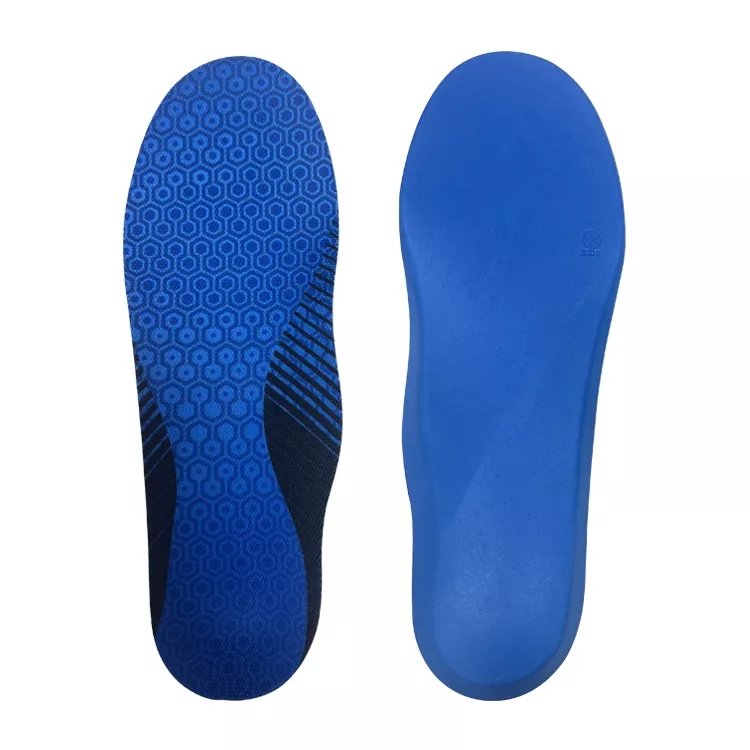
As an OEM, material control is the most powerful lever for managing compression set across a portfolio. 3BU Technology works with multiple EVA and PU formulations, including high‑rebound EVA, recycled blends, and advanced PU foams, to match brand specifications on hardness, density, resilience, and lifecycle cost. [foam-well]
By standardizing key inputs—such as hardness bands in Asker C and density in g/cm³—we can forecast how compression set ratios will behave under different shoe architectures and user profiles. This turns material selection from a guesswork exercise into a repeatable sourcing decision that can be documented in technical data sheets and quality agreements. [alibaba]
Compression set performance is also shaped by process control: molding parameters, curing times, and die‑cutting tolerances all affect how the foam structure responds over time. For bulk OEM orders, 3BU Technology runs controlled processes for molded and die‑cut EVA and PU insoles, using statistical process control to minimize variability batch‑to‑batch. [insolemaker]
In quality audits, we pair mechanical testing—compression set, resilience, and flex fatigue—with physical inspections of finished insoles to catch defects before they reach assembly lines. This reduces the risk of inconsistent compression set performance, especially when a global brand splits production across multiple factories or countries. [fxfootwear]
To move beyond generic EVA vs PU debates, B2B sourcing teams should build a compression set specification aligned with product strategy. From an industry consultant perspective, a practical framework looks like this: [accio]
1. Define the primary use case.
Clarify whether the shoe targets running, walking, casual wear, safety work, or orthotic support; this shapes acceptable compression set ranges. [accio]
2. Set target wear duration.
Decide how long the insole must maintain "acceptable" cushioning—three months for fashion sneakers, twelve months for work boots, or longer for medical applications. [alibaba]
3. Choose baseline material family.
Select EVA, PU, or hybrids based on unit cost, weight, sustainability, and brand positioning; avoid mixing materials without a clear performance reason. [fxfootwear]
4. Specify lab test conditions.
Align with recognized standards for compression set testing and communicate test temperature, load, and time explicitly in OEM contracts. [4spepublications.onlinelibrary.wiley]
5. Define acceptable compression set bands.
Use data ranges (for example, "15–20% under standard test") rather than single numbers to allow for realistic production variability. [4spepublications.onlinelibrary.wiley]
6. Link specs to warranty and marketing claims.
Make sure comfort promises in marketing copy match the technical spec; this closes the gap between user expectations and lab performance. [alibaba]
User reviews are an under‑used data source for material decisions. When brands share feedback with 3BU Technology, we often see clear patterns: complaints about early flattening cluster around certain thicknesses and hardness bands, while praise for long‑lasting support appears in heavier PU or hybrid constructions. [foam-well]
By tagging reviews with shoe type, user weight, and usage scenario where available, we build a more human‑centered picture of compression set performance, beyond the lab charts. This is a key part of modern E‑E‑A‑T‑aligned product development: grounding material choices in real user experience, not just theoretical advantages. [accio]
Global footwear brands increasingly demand recycled and bio‑based EVA grades that lower carbon footprint without compromising compression set performance. Recent EVA developments—recycled content blends, sugarcane‑based EVA, and other bio‑derivatives—can match or even improve compression set compared to conventional formulations when properly engineered. [fxfootwear]
3BU Technology integrates these materials into OEM insoles for brands that balance comfort, durability, and sustainability scores across their portfolio. Here, compression set is treated as a non‑negotiable quality gate; if a greener foam cannot meet the specification, it is either re‑formulated or rejected before entering mass production. [insolemaker]
Industry reports highlight upcoming smart insoles and advanced foam systems that monitor load, fatigue, and wear in real time. While these solutions are still nascent in mainstream OEM programs, they point toward a future where compression set ratios will be tracked in‑field, not only in labs. [accio]
For sourcing managers, this trend reinforces the need to understand material behavior deeply now, so that when sensor‑enabled insoles become common, the underlying EVA, PU, or hybrid stacks are already optimized for long‑term performance. [alibaba]
Use the following quick checklist when briefing 3BU Technology or another OEM partner: [foam-well]
- Clarify shoe category (running, casual, safety, orthotic).
- Prioritize user experience (soft bounce vs firm support).
- Set target in‑use lifespan in months and link it to warranty.
- Define acceptable compression set range in lab tests.
- Choose material family (EVA, PU, or hybrid) based on cost and brand positioning.
- Consider sustainability requirements (recycled or bio‑based content).
- Document process preferences (molded vs die‑cut, single‑density vs multi‑layer).
A structured approach like this helps brands avoid purely price‑driven decisions that can lead to inconsistent user satisfaction and higher long‑term costs. [alibaba]
As one of the recognized insole manufacturers in China's B2B ecosystem, 3BU Technology provides end‑to‑end OEM support—from material formulation through tooling, production, and logistics—for EVA, PU, and hybrid insole programs. International sourcing guides already list 3BU among the top Chinese insole producers, citing production capacity, quality consistency, and responsiveness as key strengths for global buyers. [insolemaker]
By combining technical testing of compression set ratios, user‑centric design input, and transparent communication with brand teams, 3BU Technology helps footwear companies launch products that feel right on day one and still perform months later. For brands managing complex multi‑country supply chains, having a single OEM partner that understands both EVA and PU deeply is a strategic advantage rather than a simple vendor choice. [foam-well]
If your team is preparing a new footwear line or refreshing an existing model, now is the time to lock in a compression set specification and align it with your material strategy. Share your target shoe category, price band, and user profile with 3BU Technology, and our engineers can propose EVA, PU, or hybrid insole constructions—backed by lab data—that minimize pack‑out complaints and maximize long‑term comfort. [insolemaker]
Instead of treating EVA vs PU as a generic trade‑off, we can turn it into a measured sourcing decision, with hard numbers, real user feedback, and OEM process control behind every insole we produce. [fxfootwear]
1. What is compression set in shoe insoles?
Compression set is the percentage of deformation a foam retains after being compressed under specified conditions, and it indicates how much cushioning an insole will lose over time. [journals.indexcopernicus]
2. Why do many brands still prefer EVA over PU for mainstream insoles?
Brands favor EVA because it offers a strong combination of low compression set in lab tests, light weight, and competitive pricing, which suits high‑volume athletic and lifestyle footwear. [wefoameva]
3. When is PU a better choice than EVA for insoles?
PU is often better for safety and work footwear that needs denser support and longer structural life under heavy loads, even if the compression set ratio is higher than EVA. [wefoameva]
4. Can recycled or bio‑based EVA match the compression set performance of conventional EVA?
Modern recycled and bio‑based EVA formulations can reach similar or improved compression set performance compared to conventional EVA, provided the OEM controls material quality and processing conditions. [fxfootwear]
5. How should sourcing teams define compression set requirements in OEM contracts?
Teams should specify test methods, temperature and load conditions, and acceptable compression set ranges, then link those technical requirements to target product lifespan and user comfort expectations. [journals.indexcopernicus]
1. WeFoamEVA. "EVA Soles vs PU Soles: A Comprehensive Performance Comparison." 2024. Available at: <https://www.wefoameva.com/eva-soles-vs-pu-soles-a-comprehensive-performance-comparison255> [wefoameva]
2. Wiley Online Library. "Physicomechanical, Friction, and Abrasion Properties of EVA/PU Blend Foams." Available at: <https://www.wefoameva.com/eva-soles-vs-pu-soles-a-comprehensive-performance-comparison255> [4spepublications.onlinelibrary.wiley]
3. ICAMS 2020 – 8th International Conference on Advanced Materials and Systems. Conference papers on EVA and PU foam behavior. Available at: <https://journals.indexcopernicus.com/api/file/viewByFileId/2066972> [journals.indexcopernicus]
4. FX Footwear. "EVA Insoles Explained: Properties, Benefits, and Uses." 2026. Available at: <https://fxfootwear.com/eva-insoles/> [fxfootwear]
5. InsoleMaker. "Top 10 Shoe Insole Manufacturers in China – 3BU Technology." 2025. Available at: <https://www.insolemaker.com/top-10-shoe-insole-manufacturers-in-china.html> [insolemaker]
6. Foamwell. "Top 10 Best Insole Manufacturers in China." Available at: <https://www.foam-well.com/news/top-10-best-insole-manufacturers-in-china/> [foam-well]
7. Accio. "Insoles for Footwear Production: Bulk Suppliers & Trends." 2025. Available at: <https://www.accio.com/plp/insoles-for-footwear-production> [accio]
8. Alibaba. "Inner Soles Supplier Guide: Global Sourcing & Top Manufacturer Data." 2026. Available at: <https://www.alibaba.com/price-comparison/inner-soles-for-shoes-manufacturer> [alibaba]


