
Language
Views: 222 Author: Edvo Publish Time: 2026-01-07 Origin: Site


Content Menu
● Global Market Value And Annual Volume
● Product Segmentation And Use Frequency
● Replacement Cycles And Repeat Purchases
● Opportunities For OEM Manufacturers
● Technology, Customization, And Digitalization
● Channel Structure And Annual Throughput
● Risk Factors And Market Challenges
● Consumer Behaviour And Awareness
● Application Scenarios In Different Footwear
● Design Trends And User Experience
● Role Of Branding And Private Label
● Sustainability And Future Growth
● FAQ
>> 1. What Is An Orthotic Insole?
>> 2. How Often Should Orthotic Insoles Be Replaced?
>> 3. Are Custom Orthotic Insoles Better Than Prefabricated Ones?
>> 4. Which Materials Are Commonly Used For Orthotic Insoles?
>> 5. Why Do Brands Choose Chinese OEM Factories For Orthotic Insoles?
The orthotic insole market has become one of the most dynamic segments in the global footcare and orthopedic product industry, driven by aging populations, sports participation, and rising awareness of posture and joint health. For brands, wholesalers, and OEM manufacturers, understanding how many orthotic insoles are sold in a year is essential for capacity planning, product positioning, and long‑term strategy.[1]
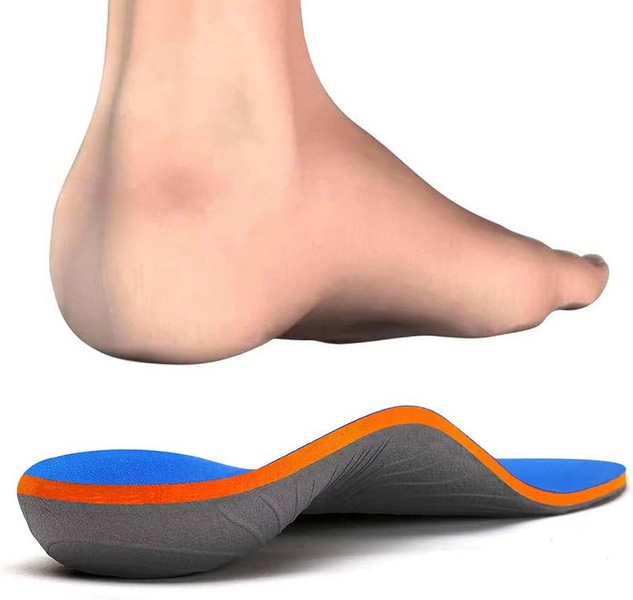
Industry research indicates that the global foot orthotic insoles market is valued at several billion US dollars in the mid‑2020s, with projections showing steady growth over the next decade. If the average selling price of an orthotic or orthopedic insole is assumed to be in the mid double‑digit range in US dollars at the retail level, this value corresponds to hundreds of millions of pairs of orthotic insoles sold worldwide every year.[1]
From a practical business perspective, combining global revenue estimates and typical per‑pair prices suggests that annual sales volume for orthotic and orthopedic insoles can reasonably be placed in the broad range of many hundreds of millions of pairs per year, depending on how strictly “orthotic” is defined versus general comfort insoles. This number includes medical‑grade custom insoles, prefabricated corrective insoles, and performance‑oriented designs used in sports, work, and daily footwear.[1]
Several structural trends support continuous growth in orthotic insole demand year after year.[1]
- Aging populations in developed and emerging markets are creating more demand for solutions that relieve pain from arthritis, plantar fasciitis, and other chronic conditions.
- Rising prevalence of obesity and diabetes increases foot problems, leading physicians and therapists to recommend orthotic insoles as part of conservative treatment plans.[1]
- Fitness and sports participation are expanding, and many consumers seek insoles that enhance shock absorption, stability, and performance in running, basketball, hiking, and other activities.
- Wider availability of insoles through pharmacies, orthotic clinics, supermarkets, shoe stores, and online marketplaces makes it easier for consumers to purchase and replace insoles regularly.[1]
These drivers not only increase the number of insoles sold annually, but also support premium segments such as custom‑made, semi‑custom, and digitally configured products.[1]
Annual sales of orthotic insoles are distributed unevenly across regions due to different healthcare systems, income levels, and consumer habits.[1]
- North America is one of the largest markets in value terms, supported by high per‑capita spending on health products, strong participation in sports, and a mature clinical and retail channel.
- Europe has a well‑established medical and pharmacy network, where podiatrists and orthopedic specialists frequently prescribe or recommend orthotic insoles for a wide range of conditions.[1]
- Asia‑Pacific shows faster relative growth as urbanization and disposable incomes rise, with countries such as China increasing both imports and local production of medical and comfort insoles.
For OEM manufacturers, these regional characteristics translate into different product portfolios, certification requirements, and packaging standards when serving global brand owners and wholesalers.[1]
Orthotic insoles sold in a year can be segmented by design, material, and application scenario.[1]
- Custom orthotic insoles, often produced from detailed biomechanical assessments, serve patients with complex foot and gait issues and typically command higher prices but lower unit volumes compared with mass‑market products.
- Prefabricated orthotic and semi‑orthotic insoles, made from materials such as EVA, PU, gel, and composite structures, represent the largest share of annual sales because they fit a wide range of footwear and are easier for retailers to stock.
- Sports and work‑safety insoles are purchased not only for correction but also for cushioning, stability, and fatigue reduction, leading to more frequent replacement cycles and higher lifetime unit consumption per user.
Since most consumers own several pairs of shoes, a single end user can account for multiple pairs of insoles over a year as they outfit running shoes, work boots, and casual footwear.[1]
Annual orthotic insole sales are closely linked to replacement behavior, which varies by user type and product quality.[1]
- Medical‑grade or custom insoles may be used for extended periods, but users often add lower‑cost prefabricated insoles in other shoes, raising the effective number of pairs purchased yearly.
- Athletes and heavy industrial workers may replace performance insoles multiple times a year due to wear, odor, or changes in training intensity, significantly increasing per‑capita yearly demand.
- For everyday comfort insoles, many consumers replace only when discomfort reappears, but as awareness grows, educational content by brands and clinics is gradually shortening replacement intervals.[1]
For OEM factories, emphasizing durability, moisture control, and antimicrobial features can help brand customers justify slightly higher prices while still encouraging regular replacement.[1]
As a leading Chinese insole manufacturer providing OEM services, the yearly sales volume of orthotic insoles worldwide translates into substantial room for product and capacity expansion.[1]
- International brands increasingly outsource production to specialized factories that can combine multiple processing technologies while maintaining strong quality control.
- Buyers are looking for flexible order quantities, rapid sampling, and the ability to develop customized shapes, arch profiles, and top‑cover materials tailored to their target end users.
- Sustainable and recyclable materials, such as bio‑based foams or recycled blends, are gaining attention and can differentiate OEM suppliers in competition for long‑term contracts.
By aligning with these trends, a Chinese OEM factory can capture larger orders from global orthotic brands, retailers, and footwear manufacturers that need branded insoles to complement their shoe lines.[1]
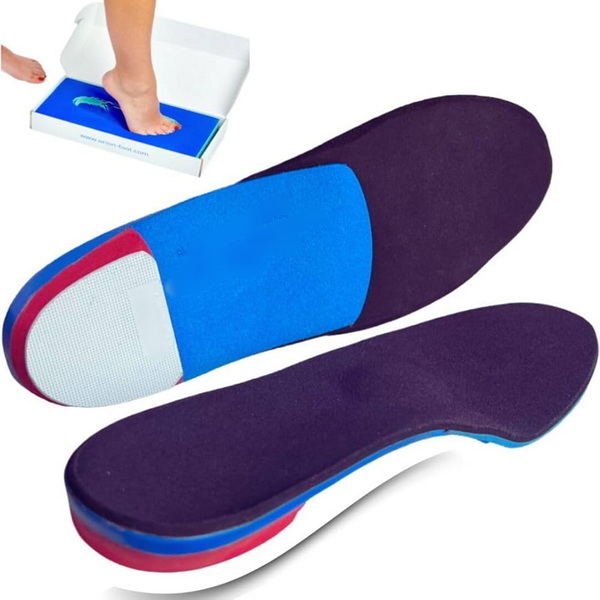
Technology is reshaping how orthotic insoles are designed, manufactured, and sold each year.[1]
- Advanced foot scanning and gait analysis tools allow clinics and brands to design more precise arch support, heel cups, and forefoot support for different foot types.
- Modern production methods enable semi‑custom or fully custom insoles to be produced in smaller batches while still maintaining cost efficiency for OEM partners.
- Online platforms and direct‑to‑consumer models integrate digital fit tools, enabling consumers to share foot data and receive insoles matched to their profile, further increasing yearly unit sales.[1]
OEM factories able to receive digital design data, manage SKU complexity, and support short lead times are best positioned to serve this evolving demand structure.[1]
The total number of orthotic insoles sold each year flows through a multichannel distribution system that ranges from clinical settings to mass retail.[1]
- Hospital and clinic channels focus on higher‑value products, often bundled with consultation services, which reduces volume per outlet but yields strong margins and repeat prescriptions.
- Pharmacies, sports shops, and supermarkets sell ready‑to‑wear insoles, driving high unit volume and creating consistent yearly replenishment needs for distributors and OEM suppliers.
- Online marketplaces rapidly expand the accessible customer base, allowing niche brands and private‑label OEM products to reach consumers in new countries and segments.[1]
For Chinese OEM manufacturers, cooperating with international importers and online brand owners can significantly increase annual output, as digital channels are hungry for differentiated, competitively priced insole lines.[1]
Despite strong yearly sales, the orthotic insole market faces several challenges that can influence how many units are sold and at what price.[1]
- Regulatory and medical‑device classification requirements differ between countries, affecting labeling, materials, and testing standards for corrective insoles.
- Intense competition in generic comfort insoles can push down prices, requiring OEM factories to improve automation, material utilization, and logistics efficiency.
- Economic slowdowns may temporarily reduce discretionary purchases in some markets, although medical and work‑related insoles tend to be more resilient than purely fashion products.[1]
Manufacturers that diversify their customer base, invest in research and development, and build long‑term relationships with brand owners can better stabilize their annual sales volumes.[1]
Consumer awareness plays a crucial role in how many orthotic insoles are sold in a year. As people learn more about the link between foot posture, overall posture, and joint health, they become more willing to invest in supportive insoles for daily use and sports activities.[1]
Health professionals, fitness trainers, and influencers increasingly talk about foot health, which encourages consumers to try orthotic insoles as a relatively affordable solution compared with more invasive treatments. As awareness rises, the number of first‑time buyers grows, and many of those buyers become repeat customers who upgrade to better materials or more specialized designs over time.[1]
The diversity of footwear types also drives annual sales of orthotic insoles. Many consumers use different types of insoles for running shoes, walking shoes, work boots, safety footwear, casual sneakers, and even formal shoes.[1]
Sports enthusiasts often seek insoles that improve shock absorption and energy return in running and training shoes, while workers in construction, logistics, and manufacturing look for insoles that reduce fatigue during long standing hours. Office workers and everyday users prefer low‑profile insoles that fit easily into slim shoes while still providing comfortable arch support and pressure distribution.[1]
This variety of application scenarios leads to demand for multiple pairs per user across a single year, which amplifies the total number of units sold globally.[1]
Design trends in orthotic insoles also influence buying behaviour. Modern insoles focus not only on support and correction but also on comfort, breathability, and aesthetics, including attractive top‑cover fabrics and subtle branding.[1]
Multi‑layer constructions with different densities, heel cushions, metatarsal pads, and forefoot cushioning are increasingly common, creating a more refined user experience. Some insoles incorporate odor‑control technologies or moisture‑management fabrics that keep feet dry, which encourages users to replace insoles more proactively to maintain that fresh feeling.[1]
Branding plays an important role in how many orthotic insoles are sold each year, especially in retail and online channels. Strong brands communicate clear benefits related to pain relief, performance, or comfort, helping consumers quickly identify products that match their needs.[1]
At the same time, private‑label and store brands use OEM manufacturers to offer competitively priced insoles under retailer names, capturing value‑conscious customers who may not pay for premium brands. This combination of global brands and private labels widens the market and keeps yearly unit volumes high, as retailers can position insoles at different price levels to reach more segments.[1]
Sustainability is becoming a more important factor in the orthotic insole market. International buyers and end consumers are increasingly interested in recycled materials, bio‑based foams, and production methods that reduce waste and energy consumption.[1]
OEM factories that invest in cleaner materials and processes can differentiate themselves and potentially access new customers that prioritize environmental responsibility. As sustainability expectations continue to grow, this trend may stimulate new replacement and upgrade cycles, supporting further increases in yearly insole sales.[1]
Current market information suggests that the global orthotic and orthopedic insole industry generates significant annual revenue, corresponding to a very large number of pairs sold each year across medical, sports, work, and everyday comfort applications. Driven by demographic changes, lifestyle diseases, and an expanding culture of fitness and health awareness, demand for orthotic insoles is expected to remain strong and continue growing. For experienced OEM manufacturers, especially in China, this environment offers major opportunities to supply high‑quality, innovative, and cost‑effective insoles to international brands, wholesalers, and footwear producers that need reliable long‑term partners.[1]
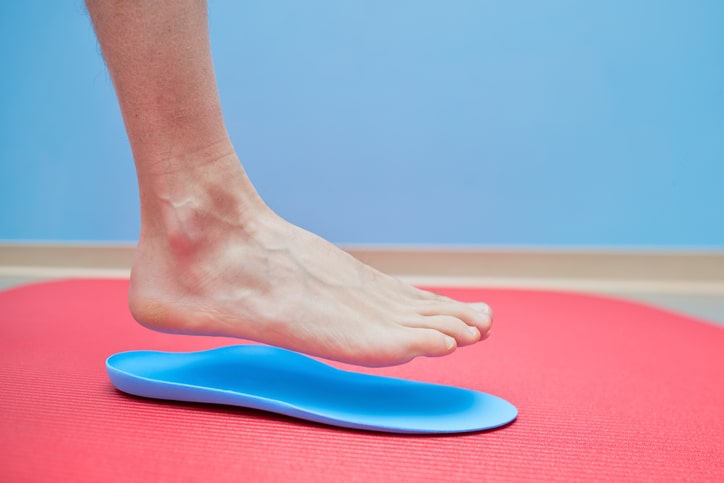
An orthotic insole is a specially designed insert placed inside footwear to support the arch, stabilize the foot, and improve alignment of the lower limbs. It may be custom‑made or prefabricated and is often recommended for common foot‑related problems such as plantar fasciitis, flat feet, and over‑pronation.[1]
Replacement frequency depends on usage intensity, body weight, and material quality, but many users replace commonly worn insoles roughly once or twice a year. People who engage in intensive sports or heavy physical work may need new insoles several times per year because cushioning and support materials compress and wear down more quickly.[1]
Custom orthotic insoles are tailored to an individual's foot structure and gait pattern, which can provide more precise biomechanical correction for complex issues. Prefabricated insoles, however, are more affordable and suitable for large numbers of people, making them the dominant category in terms of annual unit sales worldwide.[1]
Common materials include EVA foam, PU foam, thermoplastic components, gel inserts, and composite laminates that balance support, cushioning, and durability. Many products also feature textile top covers with moisture‑wicking and odor‑control properties to enhance comfort and hygiene during daily wear.[1]
Brands often partner with Chinese OEM factories because they offer integrated production capabilities, competitive pricing, and flexible customization options for different markets and consumer groups. These factories can develop private‑label lines and technical insoles that meet international quality expectations and regulatory requirements while supporting stable long‑term supply.[1]
[1](https://www.thebusinessresearchcompany.com/report/foot-orthotic-insoles-global-market-report)


