
Views: 222 Author: Edvo Publish Time: 2025-11-29 Origin: Site


Content Menu
● What You Need Before Cutting
● Step 1: Confirm Your Insoles Are Trim-to-Fit
● Step 2: Remove the Original Shoe Insole
● Step 3: Align the Template and Memory Foam Insole
● Step 4: Trace a Smooth Cutting Line
● Step 5: Cut Slowly with Sharp Scissors
● Step 6: Test-Fit the Memory Foam Insole in the Shoe
● Step 7: Repeat the Process for the Second Insole
● Extra Tips to Avoid Common Mistakes
● How to Cut Memory Foam Insoles Without a Template
● Fine-Tuning Length and Width
● Smoothing and Protecting the Cut Edges
● Safety When Cutting Memory Foam Insoles
● When You Should Not Cut Memory Foam Insoles
● Using Visual Guides to Support Users
● Common Fit Issues After Cutting and How to Fix Them
● How Often Should Trimmed Memory Foam Insoles Be Replaced?
● FAQ
>> 1. Can all memory foam insoles be cut?
>> 2. What is the best way to avoid cutting too much?
>> 3. Do I need special scissors for memory foam insoles?
>> 4. Why does my insole still curl up at the toe after cutting?
>> 5. How long do trimmed memory foam insoles typically last?
Cutting memory foam insoles correctly helps you get a custom fit, better support, and a more professional “OEM-level” finish inside your shoes. As a result, your footwear feels more balanced, prevents slipping, and reduces pressure on your toes and arches during daily walking or sports.

- A pair of full-length memory foam insoles, preferably trim-to-fit type.
- The removable shoe insole or liner to use as a physical template.
- Sharp scissors suitable for foam and fabric.
- A pen or marker for tracing smooth cutting lines.
- A flat, stable work surface with good lighting and enough space.
Having everything prepared in advance keeps your trimming process smooth and prevents mistakes from rushing or stopping mid-step to search for tools.
Before you start, make sure the memory foam insoles are intended for trimming. Many comfort and athletic insoles are made longer and marked with size ranges so users can cut them to match specific shoes. Some specialized medical orthotics or three-quarter-length inserts, however, are pre-shaped and should not be trimmed.
Check any size indicators, length marks, or printed outlines on the forefoot area. If there is a rigid plastic shell or a deeply formed heel cup, assume that only the front foam zone is safe to cut, while the structural heel area should remain intact.
Most shoes with removable liners allow you to pull out the factory insole by lifting from the heel and then sliding it forward. This original liner gives you the exact contour of the shoe interior, including toe shape and side curvature.
If the liner is partly glued, peel slowly and evenly to avoid ripping it. When the insole is not removable, you will have to rely on printed trim lines, shoe size markings, or incremental test-fitting instead of using a physical template.
Place your memory foam insole upside down on the table, then place the original shoe insole upside down on top, matching heel to heel. Align the back edges first, then adjust the sides to make sure the old insole sits as neatly as possible over the new one.
Pay attention to any differences in width or curvature at the toe. If the factory liner is badly worn at the heel, focus on positioning more by the toe and side edges, because these parts still reflect the inner shape of the shoe more accurately.
Use your pen or marker to trace around the toe and forefoot of the original insole onto the memory foam. Follow the shape in one continuous motion, avoiding sharp angles or zigzags that would later feel uneven under your toes.
Most trimming happens in the front third of the insole, since the heel usually already fits neatly into the shoe's heel cup. If your new insoles show printed size lines, you can compare your traced outline to those markings and keep your line slightly on the “larger” side so you have room for final adjustments.
Take your scissors and start cutting along the traced line using short, controlled strokes. Begin from one side of the toe and work around the front, rather than trying to cut across the entire forefoot in one long motion.
Aim to cut just outside the line, leaving a tiny safety margin. You can always trim more later if the insole is still too long, but you cannot replace material once it has been removed. For thick or dense memory foam, use strong scissors that maintain a clean edge without crushing the foam.
After cutting, slide the trimmed insole into the shoe, toe first, then press it down from heel to toe. Check whether it lies flat inside the shoe, without bulging up at the toe or wrinkling under the ball of the foot.
If the insole curls upwards, or if you feel a ridge when you press the toe area, remove it and trim a very small amount more from the front. Repeat the test-fitting process until the insole fits flush along the entire length, with the heel sitting firmly at the back and no gap or movement.
Once you are satisfied with the first insole, use it as the template for the second side. Place the finished insole upside down on top of the untrimmed memory foam insole, align the heels, trace the outline, and cut using the same slow, controlled method.
Even though both shoes are the same size, always test-fit the second insole separately. Small manufacturing differences in the shoe shape or your previous wear pattern can mean one shoe needs slightly finer trimming than the other.
- Take your time; measure and check alignment twice before cutting once.
- Trim less than you think is necessary at first, then fine-tune gradually.
- Focus trimming on the toe and forefoot and avoid cutting rigid heel cups.
- Do not force the insole into the shoe if it is obviously too long; pull it out and trim again.
These habits help you avoid a loose, sliding insole or one that is too short and leaves uncomfortable empty space at the heel.
If your shoes have fixed insoles that cannot be removed, you can still trim memory foam insoles using other references. Many trim-to-fit products have printed size marks that you can follow based on your shoe size, choosing the nearest longer size and gradually trimming down.
Another method is to start with only very small cuts at the toe, then insert the insole and mark where it bends or presses against the front of the shoe. Take it out, trim a little at that specific area, and repeat until it lies flat. This “cut and test” approach is slower, but it allows you to work safely without a physical template.
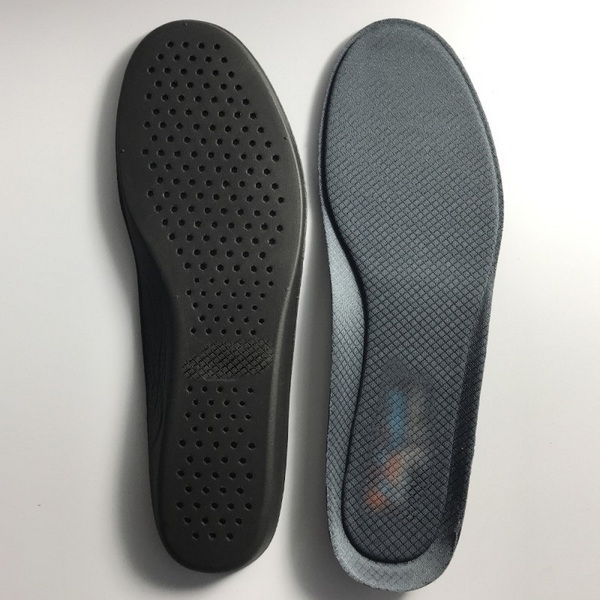
Most users think only about length, but sometimes the width of a memory foam insole also needs minor adjustment. If you feel the sides of the insole pushing hard against the upper or folding upwards, mark the overlapping zones and carefully trim a small strip from each side.
When adjusting width, work very slowly and symmetrically. Trim a tiny amount from one side, test-fit, then trim the other side if needed. Over-trimming width can cause the insole to slide side-to-side, reduce heel stability, and create new pressure points.
Clean edges not only look better but also help the insole last longer. After the main cuts, check for small foam “hairs” or irregular bumps along the edge. Use the tips of your scissors to make short, gentle snips to tidy the perimeter rather than tearing off pieces by hand.
Freshly cut foam can be slightly more vulnerable to abrasion from rough shoe interiors. If the inside of the shoe has exposed seams, staples, or damaged areas, consider using insoles with a durable fabric top cover or repairing those rough spots to prevent the foam from tearing over time.
Always cut away from your body and keep fingers clear of the cutting path. Work on a stable table or desk rather than on your lap, and avoid cutting when you are tired or distracted.
If you are helping a child or someone new to using scissors, let them observe and assist with simple tasks like tracing, while an adult handles the cutting. Proper safety habits make the DIY experience more comfortable and stress-free.
Some insoles are designed with stitched edges, thick plastic shells, or special medical structures that can be damaged by cutting. In these cases, cutting may void warranties or change the way the insole supports the foot.
If the insole already fills the shoe tightly and still feels uncomfortable, trimming will not solve the problem. Instead, you might need a thinner insole, a different arch profile, or a model specifically designed for the type of shoe you are using, such as dress shoes, hiking boots, or safety footwear.
For end customers, step-by-step photos, diagrams, and short videos make trimming more intuitive. For example, you can show:
- How to place the factory insole heel-to-heel on top of the memory foam insole.
- Where to mark with a pen and where to avoid cutting, especially near the heel cup.
- Before-and-after shots of an insole that was too long, then correctly trimmed to lie flat.
In a digital article or product page, combining written steps with clear visuals reduces confusion and builds trust in your brand's guidance.
After trimming, some users still experience minor fit problems. The most frequent issues include:
- The insole moves forward inside the shoe: Usually caused by cutting too short. In this case, you may need a fresh pair trimmed more conservatively or consider using a small amount of double-sided tape at the heel to limit movement.
- A raised ridge or bubble in the toe area: Indicates the insole is still slightly too long. Take out the insole, trim a very small section from the toe, and test again.
- One shoe feels tighter than the other: Feet are often slightly different in size. The insole in the tighter shoe may require very small extra trimming at the toe or along one side.
By addressing these issues calmly and methodically, users can turn an imperfect first trim into a precise final fit.
Memory foam gradually compresses under body weight and repetitive impact. Over time, the cushioning becomes thinner and does not rebound as well, reducing comfort and shock absorption. When you notice that the insoles feel flat, your heels strike harder, or your feet feel more tired at the end of the day, it is usually time for a new pair.
Active users who walk or stand for many hours often replace insoles roughly every several months to a year, depending on weight, activity level, and shoe type. When you purchase a new pair, you can use the previous well-fitting memory foam insole as your template and repeat the same cutting steps for fast, consistent results.
Cutting memory foam insoles is straightforward when you follow a clear, careful process. Confirm that the insoles are trim-to-fit, remove the original shoe liner as a template whenever possible, trace a smooth cutting line, and cut slightly outside that line using sharp scissors. Then test-fit in the shoe, make small adjustments, and repeat for the second insole. Paying attention to length, width, edge smoothness, and safety helps you achieve a snug, buckle-free fit that improves comfort and support, giving your footwear a customized feel similar to a professionally fitted OEM insole.

No. Many full-length comfort and sport memory foam insoles are designed to be trimmed, but medical orthotics, stitched-edge designs, and some three-quarter-length inserts should not be cut. Always check the product information to confirm whether trimming is allowed.
The safest approach is to trace carefully, cut just outside the line, and trim in small stages. Test the insole in the shoe after each round of trimming and only remove more foam when you clearly see or feel that the insole is still too long.
You do not need professional tools, but strong, sharp household or fabric scissors work best. They create clean cuts through foam and fabric layers without crushing, which helps you keep the edge neat and maintain the shape you traced.
If the insole curls or buckles at the toe, it is usually still a little too long or slightly too wide in that area. Mark where the curl appears, remove the insole, trim a very small amount from that zone, and test again until it lies flat.
Lifespan depends on your weight, activity level, and how often you wear the shoes, but many people find that memory foam insoles remain comfortable for several months to a year of regular use. Replace them when cushioning feels flat or when you notice more foot fatigue even though the fit is still correct.


