
Views: 268 Author: 3BU Technology Publish Time: 2026-07-16 Origin: Site


Content Menu
● Understanding Porous PU and Perforated EVA
>> What is Porous PU in Insoles?
>> What is Perforated EVA in Insoles?
● Moisture-Wicking in Humid Environments – The Core Comparison
>> How Moisture Really Moves Inside the Shoe
>> Porous PU Moisture Management
>> Perforated EVA Moisture Management
● Key Performance Factors – Porous PU vs Perforated EVA
>> Moisture-Wicking and Breathability
>> Cushioning, Stability and Fatigue
● Durability, Hygiene and Odor Control
>> How Materials Age in Humid Conditions
>> Cleaning and Care from a User Perspective
● OEM & Design Considerations for Brands
>> Manufacturing and Customization
>> Design Strategies to Maximize Moisture-Wicking
● Expert View – When to Choose Porous PU vs Perforated EVA
>> Scenario-Based Recommendations
>> Personal OEM Insight from the Field
● Practical Steps for Brands and Buyers
>> 5-Step Checklist for Material Selection
>> How 3BU Technology Can Support Your Project
● Conclusion – Which Material Wins in Humid Environments?
● FAQs About Porous PU and Perforated EVA Insoles
Porous PU and perforated EVA both improve insole breathability, but they manage sweat very differently in real-world humid conditions. For high-humidity, high-sweat use, porous PU generally delivers more consistent moisture-wicking over time, while perforated EVA offers lighter weight and faster initial drying but with greater performance drop-off as pores clog and the foam fatigues. [insolemaker]
As a China-based OEM insole manufacturer working with international brands, we see the porous PU vs perforated EVA debate every season when customers optimize insoles for tropical or high-humidity markets. From both lab data and feedback from runners, workers and outdoor users, the core insight is simple: moisture-wicking is not only about "holes", it is about the whole micro-structure plus surface treatment and in-shoe climate design. [deryou.com]
In this article, I will combine personal project experience from OEM development projects with published material science insights to compare porous PU and perforated EVA from every angle that matters in humid environments: moisture transport, long-term comfort, durability, and manufacturability for brands. You can use this as a practical decision guide when specifying insole materials for your next collection or private-label project. [acf]
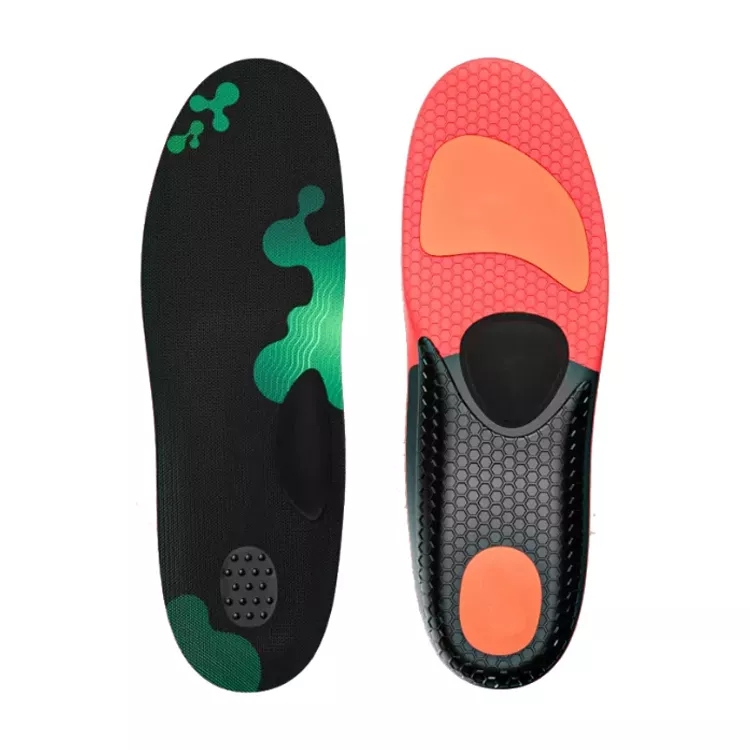
Porous PU (polyurethane) insoles use an open-cell foam or micro-channeled structure that allows air and moisture vapor to move through the material rather than only around it. Compared with classic dense PU, porous PU features interconnected cells that act as capillaries, transporting sweat away from the plantar surface and distributing it into deeper layers or into moisture-absorbing top fabrics. [cmpe360]
From an OEM perspective, porous PU is often combined with antimicrobial treatments and mesh or moisture-wicking topcloths to create a complete microclimate system, not just a cushioning layer. This system-level design becomes critical in humid environments where the shoe interior quickly approaches saturation. [aibang]
EVA (ethylene-vinyl acetate) is a lightweight, resilient foam widely used as midsole and insole material in sport and casual footwear. Perforated EVA insoles are standard EVA sheets that have been punched with ventilation holes to let air circulate and give sweat a path to escape from the foot-surface interface. [sohu]
Because EVA is naturally more closed-cell than many PU foams, perforations become the main route for moisture and air exchange rather than internal diffusion through the material. In mass-market products, perforated EVA is attractive due to its low density, low cost and relatively simple die-cutting / punching process in large-volume OEM production. [acf]
In tropical or humid climates, in-shoe humidity can remain very high even when the outer environment is ventilated. Sweat accumulates at three levels: [insolemaker]
- On the skin surface
- Inside the insole's top layer and foam structure
- In the air space between insole, sock and upper
Effective moisture-wicking insoles must therefore do three things at once: absorb or spread sweat away from hotspots, move moisture vapor out of the foam, and support air circulation with every step. [deryou.com]
Porous PU, especially open-cell variants, can absorb and redistribute sweat throughout the foam volume, lowering the local saturation at pressure points like the heel and forefoot. This capillary action creates a more uniform moisture field, so users feel less "wet spot" irritation even when overall moisture levels remain high. [cmpe360]
Because the cells are interconnected, pressure from walking acts like a pump: compression expels humid air and compression release draws in drier air from surrounding spaces. In practice, this makes porous PU more forgiving during long wear durations such as all-day work or long-distance walking in humid cities. [aibang]
Perforated EVA relies less on absorption and more on airflow and drainage through the punched holes. When the wearer walks, air can move vertically through the perforations, and sweat can drip or wick down into the lower layers or the shoe cavity, depending on the overall construction. [acf]
This delivers a fast "initial dry" feeling in moderate humidity or for users with lower sweat rates, because the vent holes quickly evacuate liquid away from the skin. However, in very humid environments with heavy sweating, these perforations can become saturated reservoirs, and their effectiveness depends heavily on sock material and midsole design to keep air actually flowing. [deryou.com]
From a practical OEM and user perspective, moisture-wicking performance can be broken into four dimensions: absorption capacity, drying speed, airflow, and consistency over time. [insolemaker]
Moisture & Comfort Performance Overview:
| Performance factor | Porous PU (open-cell / porous) | Perforated EVA (punched) |
|---|---|---|
| Sweat absorption & distribution | High, spread across foam volume (insolemaker) | Low–medium, mainly drains via holes (acf) |
| Breathability in high humidity | Stable due to micro-pumping effect (insolemaker) | Strong when holes are clear, drops when saturated (acf) |
| Drying speed after heavy sweat | Moderate, depends on cell size and topcloth (deryou.com) | Fast initial surface dry, slower deep dry if sweat accumulates below (acf) |
| Long-term moisture performance | More consistent if foam remains open-cell (insolemaker) | Can decline as EVA compacts and holes clog with debris (acf) |
For consistently humid markets, porous PU tends to deliver more predictable breathability across different users and use cases, especially when paired with moisture-wicking textiles. Perforated EVA can work very well in dry-to-moderate climates or for sport shoes with strong upper ventilation, where air exchange through the perforations is not restricted. [cmpe360]
Moisture is only part of the story; cushioning dynamics also affect perceived comfort in humid conditions because softened, sweat-soaked insoles can feel unstable. [deryou.com]
- Porous PU typically offers stable support and controlled rebound, making it suitable for work shoes, outdoor boots and basketball or court shoes where lateral stability matters. [cmpe360]
- EVA is lighter and softer initially but can compress and lose thickness more quickly, particularly under repetitive load, which can affect both moisture handling (less foam volume) and support. [acf]
In OEM projects targeting long wear in hot factories or warehouses, porous PU with zoned densities is often chosen to balance support, anti-fatigue and sweat management over many hours of standing. For lightweight running shoes or casual sneakers in less extreme humidity, perforated EVA remains a strong choice thanks to its low weight and cost. [aibang]
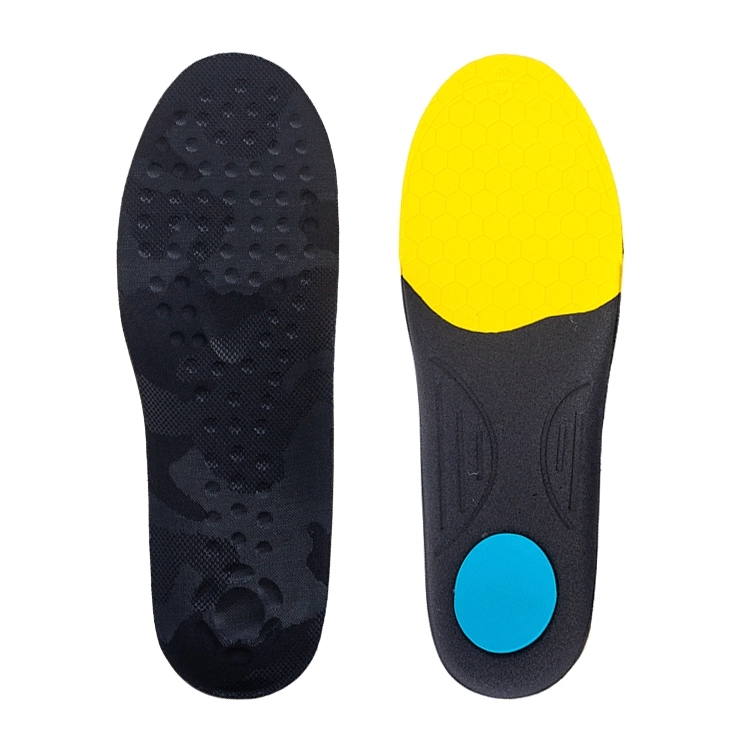
Open-cell or porous structures can be vulnerable to material breakdown if the chemistry is not optimized, especially under constant sweat, heat and microbial activity. EVA, on the other hand, is chemically stable but mechanically prone to compression set, especially in lower-density, low-cost formulations. [acf]
To combat odor and bacteria, both porous PU and EVA insoles increasingly incorporate:
- Antimicrobial additives in the foam
- Antibacterial or quick-dry top fabrics
- Designs that avoid permanent wet zones under the arch and forefoot
When engineered correctly, porous PU offers a better environment for long-term odor management because moisture is dispersed and not localized in a few saturated zones. Perforated EVA can also perform well, but odor risk increases if the holes trap sweat and are not matched with adequate airflow and drying time between wears. [insolemaker]
From a user-experience standpoint, care instructions can be the difference between positive and negative reviews in humid markets. [aibang]
- Porous PU: Hand washing with mild detergent and air drying in shade usually works well; users should avoid intense heat that can damage the foam structure. [deryou.com]
- Perforated EVA: Easier to rinse because the material absorbs less water, but the perforations can trap dirt; regular brushing or flushing of the holes helps maintain airflow. [cmpe360]
Clear, simple care guidance printed on packaging or product pages is essential to preserve moisture-wicking performance and prolong insole life. [aibang]
As an OEM/ODM insole manufacturer, we usually guide brand partners through material selection by mapping product requirements to manufacturing realities. [insolemaker]
Typical considerations:
- Target market climate (tropical, temperate, dry)
- Use case (work safety, running, outdoor, casual, diabetic care)
- Expected wearing duration per day
- Price point and volume
Porous PU requires precise foaming control, density management and sometimes multi-layer mold structures to ensure consistent pore distribution. Perforated EVA can be produced from standard EVA sheets with post-process punching, which is extremely scalable and cost-efficient for large-volume programs. [acf]
A material alone cannot solve moisture issues in very humid environments; system-level design is required. [insolemaker]
Effective strategies we see in successful products include:
1. Using porous PU in high-sweat zones (heel, forefoot) combined with stiffer support EVA in arch or midfoot areas. [deryou.com]
2. Matching perforated EVA with mesh uppers and vented midsoles to ensure the holes actually connect to an airflow path. [cmpe360]
3. Specifying moisture-wicking or bamboo-charcoal top fabrics that move sweat away from the skin before it reaches the foam. [deryou.com]
4. Adding micro-channels on the insole surface to direct sweat into porous areas or perforation fields. [insolemaker]
For humid markets in Southeast Asia, the Middle East or coastal regions, many brands now opt for hybrid constructions combining both porous PU and perforated EVA to fine-tune both weight and moisture management. [aibang]
Based on development work with international partners and current market trends in performance and work footwear, the following practical guidelines often lead to better user outcomes. [aibang]
Choose porous PU when:
- Target markets are consistently hot and humid
- Users wear shoes for 8–12 hours per day (e.g. factory, logistics, retail)
- Stability and anti-fatigue are as important as breathability
- The product needs more consistent moisture-wicking across different user profiles
Choose perforated EVA when:
- Weight and price are critical, such as entry-level or fast-fashion sneakers
- Uppers already have strong ventilation and quick-dry capabilities
- Users engage in shorter-duration activities or live in moderate climates
- Design calls for thin, flexible insoles with customizable perforation patterns
Working with overseas brands, we see that customer complaints in humid markets almost always link to "wet", "sticky" or "smelly" feeling rather than a specific foam name. Products that perform best usually pair a porous or perforated base with smart upper design and clear user education on drying and replacement cycles. [cmpe360]
In several recent work-boot projects for tropical climates, switching from simple perforated EVA to zoned porous PU in key pressure points significantly reduced moisture-related complaints without dramatic cost increases, especially at medium and premium price tiers. For a lightweight running series aimed at e-commerce channels, perforated EVA remained the preferred solution because weight and price were decisive, and the shoes already used highly breathable mesh uppers. [acf]
If you are specifying insoles for your next collection, use this simple checklist:
1. Define climate and user profile – high humidity, sweat rate, wearing hours per day. [insolemaker]
2. Map product category – work, sport, outdoor, casual, medical; each has different moisture and stability demands. [deryou.com]
3. Set performance priorities – rank moisture-wicking, weight, stability, and price.
4. Select core material – porous PU, perforated EVA, or hybrid, based on the above priorities. [acf]
5. Co-design upper and midsole – ensure ventilation paths align with insole pores or perforations and specify suitable top fabrics. [cmpe360]
As a dedicated OEM insole manufacturer in China, 3BU Technology collaborates closely with brand and private-label customers to prototype, test and scale insole solutions tailored to specific markets. We can help you: [aibang]
- Select between porous PU, perforated EVA or hybrid constructions based on your brief
- Optimize density, hardness and thickness for different shoe categories
- Integrate antimicrobial, deodorizing and moisture-wicking technologies
- Validate designs with wear trials and lab tests before mass production
If you plan to launch or upgrade footwear lines for humid markets, a short technical consultation can significantly reduce trial-and-error and speed up time to market. [insolemaker]
In real-world humid environments, porous PU generally offers more consistent moisture-wicking and comfort over long wear times, especially in work, outdoor and safety footwear categories. Perforated EVA remains a strong solution where weight, cost and upper ventilation are primary drivers, and where wearing duration or humidity levels are less extreme. [acf]
For brands and wholesalers, the smartest strategy is not to chase a "one material fits all" answer, but to match material choice to climate, use case and product positioning. By treating insoles as an integral part of your breathable-footwear system, you can deliver better user experiences, fewer returns and stronger differentiation in competitive markets. [aibang]
If you need to compare porous PU and perforated EVA for a specific project or market, share your target climate, user scenario and price range, and our engineering team can recommend a tested insole construction and sampling plan aligned with your brand strategy. [insolemaker]
Q1: Are porous PU insoles heavier than perforated EVA insoles?
A1: Yes, porous PU is typically denser than EVA, so insoles tend to be slightly heavier at the same thickness, though the difference can be reduced by optimizing foam density and design cut-outs. [deryou.com]
Q2: Will porous PU insoles feel too warm in tropical climates?
A2: When engineered with open-cell structures and paired with breathable top fabrics and uppers, porous PU can remain comfortable even in tropical conditions by distributing and releasing moisture more evenly. [cmpe360]
Q3: Do perforated EVA insoles lose cushioning faster in humid environments?
A3: EVA can experience compression set over time, especially in lower-density formulations and under heavy use, which may reduce cushioning and indirectly affect moisture management as foam thickness decreases. [sohu]
Q4: Can porous PU and perforated EVA be combined in one insole?
A4: Yes, hybrid constructions are increasingly used to combine the stable support and moisture dispersion of porous PU in key zones with the lightweight feel and flexible design options of perforated EVA. [deryou.com]
Q5: How often should insoles be replaced in humid markets?
A5: Replacement intervals vary by use, but for daily wear in hot, humid conditions, many brands recommend replacing insoles every 3–6 months to maintain cushioning, hygiene and moisture-wicking performance. [cmpe360]
1. 3BU Technology. "Open-Cell vs Closed-Cell EVA Inserts: Which Offers Better Moisture Management in Tropical Climates?" 2026. https://www.insolemaker.com/open-cell-vs-closed-cell-eva-inserts-which-offers-better-moisture-management-in-tropical-climates.html
2. ACF 林至科技. "EVA鞋垫全解析:从材料特性到选购指南." 2025. https://www.acf.cn/news/503.html
3. 德佑鞋墊. "鞋墊材質大解密:EVA、記憶泡棉、碳纖維哪個最好?." 2026. https://www.deryou.com.tw/blogs/insole/insole-material-guide
4. CMPE360. "2019年鞋材中底常用弹性体及发展趋势." https://www.cmpe360.com/p/100869
5. 艾邦智造. "一文读懂鞋中底的10种发泡材料." 2026. https://www.aibang.com/a/35104
6. 搜狐号. "OBC、TPU、EVA、POE等弹性体发泡鞋材详细解读." 2022. https://www.sohu.com/a/519368690_121123915


