
Views: 232 Author: 3BU Technology Publish Time: 2026-07-07 Origin: Site


Content Menu
● Understanding Rigid Arch Support in Cycling Insoles
>> Why Material Choice Matters
● Carbon Fiber Insoles: High-Performance Benchmark
>> Key Advantages of Carbon Fiber Arch Support
>> Limitations of Carbon Fiber
● Fiberglass Insoles: Balanced Performance Alternative
>> Key Advantages of Fiberglass Arch Support
● Carbon Fiber vs Fiberglass: Direct Comparison
>> Performance and Engineering Differences
● Expert Insight: Which Material Wins in Real Cycling Scenarios?
● OEM Manufacturing Perspective: Choosing the Right Material
>> Manufacturing Complexity Comparison
● New Insight: Hybrid Material Innovation in Cycling Insoles
>> Why Hybrid Insoles Are Gaining Popularity
● Practical Guide: How to Choose the Right Insole Material
● Case Study: OEM Strategy for a European Cycling Brand
>> Key Takeaway
● Sustainability Considerations
>> Carbon Fiber
>> Fiberglass
● Why Partner with a Professional OEM Insole Manufacturer
● FAQ
>> 1. Is carbon fiber always better than fiberglass for cycling insoles?
>> 2. Are carbon fiber insoles worth the higher cost?
>> 3. Can fiberglass insoles provide enough arch support?
>> 4. What is a hybrid insole?
>> 5. Which material lasts longer?
In the world of professional cycling performance and biomechanical optimization, rigid arch support is no longer optional—it is a competitive necessity. Two materials dominate this space: carbon fiber and fiberglass. Both are widely used in high-performance cycling insoles, particularly for brands seeking OEM insole manufacturing solutions that balance stiffness, durability, and cost.
From my experience working closely with global cycling brands and orthopedic product developers, the debate of Carbon Fiber vs Fiberglass for rigid arch support is not just about material preference—it's about performance outcomes, rider biomechanics, and manufacturing scalability.
This guide breaks down both materials from engineering, performance, and commercial perspectives, helping brands, wholesalers, and product managers make informed decisions.
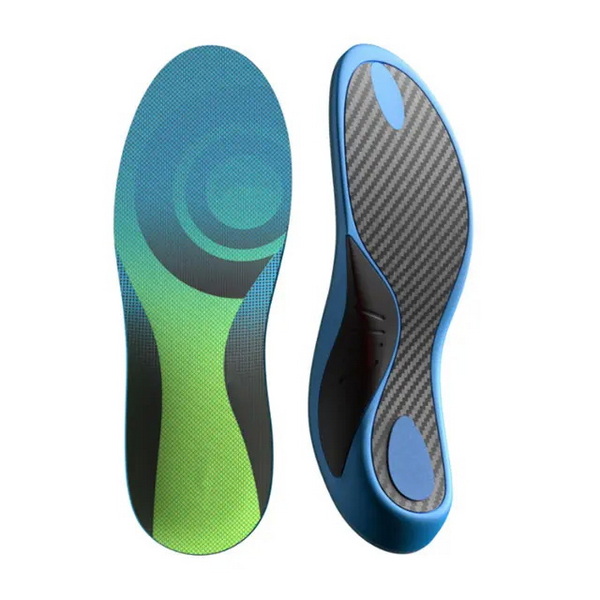
Rigid arch support is critical in cycling because it:
- Stabilizes the foot under high torque loads
- Improves power transfer efficiency
- Reduces fatigue during long-distance rides
- Prevents overpronation and injury risks
Unlike running or walking, cycling involves a fixed foot position, meaning any inefficiency in support translates directly into energy loss and discomfort.
The material used in the arch support layer determines:
- Stiffness level (flex vs rigidity)
- Weight of the insole
- Durability under repetitive stress
- Cost and manufacturability
This is where carbon fiber and fiberglass diverge significantly.
Carbon fiber is a composite material made from carbon filaments woven into a matrix, typically reinforced with resin. It is known for:
- Exceptional stiffness-to-weight ratio
- High tensile strength
- Minimal deformation under load
- Maximum Power Transfer
- Carbon fiber minimizes energy loss by preventing flex, ensuring that every watt generated translates into forward motion.
- Ultra-Lightweight
- Ideal for competitive cyclists where every gram matters.
- Precision Fit and Responsiveness
- Offers a snappy, responsive feel, favored by elite riders.
- Long-Term Structural Integrity
- Maintains shape even after thousands of cycling hours.
- Higher Cost
- Raw material and processing costs are significantly higher.
- Less Forgiving
- May feel too rigid for recreational riders or those with sensitive feet.
- Complex Manufacturing
- Requires advanced tooling and quality control, impacting OEM scalability.
Fiberglass consists of woven glass fibers embedded in resin, offering a balance between flexibility and strength.
- Moderate Stiffness
- Provides adequate support without excessive rigidity, making it more comfortable for a wider user base.
- Cost-Effective
- Ideal for mid-range cycling brands and large-volume OEM production.
- Good Durability
- Resistant to fatigue and suitable for daily cycling use.
- Easier Manufacturing
- Allows for scalable production with consistent quality.
- Lower Stiffness Compared to Carbon Fiber
- Slight energy loss during high-intensity cycling.
- Heavier
- Adds marginal weight compared to carbon fiber alternatives.
- Less Premium Perception
- Often positioned below carbon fiber in high-end product lines.
- Stiffness
- Carbon Fiber: Extremely rigid, ideal for racing.
- Fiberglass: Moderately rigid, better for endurance and comfort.
- Weight
- Carbon Fiber: Ultra-lightweight.
- Fiberglass: Slightly heavier.
- Durability
- Carbon Fiber: Excellent long-term shape retention.
- Fiberglass: Good, but may degrade faster under extreme loads.
- Comfort
- Carbon Fiber: Less forgiving.
- Fiberglass: More adaptable to different foot shapes.
- Cost
- Carbon Fiber: Premium.
- Fiberglass: Cost-efficient.
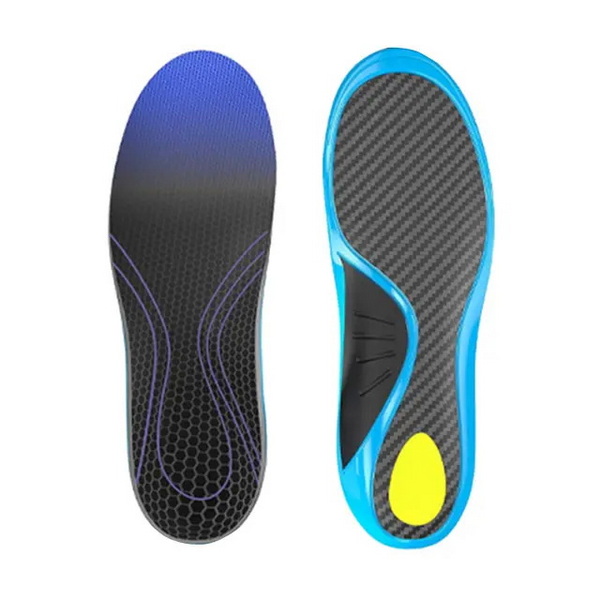
From a biomechanics and product development perspective, there is no universal winner.
- Targeting professional or competitive cyclists
- Prioritizing maximum power transfer
- Positioning product as premium/high-performance
- Weight reduction is critical
- Serving recreational or endurance riders
- Balancing comfort and performance
- Producing at scale with controlled cost
- Targeting mid-market segments
Industry observation: Many top brands now offer dual product lines, using carbon fiber for elite models and fiberglass for mass-market SKUs.
As a leading OEM insole manufacturer (3BU Technology), we've observed key decision patterns among global clients.
1. Target Customer Profile
2. Retail Price Positioning
3. Volume Requirements
4. Customization Needs (arch height, foot type)
5. Regulatory and durability standards
- Carbon Fiber:
- Requires precision layering and curing processes
- Higher rejection rates if not properly controlled
- Fiberglass:
- More forgiving production process
- Easier to maintain consistency in bulk orders
One emerging trend is the hybridization of carbon fiber and fiberglass.
- Combine carbon fiber stiffness with fiberglass flexibility
- Optimize cost-performance ratio
- Provide targeted reinforcement zones
- Carbon fiber in arch and heel zones
- Fiberglass in forefoot for flexibility
This approach delivers:
- Improved comfort without sacrificing performance
- Reduced production cost vs full carbon models
For brands and buyers, here is a simplified decision framework:
1. Define your target cyclist profile
2. Determine price positioning
3. Evaluate performance requirements
4. Choose material:
- Carbon fiber → performance-first
- Fiberglass → balance-focused
5. Consider hybrid solutions for differentiation
A European brand approached us with two product goals:
- High-end racing insole
- Mid-range endurance insole
- Carbon Fiber Model
- Target: Competitive cyclists
- Result: Increased perceived value and premium pricing
- Fiberglass Model
- Target: Amateur riders
- Result: 40% higher sales volume due to affordability
A tiered material strategy allows brands to:
- Capture multiple market segments
- Optimize production cost
- Strengthen brand positioning
Sustainability is becoming a key factor in material selection.
- Difficult to recycle
- High energy consumption during production
- Slightly better recyclability
- Lower environmental footprint in manufacturing
Manufacturers are exploring:
- Recycled composites
- Bio-based resins
- Eco-friendly production processes
Choosing the right material is only part of the equation. Execution matters.
At 3BU Technology, we provide:
- Customized arch support design
- Material optimization (carbon fiber, fiberglass, hybrid)
- Biomechanical testing support
- Scalable OEM/ODM production
Our goal is to help brands create performance-driven, market-ready insole solutions.
If you are developing cycling insoles or performance footwear products, the choice between carbon fiber and fiberglass can define your product success.
Contact 3BU Technology today to:
- Explore custom insole solutions
- Request material samples
- Get expert guidance on OEM production strategies
No. Carbon fiber offers superior stiffness and performance, but fiberglass provides better comfort and cost efficiency for many users.
For professional or competitive cyclists, yes. For casual riders, fiberglass may provide better value.
Yes. High-quality fiberglass insoles can deliver sufficient rigidity for most cycling applications.
A hybrid insole combines materials like carbon fiber and fiberglass to balance stiffness, comfort, and cost.
Carbon fiber generally has better long-term structural integrity, especially under high stress.
1. ScienceDirect – Carbon Fiber (Materials Science topic overview) https://www.sciencedirect.com/topics/materials-science/carbon-fiber
2. CompositesWorld – Carbon Fiber vs Glass Fiber https://www.compositesworld.com/articles/carbon-fiber-vs-glass-fiber
3. PMC (NCBI) – Research article on carbon fiber related topic https://www.ncbi.nlm.nih.gov/pmc/articles/PMC6266649/
4. ResearchGate – Foot Biomechanics in Cycling https://www.researchgate.net/publication/Foot_Biomechanics_in_Cycling
5. Grand View Research – Composite Materials Market https://www.grandviewresearch.com/industry-analysis/composite-materials-market


