
Views: 232 Author: 3BU Technology Publish Time: 2026-07-12 Origin: Site


Content Menu
● Why Custom Insoles Matter For Athletes
● Key Sports Injuries Linked To Poor Foot Mechanics
● Overpronation, Supination And Alignment Control
● Reducing Muscle Fatigue And Speeding Recovery
● Shock Absorption In High-Intensity Sports
● Matching Insoles To Different Sports
>> Running
>> Soccer
● Performance Benefits Beyond Injury Prevention
● Replacement Cycles: How Often Should Insoles Be Updated?
● OEM Insight: How Leading Manufacturers Support Athlete Brands
● Practical Steps For Athletes To Choose Custom Insoles
● Example Comparison: Sport-Specific Insole Priorities
● Call To Action: Choosing The Right Custom Insoles
● FAQs
Custom sports insoles are one of the most underused yet powerful tools for preventing sports injuries and unlocking peak performance, especially for athletes who train and compete regularly. When combined with modern OEM manufacturing capabilities from expert insole factories in China, brands and distributors can deliver truly customized support at scale for runners, ball-sport athletes, and high-impact training. [centori]
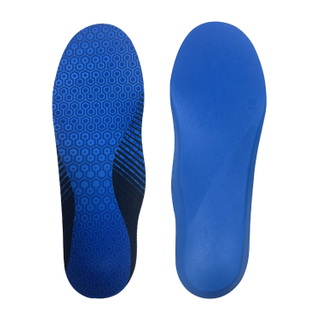
Athletes' feet absorb massive repetitive stress from sprinting, jumping, and sudden directional changes, which over time can lead to chronic pain and overuse injuries. Custom sports insoles are designed to redistribute pressure, stabilize foot mechanics, and improve lower-limb alignment so the entire kinetic chain—from feet to knees, hips, and lower back—functions more efficiently. [nata]
From an industry perspective, leading insole manufacturers and sports medicine experts increasingly view insoles as core injury-prevention equipment, not simple comfort accessories, because they address biomechanical risk factors before they escalate into serious conditions. [centori]
Several common sports injuries originate from overpronation, supination, and inadequate shock absorption in the foot. When these mechanical issues are not corrected, microtrauma accumulates with each training session or game, eventually presenting as pain or performance decline. [physio-pedia]
Typical injury patterns seen in clinics and among performance coaches include: [nata]
- Medial tibial stress syndrome (shin splints) related to excessive pronation.
- Achilles tendonitis caused by unstable heel loading and poor rearfoot control.
- Plantar fasciitis associated with collapsed arches and insufficient heel cushioning.
- Patellofemoral knee pain driven by misaligned lower-limb biomechanics.
For footwear brands and OEM partners, highlighting these real-world injury scenarios helps connect insoles to outcomes athletes care about: staying healthy, staying on the field, and extending their competitive lifespan. [wiredmedia.co]
Overpronation occurs when the foot rolls inward excessively, while supination describes excessive outward rolling during stance and push-off. Both patterns distort lower-limb alignment, increasing stress on ankles, knees, and hips and magnifying impact forces during high-intensity movements. [physio-pedia]
Custom sports insoles use targeted arch profiles, heel cups, and posting to: [centori]
- Support the medial arch to reduce excessive pronation.
- Stabilize the heel and midfoot to control supination.
- Promote more neutral alignment so load is distributed evenly across the foot.
When athletes train and compete with more neutral mechanics, the risk of overload injuries declines, and energy transfer from ground to muscle becomes more efficient. [nata]
Muscle fatigue is one of the hidden drivers of sports injuries, especially in multi-game tournaments or high-volume training blocks. As fatigue sets in, athletes' movement quality declines: posture deteriorates, landing mechanics become uncontrolled, and compensations appear in the knees and hips. [physio-pedia]
Well-designed custom insoles help in several ways: [centori]
- Additional cushioning dampens repetitive impact forces, particularly in the heel and forefoot.
- Supportive structures reduce micro-instability, so stabilizing muscles work less to keep joints aligned.
- Improved load distribution prevents localized hotspots that accelerate fatigue and inflammation.
Sports medicine practitioners also use insoles as part of rehabilitation protocols, because they keep the foot and ankle better aligned during the healing process and early return to play. [nata]
Running, basketball, tennis, and soccer all involve frequent high-impact landings, explosive sprints, and abrupt stops, which place substantial stress on the heel, midfoot, and forefoot. Over a season, these forces can contribute to stress fractures, plantar fasciitis, and joint irritation if not properly managed. [physio-pedia]
Custom sports insoles engineered for impact control typically feature: [centori]
- Multi-density foam or elastomer layers to absorb and dissipate shock.
- Structured heel cups to stabilize the calcaneus under load.
- Contoured midfoot designs that support the arch during compression.
From a product development viewpoint, combining biomechanical design with performance materials is now a standard expectation in premium athlete insoles sold through brands and distributors. [wiredmedia.co]
Choosing the right insole design for each sport is critical, because movement patterns and injury risks vary between activities. Below is an overview of core design priorities for typical athlete segments. [linkedin]
Distance runners and sprinters experience repetitive heel-to-toe impacts on often unforgiving surfaces. Effective running insoles should provide: [physio-pedia]
- Arch support to manage overpronation or supination.
- Heel and forefoot cushioning to attenuate impact shock.
- Breathable, moisture-wicking materials to reduce friction and overheating.
Court sports require rapid lateral cuts, vertical jumps, and abrupt decelerations. Custom insoles for these athletes focus on: [nata]
- Strong lateral support to reduce ankle rolling during side-to-side movements.
- Resilient cushioning for repeated jumps and hard landings.
- Durable construction to withstand constant high-load pivots and stops.
Soccer players combine endurance running with explosive sprints, quick turns, and often play on variable pitches. Effective soccer insoles emphasize: [centori]
- Lightweight design that does not compromise boot feel or speed.
- Heel support to lower the risk of stress fractures and chronic heel pain.
- Shock absorption that protects both feet and lower back during intense match play.
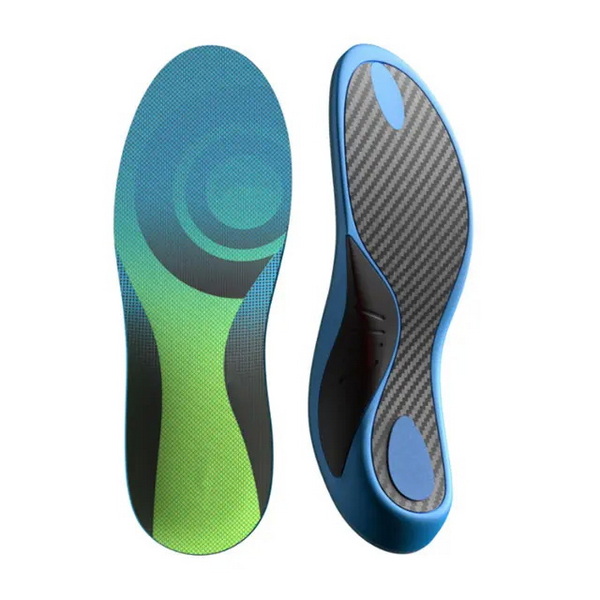
Athletes and coaches increasingly recognize that performance and injury prevention are two sides of the same biomechanical coin. By improving alignment and load distribution, custom insoles often deliver measurable performance gains alongside risk reduction. [nata]
Key benefits frequently reported by users and practitioners include: [centori]
- Better balance and stability during cutting and landing.
- More efficient stride mechanics, enabling smoother acceleration.
- Reduced discomfort, allowing longer and higher-quality training sessions.
From a competitive SEO and content standpoint, articulating these performance advantages clearly helps your article stand out from basic "comfort-only" insole content and aligns with athletes' aspirational goals. [wiredmedia.co]
Like shoes and other sports equipment, custom insoles gradually lose their structural integrity and cushioning effectiveness with use. Most athletes should consider replacing their insoles every 12–18 months, depending on training load, body weight, and playing surface. [blog.saleslayer]
Useful indicators that an upgrade is due include: [blog.saleslayer]
- Visible compression or flattening in high-impact zones.
- Loss of cushioning, noticed as new or returning foot pain.
- Changes in posture or foot mechanics compared to earlier seasons.
Educating users about replacement timelines not only improves health outcomes but also supports sustainable product lifecycle planning for brands and OEM manufacturers. [blog.thomasnet]
From the OEM side, advanced insole factories in China now collaborate closely with international sports brands, wholesalers, and footwear producers to deliver sport-specific custom insoles at scale. Partners look for manufacturers that combine engineering expertise with flexible production models. [getpassionfruit]
Typical OEM capabilities valued by global brands include: [linkedin]
- Biomechanics-driven design support, working with sports medicine data and athlete feedback.
- Multi-sport product lines (running, court sports, soccer, training) based on modular tooling and materials.
- Strict quality control and material testing, ensuring consistency across large batches.
- Responsive sampling and customization, allowing brands to tailor arch profiles, hardness levels, and top fabrics.
For B2B buyers, choosing the right OEM partner can determine whether their sports insole range becomes a true performance category or remains a generic accessory. [wiredmedia.co]
To translate expert knowledge into actionable steps, athletes and coaches need a simple decision process for selecting insoles. A practical approach might look like this: [outerboxdesign]
1. Identify your main sport and training surface (track, road, hardwood, turf).
2. Assess your foot mechanics—via professional gait analysis or simple video of running and jumping.
3. List current or past injuries (shins, heel, knee, lower back).
4. Choose insoles built specifically for your sport, prioritizing stability if you roll in/out and cushioning if impact pain is prominent.
5. Test fit inside your current footwear, ensuring no slipping, crowding, or altered boot feel.
6. Monitor performance and comfort for 2–4 weeks, adjusting model or stiffness if needed.
This step-by-step approach increases adherence and helps athletes feel in control of their equipment choices, aligning well with modern UX expectations in sports e‑commerce. [influenceflow]
Below is a simple conceptual comparison of design priorities across three major athlete groups. [wiredmedia.co]
| Athlete type | Primary need | Insole focus areas |
|---|---|---|
| Runner | Repetitive impact control (centori) | Arch support, heel/forefoot cushioning, breathability (centori) |
| Basketball/Tennis player | Lateral stability and jump landings (centori) | Lateral support, resilient cushioning, durability (centori) |
| Soccer player | Lightweight agility over long durations (centori) | Lightweight build, heel support, shock absorption (centori) |
Such structured comparisons help athletes quickly identify which product family is most aligned with their movements and risk profile. [influenceflow]
If you're serious about reducing sports injury risk and maximizing performance, custom insoles should be part of your core equipment strategy, alongside footwear, strength training, and recovery routines. Whether you're a professional athlete, weekend competitor, or coach managing a team, investing in insoles tuned to your sport and foot mechanics can deliver outsized benefits over an entire season. [nata]
Work with trusted sports insole brands and OEM partners who understand both biomechanics and manufacturing, and take the time to select models matched to your sport, training volume, and previous injury history. [linkedin]
Q1: Are custom sports insoles only necessary for athletes with existing foot pain?
Not at all—many sports medicine experts recommend insoles preventively for athletes with high training volume or known biomechanical risk factors, even before pain appears. [centori]
Q2: Will custom insoles make my shoes feel tighter or uncomfortable?
Properly designed insoles are created to integrate seamlessly into performance footwear; when sized correctly, they should improve stability and comfort rather than crowding the foot. [blog.saleslayer]
Q3: Can insoles help with knee and lower back pain from sports?
Yes, by improving foot and ankle alignment, insoles can reduce abnormal load transfer up the kinetic chain, which often alleviates knee and lower back stress in active individuals. [nata]
Q4: How do I know if I need more arch support or more cushioning?
Athletes with clear overpronation or supination often benefit most from structured arch support, while those with impact-related heel or forefoot pain may prioritize enhanced cushioning; many sport-specific insoles combine both. [physio-pedia]
Q5: Are OEM-manufactured insoles as reliable as branded sports insoles?
Leading OEM insole manufacturers supplying international brands operate strict quality processes and testing, so their products can match or exceed retail-branded insoles when designed to the same specifications. [linkedin]
1. ALINE Insoles – "Preventing Sports Injuries with Custom Insoles For Athletes." <https://alineinsoles.com/blogs/news/preventing-sports-injuries-with-custom-insoles-for-athletes> [centori]
2. NATA – Inter-Association Consensus Statement on Best Practices for Sports Medicine Management. <https://www.nata.org/sites/default/files/inter-association_consensus_statement_on_best_practices_for_sports_medicine_management.pdf> [nata]
3. Centori – "How Insoles.com put their best foot forward on Google." <https://www.centori.io/customer-stories/how-insoles-com-put-their-best-foot-forward-on-google> [centori]
4. Wired Media – "Utilising Your Footwear Brands Blog for SEO: Content Ideas and Strategy." <https://www.wiredmedia.co.uk/2025/03/02/utilising-your-footwear-brands-blog-for-seo-content-ideas-and-strategy/> [wiredmedia.co]
5. InfluenceFlow – "How to Write SEO-Optimized Blog Posts: The Complete 2026 Guide." <https://influenceflow.io/resources/how-to-write-seo-optimized-blog-posts-the-complete-2026-guide/> [influenceflow]
6. LinkedIn – "How to Build a Profitable SEO Strategy for Your E-commerce Site (Compression sleeves & insoles)." <https://www.linkedin.com/posts/raushan-raj-501771237_your-seo-strategy-shouldnt-just-drive-activity-7374795319919706113-caaI> [linkedin]
7. Siteimprove – "A creator's guide to SEO content strategy." <https://www.siteimprove.com/blog/seo-content-strategies/> [siteimprove]
8. Thomasnet – "13 Ways To Improve Your Manufacturing Blog." <https://blog.thomasnet.com/ways-to-improve-manufacturing-blog> [blog.thomasnet]
9. Sales Layer – "How to Optimize Your Fashion Product Pages." <https://blog.saleslayer.com/optimize-fashion-product-pages> [blog.saleslayer]


