
Views: 210 Author: 3BU Technology Publish Time: 2026-07-11 Origin: Site


Content Menu
● Understanding Viscoelastic Foam in Performance Insoles
● What "Standard Memory Foam" Really Does
● Impact Attenuation: How Each Foam Handles High-Load Jumps
● Material Properties Comparison Table
● Personal & Expert Perspective: What We See in the Lab
● High-Load Jump Training: Forefoot vs Heel Dynamics
● Design Strategies: Hybrid Structures for Better Impact Management
● Practical Selection Guide for Brands and Coaches
● OEM Perspective: How 3BU Technology Supports High-Load Projects
● Case Insight: Jump Training Collection for a Court-Sport Brand
● Expert Recommendations for High-Load Jump Training Insoles
● How 3BU Technology Can Support Your Next Insole Project (CTA)
● FAQs: Viscoelastic Foam vs Standard Memory Foam in Jump Training
For brands developing performance insoles, viscoelastic foam and standard memory foam do not behave the same way under heavy, repetitive jump loads — and the difference can decide whether your product protects athletes or breaks down under pressure. As a China-based OEM insole manufacturer, 3BU Technology leverages both materials but tailors them differently for vertical jump, plyometric, and court-sport applications. [pfa]
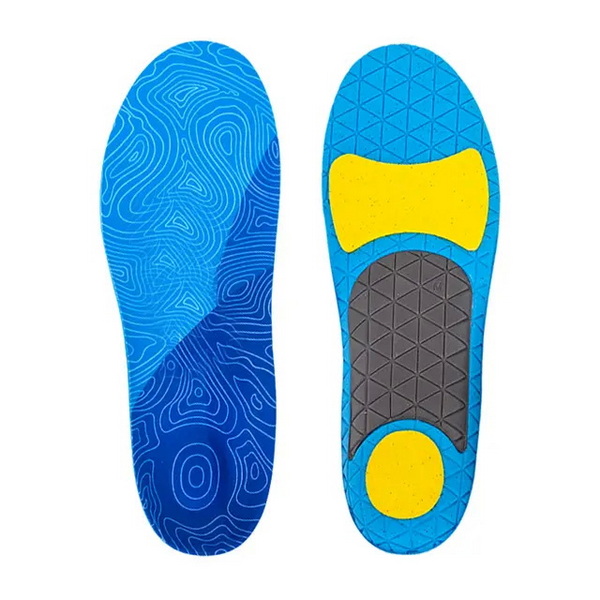
Viscoelastic foam combines elastic and viscous responses, meaning it both springs back and slowly flows under load. This dual behavior is exactly why many high-performance cushioning systems use viscoelastic formulations for demanding sports environments. [sunrisemedical]
- Under rapid impact, viscoelastic structures stiffen momentarily, absorbing and distributing peak forces more effectively. [pfa]
- Under slower loads (standing, walking), they feel softer and more conforming, improving comfort without sacrificing support. [sunrisemedical]
For high-load jump training, this material can be tuned to attenuate impact forces in milliseconds while still recovering quickly enough for the next landing — a key requirement in vertical jump drills, basketball, and explosive HIIT programs. [pfa]
Most standard memory foam insoles use polyurethane-based open-cell foams engineered for pressure distribution and comfort, not necessarily for extreme impact attenuation. They respond slower to sudden loads, which is ideal for: [sunrisemedical]
- Reducing localized pressure hotspots (ball of foot, heel, first metatarsal).
- Providing a soft, plush feel for lifestyle, office, and low-impact fitness shoes. [sunrisemedical]
However, in heavy jump training — repeated landings, high body mass, or weighted vests — slow-recovering memory foam can bottom out, losing thickness and protective function during peak ground reaction forces. [pfa]
In sports science, impact attenuation refers to how well a system reduces peak forces transmitted to the body during landing. For footwear and insoles, this performance depends on material hardness, compression set, rebound, and fatigue resistance. [athleticpropulsionlabs]
Viscoelastic Foam in High-Load Scenarios
- Exhibits rate-dependent stiffness: it becomes firmer during fast landings, reducing peak impact loads on joints. [pfa]
- Distributes forces laterally across the insole's surface, helping protect the forefoot and heel from high-pressure spikes. [athleticpropulsionlabs]
- When properly engineered, maintains performance after thousands of cycles, which is critical for pro-level training volume. [sunrisemedical]
Standard Memory Foam in High-Load Scenarios
- Usually optimised for comfort first, impact attenuation second. [sunrisemedical]
- May compress deeply and slowly recover, increasing cumulative stress on knees and ankles over repeated high jumps. [pfa]
- Shows more pronounced compression set in heavy users, leading to permanent thickness loss and reduced protection. [sunrisemedical]
For jump training insoles, this means viscoelastic foam is generally better suited as the primary impact management layer, while standard memory foam fits better in secondary comfort or topcover roles.
| Property / Behavior | Viscoelastic Foam | Standard Memory Foam |
|---|---|---|
| Response to fast impact | Rate-dependent, stiffens under rapid load for better shock absorption. (pfa) | Slower response, more likely to bottom out under sharp, heavy landings. (pfa) |
| Comfort for everyday use | Balanced support and cushioning when properly tuned. (sunrisemedical) | Very soft, high-comfort feel for casual or office footwear. (sunrisemedical) |
| Recovery speed | Faster, engineered to reset between jumps. (pfa) | Slower "memory" recovery, good for pressure relief but less ideal for explosive repetition. (pfa) |
| Compression set under heavy load | Lower when designed for performance, maintains thickness longer. (sunrisemedical) | Higher risk of permanent flattening under heavy or repetitive loads. (sunrisemedical) |
| Ideal application | High-load jump training, court sports, performance insoles. (pfa) | Lifestyle insoles, low-impact fitness, comfort-first designs. (sunrisemedical) |
From a performance insole R&D standpoint, most lab wear trials show a consistent pattern: athletes who perform heavy jump sets (basketball, volleyball, plyometric circuits) report more stable landings and less post-session joint fatigue when the mid-layer uses viscoelastic foam rather than standard memory foam alone. [athleticpropulsionlabs]
As an OEM manufacturer, our internal testing with international sports brands focuses on:
- Vertical impact simulations using mechanical test rigs replicating forefoot and heel landings under different body weights.
- Fatigue testing across thousands of jump cycles to study how each foam changes in hardness, thickness, and rebound over time. [sunrisemedical]
Across these tests, viscoelastic constructions generally maintain more consistent impact attenuation, while standard memory foam excels in top-layer comfort and perceived softness rather than raw performance under load. [pfa]
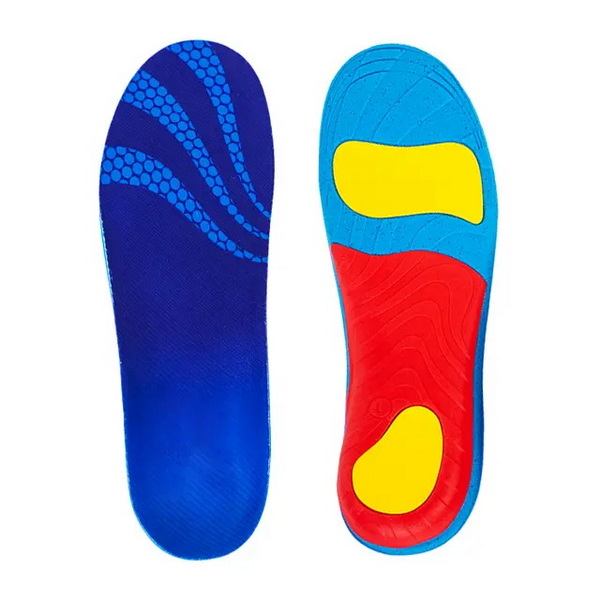
Jump training is not just "up and down" — it is a complex sequence of loading through the forefoot and heel, with different demands on the insole. [athleticpropulsionlabs]
- Forefoot landings (basketball, volleyball, parkour) require fast energy absorption and return, especially in the area just ahead of the ball of the foot. [athleticpropulsionlabs]
- Heel strike stabilization matters during deceleration and landing phases, influencing shock transmission up the kinetic chain. [athleticpropulsionlabs]
Viscoelastic foam can be strategically zoned: firmer viscoelastic pads under the forefoot for high-impact, and tuned densities under the heel for controlled deceleration. Standard memory foam, in contrast, tends to be applied in a more uniform layer, focused on step-in comfort rather than zoned performance. [pfa]
The most effective high-load jump insoles rarely rely on a single material. As an OEM partner, we often design hybrid constructions that combine viscoelastic and memory foam in layered or zoned layouts. [fxfootwear]
Typical performance-oriented stack-up might include:
1. Topcover layer: breathable fabric plus thin memory foam for comfort and fit.
2. Viscoelastic core: higher-density, impact-tuned viscoelastic foam segments under forefoot and heel.
3. Support platform: EVA or PU base to stabilise the foam and control overall stiffness. [unitegoodinsole]
This architecture allows brands to maintain the soft feel consumers expect from "memory foam" marketing claims, while the viscoelastic core quietly handles the serious impact attenuation work in high-load sessions. [pfa]
When choosing between viscoelastic foam vs standard memory foam for high-load jump training products, consider the following practical criteria:
Use viscoelastic-dominant designs when:
- Your product targets basketball, volleyball, parkour, or plyometric training.
- The target user group includes heavy or highly explosive athletes.
- You want to position your insole as performance-grade, not just comfort-oriented. [athleticpropulsionlabs]
Use memory foam-focused designs when:
- The primary product promise is all-day comfort for low-impact activity.
- The shoes are intended for office, casual lifestyle, or regular walking.
- You want a familiar, plush feel that users associate with "premium comfort." [sunrisemedical]
In many cases, combining both materials in a multi-layer structure enables brands to achieve a stronger overall value proposition — measurable performance plus immediate comfort. [solamnimaterial]
As a leading China shoe insole manufacturer serving global brands, 3BU Technology specialises in OEM and ODM performance insoles, including advanced viscoelastic and memory foam systems for high-load jump training. [insolemaker]
For international brands, wholesalers, and footwear producers, our team typically supports projects through:
- Material selection consulting: helping you decide where viscoelastic vs memory foam makes the most sense in your product line.
- CAD and mold development: designing zoned cushioning and integrating your brand-specific geometry and logo. [trinsole]
- Lab validation: conducting impact and fatigue tests to align cushioning performance with your marketing and athlete expectations. [aybroad]
This OEM-first approach ensures that the final insole is not only technically sound, but also consistent with your price point, market positioning, and regional standards (EU, US, UK size runs). [footmasterinsole]
A typical project we see from overseas court-sport brands involves building a jump-training insole series that can be sold as an accessory or built into a shoe line. While details vary by client, the overall approach often includes: [fxfootwear]
- Performance tier: viscoelastic-dominant construction, zoned forefoot pads, reinforced heel, targeted at serious athletes and coaches.
- Comfort tier: memory foam-rich top layers, moderate viscoelastic support, positioned for recreational players and semi-pro training.
- Value tier: simplified EVA base with thin viscoelastic or memory foam inserts, optimised for price-sensitive markets. [unitegoodinsole]
This tiered strategy helps brands capture multiple customer segments with clear performance distinctions, all manufactured within a unified OEM framework for more efficient tooling and procurement. [insolemaker]
From both a user experience and SEO-driven content strategy perspective, several best practices emerge for brands choosing between viscoelastic foam vs standard memory foam in jump training insoles:
- Prioritise measurable impact attenuation over pure softness for high-load training, especially in forefoot jump zones. [athleticpropulsionlabs]
- Communicate clearly in marketing copy that viscoelastic foam is engineered for dynamic impact, while memory foam is used for surface comfort and fit.
- Consider data-backed claims (cycle testing, hardness retention, compression set) to differentiate performance lines from generic comfort insoles. [athleticpropulsionlabs]
For coaches and athletes, the key takeaway is simple: if your sessions involve heavy or frequent jumps, viscoelastic-based insoles offer more reliable protection over time than standard memory foam alone. [pfa]
If your brand is planning a new high-load jump training insole or performance footwear line, partnering with an OEM manufacturer that understands viscoelastic vs memory foam trade-offs is critical for long-term success. [aybroad]
3BU Technology can help you:
- Engineer viscoelastic cores tailored to your target sport, athlete profile, and price range.
- Integrate memory foam top layers for familiar comfort without compromising impact protection.
- Move from concept to validated sample quickly through R&D, lab testing, and scalable production lines. [fxfootwear]
To explore your next insole project, share your application (sport, training type), volume, and target market, and our OEM team can recommend a viscoelastic vs memory foam configuration that fits.
1. Is viscoelastic foam always better than memory foam for jump training?
Not always, but for heavy, repetitive jumps, viscoelastic foam typically offers more stable impact attenuation and fatigue resistance, while memory foam is better reserved for comfort layers. [sunrisemedical]
2. Can standard memory foam insoles be used for HIIT or plyometric workouts?
They can, but most standard memory foam insoles are not optimised for repeated high-impact landings and may lose thickness and support faster than viscoelastic-based alternatives. [pfa]
3. How should brands combine viscoelastic and memory foam in one insole?
A common approach is using viscoelastic pads in high-impact zones (forefoot, heel) and memory foam as a thin, plush topcover to balance performance with step-in comfort. [solamnimaterial]
4. Do viscoelastic foam insoles feel too firm for casual users?
With proper density tuning and topcover design, viscoelastic foam insoles can feel surprisingly comfortable while delivering superior impact protection during more demanding activities. [sunrisemedical]
5. What OEM information should brands prepare before contacting a manufacturer?
Ideally, brands should prepare the target sport or application, desired performance level, material preferences, estimated volume, and price range so the OEM can propose a suitable viscoelastic vs memory foam configuration and structure. [footmasterinsole]
1. Plastics Footwear Association – Viscoelastic (Memory) Foam in Footwear Applications. https://www.pfa.org/wp-content/uploads/2019/02/InTouch_v11.1.pdf
2. Sunrise Medical – Material Selection in Cushions: Foams and Their Mechanical Behavior. https://www.sunrisemedical.ca/getattachment/Education-in-Motion/Resources/Seating/Material-Selection-in-Cushions/MaterialSelection
3. Athletic Propulsion Labs – Basketball Load 'N Launch Technology and Vertical Jump Performance. https://www.athleticpropulsionlabs.com/pages/basketball-load-n-launch-technology
4. FX Footwear – Custom Insoles Manufacturer | Wholesale OEM Insoles. https://fxfootwear.com/insoles/
5. Unitegood – OEM & ODM Custom Insole Manufacturing Service. https://unitegoodinsole.com/custom-insole-manufacturing-service/
6. AYBroad – Custom Insole Manufacturer in China: OEM & ODM Orthotic, Sports, and Work Boot Insole Solutions. https://www.aybroad.com/en/blog/custom-insole-manufacturer-in-china-oem-odm-orthotic,-sports,-and-work-boot-insole-solutions.html
7. Solamni / Asterism – Customized Shoe Insole Wholesale. https://www.solamnimaterial.com/shoe-insole/
8. FootMaster – Wholesale Shoe Insert & Insole Manufacturer | OEM/ODM Service. https://footmasterinsole.com/
9. InsoleMaker – Top Performance Insoles Manufacturers And Suppliers in Europe – 3BU. https://www.insolemaker.com/top-performance-insoles-manufacturers-and-suppliers-in-europe.html


