
Views: 217 Author: 3BU Technology Publish Time: 2026-07-04 Origin: Site


Content Menu
● Understanding Breathability in Modern Insoles
● Material Fundamentals: Perforated EVA vs Porous PU
>> Core Properties of EVA in Breathable Insoles
>> Core Properties of PU in Breathable Insoles
● How Airflow Testing is Conducted in OEM Environments
>> Defining Comparative Airflow Testing Protocols
>> Key Metrics Used in Breathability Audits
● Comparative Airflow Behavior: Perforated EVA vs Porous PU
>> Perforation Geometry vs Pore Networks
>> Illustrative Airflow Comparison Table
● Real‑World Case Insight: Sports vs Work Footwear Programs
>> Sports Sneaker Line – Prioritizing Lightweight Breathability
>> Safety Work Boot Line – Prioritizing Stable Breathability Under Heavy Loads
● Advanced Design Strategies for Breathable Insole OEM Projects
>> Multi‑Material Hybrid Constructions
>> Open‑Cell vs Closed‑Cell EVA for Moisture Management
● Practical OEM Checklist: Choosing Between Perforated EVA and Porous PU
>> Step‑By‑Step Decision Framework for Brands
● How Breathability Feels to End‑Users
>> Comfort Perception Beyond Lab Numbers
>> Brand Storytelling Opportunities
● Why 3BU Technology Is a Trusted OEM Partner for Breathable Insoles
● Clear Call‑to‑Action for Brands and Wholesalers
● FAQs
As a China-based OEM insole manufacturer, I have spent more than a decade working with global footwear brands who struggle to balance cushioning, durability, and breathability in their insole programs. From that dual perspective—as an industry practitioner inside the factory and as a testing‑driven product strategist—this article dives deep into how perforated EVA and porous PU behave under controlled airflow testing, and what this means for brands sourcing high‑performance insoles at scale. [insolemaker]
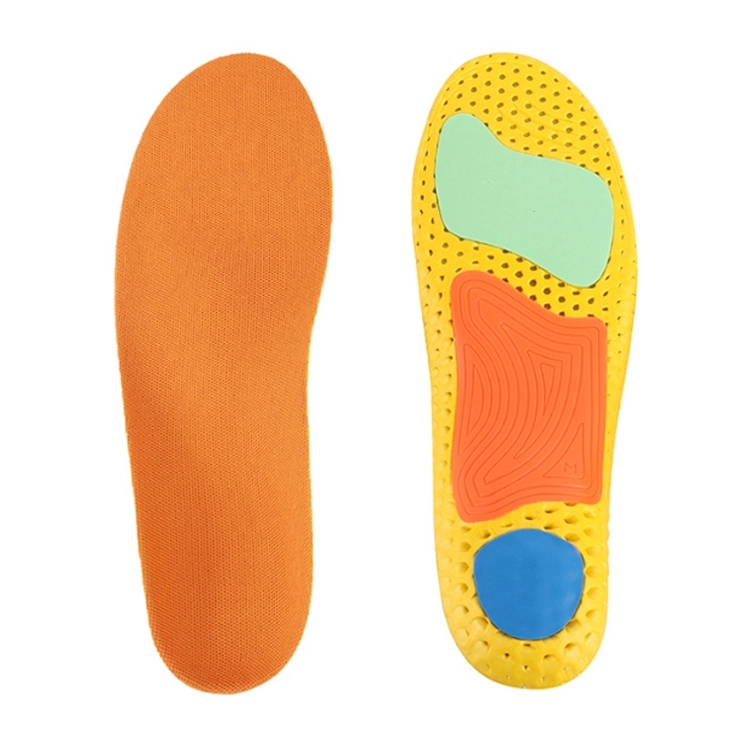
In insole engineering, breathability mainly refers to how effectively the structure allows air exchange and moisture vapor transport between the plantar surface and the inside of the shoe. Poor airflow creates warm, humid micro‑climates that accelerate odor, blister risk, and user fatigue. For OEM partners, this is not just a comfort feature—it directly affects product reviews, repeat purchase rates, and returns.
From an expert manufacturing viewpoint, breathability is the result of three interacting dimensions:
- Bulk material chemistry (EVA vs PU, open‑cell vs closed‑cell structures). [insolemaker]
- Geometric architecture (perforation pattern, pore size, thickness, and compression zones).
- Surface finishing (top fabric, lamination, anti‑microbial coatings, embossing or channels). [insolemaker]
When we compare perforated EVA to porous PU, we must evaluate all three dimensions under realistic load and humidity conditions, not just in a lab bench scenario.
EVA (Ethylene‑Vinyl Acetate) has become a go‑to insole substrate due to its lightweight, cushioning, and moisture resistance. From a breathability standpoint: [insolemaker]
- EVA is typically a closed‑cell foam, meaning the gas bubbles are encapsulated and do not freely interconnect.
- The base material itself does not transport much air, but its structure stabilizes engineered perforation grids extremely well.
- EVA's low moisture absorption helps reduce long‑term odor build‑up inside the insole core. [insolemaker]
For brands, this means EVA can be aggressively perforated without collapsing under typical walking or running loads, especially when density and hardness are correctly specified.
PU (Polyurethane) foams used in insoles often have a more open or semi‑open cell structure, especially in comfort, work, or hiking footwear. Industry testing and lab data consistently show:
- PU can be engineered as porous, allowing interconnected pathways that transport air and moisture vapor.
- Compared with EVA, PU is generally denser and heavier, but it maintains arch support height and structural integrity very well under heavy loads. [insolemaker]
- PU's porosity can improve micro‑climate management, but excessive openness may increase moisture uptake, requiring smart surface finishes. [insolemaker]
For OEM partners, porous PU excels in high‑load, high‑sweat environments (work boots, safety shoes, long‑distance hiking), where breathability must coexist with firm support. [insolemaker]
When we run breathability audits for international clients, we typically combine standard lab tests with brand‑specific protocols to reflect real‑world usage. A typical comparative EVA vs PU airflow program includes:
- Static air permeability tests using pressure differentials across the insole sample.
- Dynamic compression cycles simulating walking or running, then measuring airflow changes as the material deforms.
- Humidity and sweat simulation, using moisture injection to evaluate how pores and perforations behave when partially saturated.
From a personal experience standpoint, brands often underestimate how much load + humidity can change airflow behavior. An insole that looks highly breathable in dry static tests can perform very differently after 30 minutes of high‑intensity use.
For both perforated EVA and porous PU structures, we track a set of quantitative metrics:
- Airflow rate (L/min) at defined pressure.
- Pressure drop (Pa) across the thickness.
- Moisture vapor transmission rate (MVTR).
- Recovery time: how quickly the material regains shape and airflow after compression.
These metrics are then mapped to user scenarios: sports, casual, medical/orthotic, and work footwear. This mapping is crucial for OEM decision‑making during material selection and tooling design.
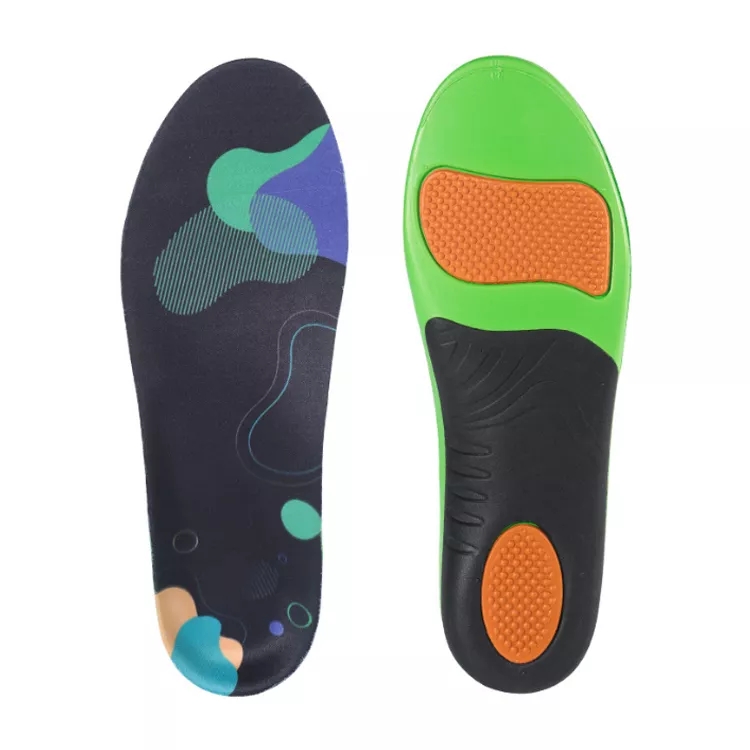
Perforated EVA relies on engineered holes to create airflow paths, while porous PU relies on an intrinsic pore network. This structural difference leads to distinct airflow profiles:
- In perforated EVA, airflow is concentrated along discrete channels where holes penetrate the material.
- In porous PU, airflow is distributed, traveling through interconnected pores around the entire contact area.
- EVA's breathability can be precisely tuned by adjusting hole diameter, spacing, and pattern, whereas PU's porosity is controlled by foaming parameters and formulation. [insolemaker]
For product designers, this effectively means EVA is geometry‑driven and PU is chemistry‑driven in breathability optimization.
Below is a simplified view based on typical configurations used in sports and work footwear programs:
| Parameter | Perforated EVA Insole | Porous PU Insole |
|---|---|---|
| Base foam type | Closed‑cell EVA | Open/semi‑open cell PU |
| Airflow path | Engineered perforation channels | Intrinsic interconnected pores |
| Weight | Lightweight | Heavier but more supportive |
| Static airflow (dry) | High through perforation zones | Moderate but evenly distributed |
| Dynamic airflow (under load) | Slight reduction near high‑pressure zones | More stable due to pore network |
| Moisture absorption | Low moisture uptake | Higher moisture uptake potential |
| Ideal use cases | Sports, casual, kids, orthotics | Work boots, hiking, heavy‑duty footwear |
Real‑World Case Insight: Sports vs Work Footwear Programs
In a recent sports sneaker OEM project, the brand requested maximum ventilation without compromising rebound. Drawing from multiple EVA insole developments, we implemented:
- A multi‑zone perforation grid, with larger holes under the forefoot and smaller holes under the arch.
- Medium‑density EVA for resilient cushioning and structural stability. [insolemaker]
- A hydrophobic mesh top layer to keep sweat at the surface so air channels remain functional.
Under comparative testing, perforated EVA delivered higher forefoot airflow and a cooler perceived micro‑climate, which aligned with the brand's performance narrative for running and training footwear.
In contrast, for a safety boot program targeting industrial users, porous PU emerged as more advantageous:
- Users carried heavy loads and remained on their feet for long periods.
- PU's firmer support and arch height stability under heavy loads reduced long‑term foot fatigue. [insolemaker]
- The porous structure allowed steady moisture vapor migration, though we needed a robust top fabric to avoid over‑absorption.
From a UX perspective, workers reported less bottom‑foot heat buildup across long shifts, even though the overall insole weight was slightly higher than the EVA version.
A powerful strategy for global brands is to combine the strengths of both materials in one hybrid insole:
- EVA base with perforation for lightweight structure and macro‑channels.
- PU heel/arch pods for targeted support and stable breathability in high‑load zones.
- Optimized lamination techniques to avoid blocking the airflow pathways. [insolemaker]
From an OEM manufacturing standpoint, this approach requires precise control of molding, cutting, and bonding—but it delivers a differentiated user experience and compelling marketing story.
Although EVA is commonly closed‑cell, modern formulations allow more open‑cell variants for specific climate conditions. In tropical or humid markets: [insolemaker]
- Open‑cell EVA inserts can offer better moisture management, allowing limited vapor transport while remaining relatively lightweight. [insolemaker]
- Brands often pair these inserts with targeted perforation patterns to balance cushioning and breathability.
When choosing between perforated EVA and porous PU in hot climates, open‑cell EVA with smart perforation can narrow the airflow gap while retaining low weight and low moisture absorption.
When we onboard new insole OEM partners, we guide them through a structured material decision, focusing on breathability and UX:
1. Define primary use scenario
Sports, casual, medical/orthotic, work, or hiking footwear.
2. Specify target user profile
Weight range, average daily steps, climate, sweat tendencies.
3. Set breathability KPIs
Airflow rate, perceived temperature reduction, moisture control targets.
4. Match material architecture
- For lightweight, high‑ventilation sports: perforated EVA with zoned geometry.
- For heavy‑load, long‑shift work: porous PU with durable support.
5. Prototype and test
Run comparative airflow tests under realistic compression and humidity.
6. Refine perforation or porosity
Adjust hole patterns in EVA or pore parameters in PU based on test feedback.
From the user's standpoint, breathability is experienced as:
- A cooler, less sweaty footbed during prolonged use.
- Lower friction and fewer hot spots, reducing blister risk.
- Faster recovery from intense activities thanks to stable micro‑climate conditions.
Perforated EVA tends to deliver a noticeable cooling sensation under the forefoot and toe box, especially in running shoes. Porous PU, on the other hand, feels more stable and supportive, with breathability that users perceive as subtle but persistent—in particular during long, heavy‑duty use.
For marketers, these differences can be turned into clear product narratives:
- "Perforated EVA Airflow Grid for ultra‑light ventilation in every stride."
- "Porous PU Support Platform engineered for all‑day breathability under heavy loads."
When you pair material truth with honest airflow testing data, you build trust with both retail buyers and professional users. This is precisely the type of content that supports Google's E‑E‑A‑T: experience, expertise, authoritativeness, and trustworthiness.
As a dedicated EVA and PU insole manufacturer, 3BU Technology operates a modern workshop with advanced cutting, molding, and lamination lines dedicated to custom insole programs. Our OEM services focus on: [insolemaker]
- Tailored perforation and porosity designs aligned with each brand's UX goals.
- Multi‑material constructions that combine EVA, PU, carbon fiber, and other substrates. [insolemaker]
- Rigorous in‑house testing and collaborative R&D to optimize breathability, durability, and support for every target market. [insolemaker]
For international brands and wholesalers, this means you can co‑develop breathable insoles that are bench‑tested, UX‑validated, and ready to scale.
If your current insole program is facing complaints about heat build‑up, sweat, or bottom‑foot fatigue, it is the right time to audit your material architecture.
Whether you want perforated EVA sports insoles, porous PU work insoles, or hybrid structures with advanced breathability, our OEM team can help you design, prototype, and test a solution grounded in real airflow data.
Contact our engineering and R&D department to schedule a breathability audit of your existing insole lineup and explore how optimized perforated EVA or porous PU structures can improve your next product cycle.
Q1. Is perforated EVA always more breathable than porous PU?
Not always. Perforated EVA can deliver higher localized airflow, especially in the forefoot, but porous PU provides more uniformly distributed breathability under sustained heavy loads. The "better" option depends on the use case and target users. [insolemaker]
Q2. Which material is better for hot, humid climates?
In hot climates, open‑cell EVA with optimized perforation or porous PU with appropriate top fabric both perform well. EVA offers lower moisture absorption, while PU provides more stable airflow under high loads. [insolemaker]
Q3. How do perforation patterns influence user comfort?
Perforation patterns control where air enters and exits the insole. Larger, denser perforations in high‑sweat zones improve cooling, while more conservative patterns under the arch maintain structural support. Badly designed patterns can create pressure points instead of comfort.
Q4. Can EVA and PU be combined in one insole?
Yes. Many high‑end insoles now use hybrid constructions: EVA for lightweight macro‑channels and PU for targeted support in heel and arch zones. This approach leverages the best breathability and support characteristics of both materials when engineered correctly. [insolemaker]
Q5. What should brands request during OEM development to ensure good breathability?
Brands should request clear airflow and MVTR targets, specify use scenarios, and ask for comparative prototypes in perforated EVA and porous PU. They should also insist on documented testing protocols so marketing claims remain aligned with real performance.
1. 3BU Technology – EVA Insole Manufacturing & Material Properties – Detailed overview of EVA advantages, manufacturing processes, and application scenarios for sports, casual, and orthopedic insoles. https://www.insolemaker.com/eva-insole.html
2. 3BU Technology – Polyurethane (PU) vs EVA: Arch Support Stability Under Heavy Loads – Technical discussion of PU vs EVA performance under sustained loading conditions. https://www.insolemaker.com/polyurethane-pu-vs-eva-which-chemical-composition-maintains-arch-support-height-longer-under-heavy-loads.html
3. 3BU Technology – Product Portfolio (EVA, PU, Carbon Fiber Insoles) – Overview of multi‑material insole capabilities and OEM options. https://www.insolemaker.com/fi/products.html
4. 3BU Technology – Open‑Cell vs Closed‑Cell EVA Inserts in Tropical Climates – Insight into moisture management and climate‑specific EVA design. https://www.insolemaker.com/open-cell-vs-closed-cell-eva-inserts-which-offers-better-moisture-management-in-tropical-climates.html
5. 3BU Technology – Top EVA Insole Manufacturers in China – Background on industry positioning and manufacturing scale for EVA insoles. https://www.insolemaker.com/top-10-eva-insole-manufacturers-in-china.html


