
Views: 222 Author: 3BU Technology Publish Time: 2026-05-15 Origin: Site


China is one of the most important global hubs for shoe insoles, covering mass‑market comfort insoles, sports performance insoles, and medical‑grade orthotic inserts. A complete upstream–downstream cluster—from foam and polymer suppliers to mold makers and printing/packaging factories—helps buyers consolidate sourcing and reduce total landed cost. [sourceready]
Industry data shows the global shoe insoles market reached around 11.99 billion USD in 2025 and is forecast to grow at a double‑digit CAGR above 10% from 2026 onward, with China contributing a significant share of capacity and innovation. In the foot orthotic insole sub‑segment, China's market alone is projected to more than double from roughly 245.9 million USD in 2020 to over 534 million USD by 2030, supported by material innovation in thermoplastics and carbon‑fiber composites. [linkedin]
For overseas brands, wholesalers, and footwear factories, this means China can offer scalable OEM/ODM capacity, competitive unit costs, and increasingly sophisticated R&D and quality systems—provided you select the right supplier and verify capabilities rigorously. [cnbusinessforum]
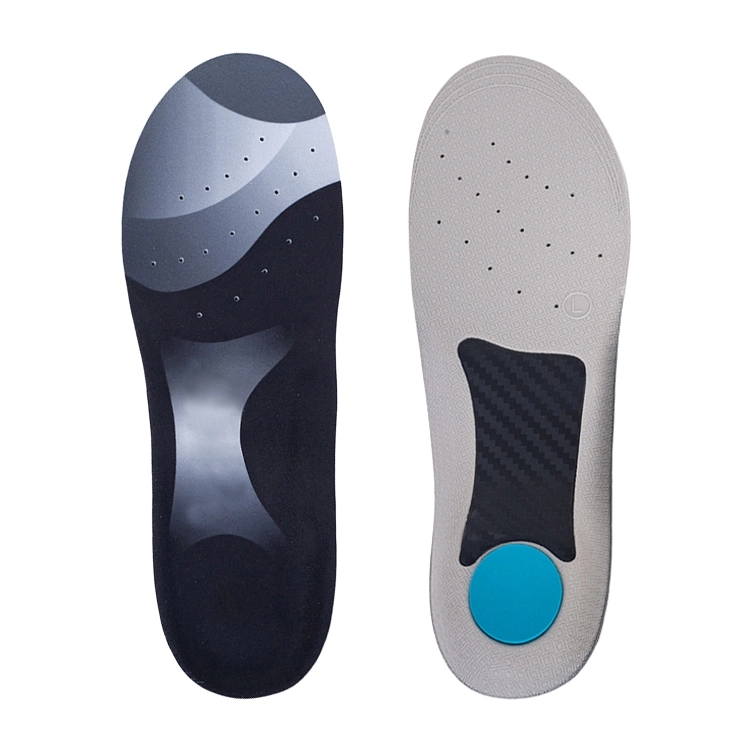
To keep this guide practical for professional buyers, the shortlist focuses on manufacturers rather than trading companies, with transparent and verifiable capabilities. The following criteria were used: [ensun]
- Manufacturing focus and experience
- Minimum 8–10 years of insole manufacturing experience and an identifiable production base in key clusters such as Dongguan, Wenzhou, Ningbo, Jinjiang, or Suzhou. [insolemaker]
- Evidence of continuous production (not "project factories") through product catalogs, news, and export records. [mandowinterinsole]
- Certifications and compliance
- Preference for factories with ISO 9001 or equivalent quality management systems, and product‑level CE or similar certifications for relevant markets. [seller.alibaba]
- Ability to work with RoHS/REACH‑compliant materials and provide supporting documentation when required. [cnbusinessforum]
- R&D and engineering support
- In‑house engineering teams capable of structure design (arch profiles, heel cups, metatarsal pads) and material tuning (EVA durometer, PU density, gel distribution). [insolemaker]
- Proven experience with OEM/ODM projects for named or clearly "world‑class" brands rather than generic white‑label products. [insolemaker]
- Production capacity, flexibility, and lead time
- Stable monthly capacity (tens of thousands to hundreds of thousands of pairs) with clear lead time for sampling and mass production. [insolemaker]
- Ability to support both growing small/medium brands and established volume buyers, with realistic MOQs. [sourceready]
- Export track record and communication
- Active export to North America, Europe, and/or developed Asian markets, plus English‑language service and responsive communication. [mandowinterinsole]
- Transparent information on contact channels, address, and after‑sales support. [cnbusinessforum]
These companies are not "perfect" for every project, but they represent reliable starting points for due diligence when building a long‑term insole supply base in China. [ensun]
Beyond price, professional buyers should examine three technical dimensions: materials, processes, and compliance. [grandviewresearch]
Common insole materials include EVA, PU, TPE, memory foam, gel, silicone, and composite carbon fiber, often laminated with mesh, fabric, or antimicrobial textiles. A capable manufacturer should manage durometer control (hardness), rebound properties, compression set, and density combinations across forefoot, arch, and heel zones. [grandviewresearch]
For sports and orthotic insoles, look for options like:
- High‑rebound EVA with multi‑density zoning for impact absorption and stability. [insolemaker]
- PU or gel pods under heel/forefoot for localized cushioning and shock dispersion. [insolemaker]
- Thermoplastic shells or carbon‑fiber inserts to deliver arch support and motion control. [insolemaker]
Main production methods include compression molding for EVA, injection or pouring for PU/gel, thermoforming for thermoplastic orthotic shells, and precision CNC or cutting for carbon‑fiber plates. Mature factories will combine these with lamination, die‑cutting, edge grinding, and full‑surface printing to achieve both performance and branding requirements. [alibaba]
On the quality side, buyers should ask about:
- Incoming material inspection and traceability procedures.
- In‑process checks (dimension, hardness, bonding strength) and final QC sampling plans.
- Functional tests such as compression set, fatigue testing, and in‑shoe fit validation on sample size runs. [cnbusinessforum]
For exports to the EU, UK, or North America, confirm that materials meet applicable RoHS, REACH, and other chemical regulations where relevant. Some factories can also support certifications or testing such as CE for certain medical or protective products and can provide third‑party lab reports on request. [seller.alibaba]
Below are ten representative insole manufacturers that meet most of the above criteria, based on public information, export visibility, and published rankings. Details should always be confirmed directly with each factory. [ensun]
3BU Technology is a specialist insole manufacturer founded in 2012 and based in Dongguan, one of China's most mature footwear and component manufacturing hubs. The company operates around 5,000 m² of workshop area with more than 100 skilled workers, focusing exclusively on insole R&D and production. [insolemaker]
3BU serves several well‑known international insole brands, including names such as Sidas, Footlogstics, and VKTRY, which reflects its experience with demanding product specifications and tight quality requirements. The factory emphasizes EVA and PU insoles (sports, orthotic, heat, foam, and carbon‑fiber categories), leveraging high‑cavity press molds to support both sample runs and larger OEM volumes efficiently. [insolemaker]
From a buyer's perspective, the most distinctive advantages of 3BU are:
- High R&D engagement for small and medium brands: the company offers free insole design based on sketches or ideas, and is used to co‑developing structures with brand owners.
- Support for small‑order OEM/ODM: 3BU explicitly positions itself as friendly to smaller MOQs, which is valuable for emerging DTC or niche brands testing new concepts.
- Fast lead times: in typical cases, 3BU can deliver sample molds within around 7 days and ship most production orders within about 3 weeks once details are finalized.
- Cost transparency: the company indicates relatively low mold fees (around 250 USD for most EVA/PU insoles) with options to refund mold fees after volume targets are met, which reduces development risk for buyers.
3BU maintains a structured quality control system built through long‑term cooperation with high‑end brands, and positions itself as a cost‑competitive, engineering‑driven partner rather than a pure volume factory. For buyers who value engineering support, quick iteration, and responsive communication over extreme scale, it is a strong candidate to include in RFQ shortlists. [insolemaker]
FootMaster, a brand under BANGNI, has been producing insoles since 1986 and is one of the more experienced players in China's insole segment. Its portfolio spans orthotic insoles, sports insoles, height‑increasing insoles, and work insoles, with a focus on PU, EVA, TPE, memory foam, and gel constructions. [insolemaker]
The company offers full OEM/ODM coverage from product design and custom logos to packaging and molding services, and publicly references CE and ISO certifications, which are relevant for buyers in regulated markets. For projects requiring a mixture of orthopedic, comfort, and fashion‑driven features at scale, FootMaster is well suited. [insolemaker]
Dongguan Jiuhui Industrial Limited is recognized for ergonomic and orthopedic insole production, supplying both domestic and overseas markets. It emphasizes modern production techniques and environmentally friendly materials, aiming at functional products that address foot health and comfort. [insolemaker]
This profile fits buyers seeking mid‑to‑high‑end insoles that combine comfort with biomechanical support, where consistent structure and material performance matter more than aggressively low pricing.
Wenzhou Future Shoe Material Co., Ltd specializes in shoe pads, insoles, and related footwear raw materials, combining manufacturing with trading capabilities. Their catalog ranges from EVA foam insoles to more structured footbeds designed to improve comfort and performance. [insolemaker]
Because the company also handles other shoe materials, it can be attractive for buyers wanting to bundle insole sourcing with broader footwear component procurement from the Wenzhou cluster.
Ningbo Kangbeien focuses on foot care products, including insoles, orthopedic braces, and protective gear. With both OEM and ODM capabilities, it uses a mix of innovative materials and biomechanical design principles to serve health and sports applications. [insolemaker]
This makes the factory a relevant candidate for brands in the medical, rehab, and sports retail channels who need insole programs integrated with other body‑support products under a cohesive brand.
Qingdao Huayang Biotechnology Co., Ltd is known for functional insoles targeting warmth and ergonomic comfort, including various heating insole solutions. These products are particularly relevant for cold‑weather markets, outdoor brands, and winter footwear lines. [insolemaker]
Buyers should verify the safety and durability of heating elements and power systems where applicable and confirm compliance with local electrical or consumer safety standards.
With more than 15 years in the field, Dongguan Topinsole focuses on orthotic and everyday comfort insoles and emphasizes strict quality control and on‑time delivery. It is positioned towards customized insole solutions for brand owners rather than generic bulk commodities. [insolemaker]
For buyers needing stable, long‑term supply of a fixed insole line with moderate engineering requirements, Topinsole is a reasonable option.
FOAMWELL (Qiyuan) Sports Technology Co., Ltd, based in Dongguan, specializes in sports‑oriented insoles using advanced foams and gels. The company focuses on impact absorption, stability, and protection for athletes and active consumers, which makes it attractive for athletic footwear and sports accessory brands. [ensun]
Its expertise and production capacity are visible across multiple B2B platforms and industry lists, where FOAMWELL is frequently cited as a leading sports insole manufacturer in China. [mandowinterinsole]
Jinjiang Taiyuan Shoes Material Co., Ltd has a strong background in shoe insole molds and material development, particularly in EVA and PU. It provides OEM/ODM services along with customizable packaging options, and often highlights eco‑friendly materials. [insolemaker]
For buyers who want to experiment with new foam structures or mold designs—especially in running or training segments—Taiyuan's mold expertise can be advantageous.
Suzhou Sunmed Co., Ltd is an OEM manufacturer with a broad range of inserts, orthopedic insoles, and cushioned shoe components. The factory maintains strict quality standards and is capable of large‑scale production for international brands. [insolemaker]
Its positioning makes it suitable for medical distributors and pharmacies seeking private‑label orthotic insoles, as well as footwear brands wanting medically oriented add‑on products.
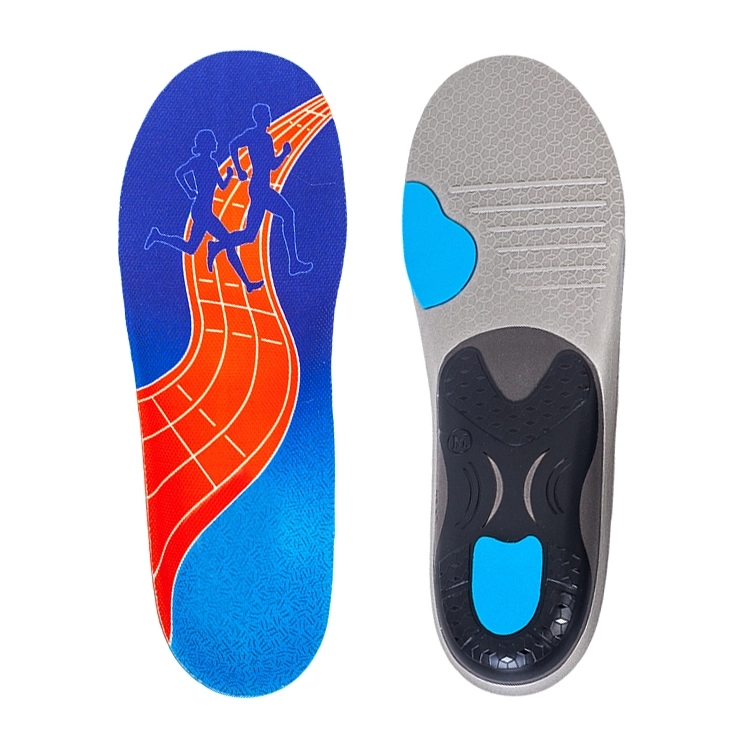
The following table summarizes typical positioning based on publicly available information; details should be confirmed during RFQ and factory audits. [mandowinterinsole]
Manufacturer | Approx. founding year | Main product focus | Typical strength market / use case | OEM/ODM focus and flexibility | Notable certifications / claims |
|---|---|---|---|---|---|
3BU Technology (Dongguan) | 2012 | EVA, PU, carbon‑fiber, sports, orthotic, heat | Small–mid brands, performance and comfort lines insolemaker | High; supports small OEM/ODM, free design & samples | ISO‑style QC, works with world‑class brands |
FootMaster (Bangni) | 1986 | Orthotic, sport, height‑increase, work | Large brands needing broad product mix insolemaker | High; full design, logo, packaging, molds insolemaker | CE, ISO quality standards referenced insolemaker |
Dongguan Jiuhui Industrial | n/a (long‑term) | Ergonomic, orthopedic | Foot health and comfort products insolemaker | Medium–high; custom structures insolemaker | Certified shoe insole manufacturer insolemaker |
Wenzhou Future Shoe Material | n/a | EVA foam insoles, pads, shoe materials | Bundled sourcing of insoles and materials insolemaker | Medium; mix of manufacture/trade insolemaker | General QC; verify per project insolemaker |
Ningbo Kangbeien Health Tech | n/a | Insoles, braces, protective gear | Sports and medical/rehab channels insolemaker | High; OEM/ODM multi‑category insolemaker | Health‑oriented product focus insolemaker |
Qingdao Huayang Biotechnology | n/a | Heating and functional insoles | Winter/outdoor and therapeutic warmth insolemaker | Medium–high; special functions insolemaker | Functional and ergonomic focus insolemaker |
Dongguan Topinsole Commodity | >15 years | Orthotic & comfort insoles | Stable long‑term OEM lines insolemaker | High; customization & delivery focus insolemaker | Strict QC emphasis insolemaker |
FOAMWELL (Qiyuan) Sports Technology | n/a | Sports, high‑performance foam insoles | Athletic footwear & sports brands ensun | High; sports‑specific OEM ensun | Advanced foam technologies ensun |
Jinjiang Taiyuan Shoes Material | n/a | EVA/PU insoles, molds | Running/training, eco‑friendly concepts insolemaker | High; strong in mold customization insolemaker | Eco‑friendly material options insolemaker |
Suzhou Sunmed Co., Ltd | n/a | Orthopedic, cushioned inserts | Medical and pharmacy channels insolemaker | High; large‑scale OEM insolemaker | Medical/orthopedic positioning insolemaker |
- Use IAF CertSearch or the accreditation body's database to verify ISO 9001 and similar certifications, checking whether the certificate number, scope, and validity date match the copy provided by the factory. [seller.alibaba]
- Cross‑check the factory's legal name and address on certificates against its website, business license, and B2B profiles; discrepancies are a red flag. [seller.alibaba]
- For CE‑marked or medically positioned insoles, ask for third‑party test reports and declarations of conformity, then confirm the testing lab's accreditation status. [seller.alibaba]
A typical insole OEM development sequence is:
1. Requirement definition
- Target market and channel (mass retail, sports specialty, medical, online DTC).
- Target consumer (activity level, arch type, weight range).
- Key functions (shock absorption, support, warmth, odor control) and price band. [alibaba]
2. Structure and material proposal
- The factory proposes 1–3 structures using combinations of EVA/PU/gel/thermoplastic shells with specified densities and hardness levels. [grandviewresearch]
- For more complex projects, some suppliers (like 3BU) can provide free design proposals based on sketches or performance briefs.
3. Prototype sampling
- Initial prototypes are produced with selected fabrics and printing; buyers should test them under real conditions (walking/running for at least one hour, preferably several days) and compare against reference products. [alibaba]
4. Iteration and confirmation
- Based on feedback, the factory adjusts thickness, hardness, arch height, and coverage, then finalizes patterns and molds. [insolemaker]
5. Pre‑production and mass production
- A small pre‑production batch confirms process stability before full mass production; independent inspection can be arranged at this stage. [cnbusinessforum]
- For export, clarify whether shipments will be EXW, FOB, or CIF, and whether the factory can consolidate orders with other footwear components to reduce freight cost. [cnbusinessforum]
- Check packaging types (blister, hanging cards, polybags, boxes) and carton dimensions early, since these affect cubic volume and shipping cost. [alibaba]
- For moisture‑sensitive or foam‑heavy products, ensure packaging provides adequate protection and discuss any storage or shelf‑life concerns. [alibaba]
One of the most common internal "secrets" in the insole industry is quiet material downgrading: using higher‑grade EVA or memory foam in samples and then switching to cheaper foam with slightly different density or rebound during mass production. Because differences can be subtle in static inspection, this often goes unnoticed until consumer complaints increase. [symphonyconsult]
How to mitigate:
- Specify measurable material parameters in contracts: density ranges, hardness (Shore C), compression set limits, and layer thicknesses. [grandviewresearch]
- Retain reference samples from both sides, sealed and signed, and use them for random comparison and third‑party lab tests when needed. [alibaba]
- Conduct random destructive testing (cutting insoles open) on incoming batches to verify internal structure and layer configuration.
Many insole products carry "orthotic" or "medical" branding even when they have limited clinical validation. While this may be acceptable in some channels, it can create regulatory or reputation risk in stricter markets. [researchandmarkets]
How to mitigate:
- Distinguish between comfort/sports insoles and medically regulated devices; adjust claims accordingly. [researchandmarkets]
- If clinical claims are desired, collaborate with suppliers who can provide relevant test data or partner with medical professionals, and verify compliance with local regulations.
Insoles must fit a wide range of shoe lasts, and small pattern shifts can cause returns due to poor fit or heel slippage. Buyers sometimes approve molds too quickly without checking fit across multiple footwear styles. [alibaba]
How to mitigate:
- Request test fits of pre‑production insoles inside representative shoes (running, casual, work boots) across several sizes. [insolemaker]
- Clarify whether the factory uses standard size grading rules or customized grading based on your market's sizing.
Even when the insole itself is good, poor packaging (wrong size label, mixed pairs, incorrect left/right printing, color deviation) can lead to costly rework or returns. [alibaba]
How to mitigate:
- Include packaging checks (barcode scanning, size/variant verification) in inspection criteria and ask for final packed samples. [cnbusinessforum]
- Standardize artwork and provide clear packaging SOPs to the factory.
China's insole manufacturing ecosystem offers a wide spectrum of partners—from high‑flexibility engineering‑oriented factories like 3BU Technology to large, diversified producers like FootMaster and specialized players in sports, orthopedic, and heating segments. For professional buyers, the key is not just to find "big names", but to match product type, MOQ, and development needs with a factory's genuine strengths, and then back that choice with solid verification and QC systems. [ensun]
If you are building or upgrading your insole supply base, a practical next step is to shortlist 3–5 factories that align with your product roadmap, share detailed RFQs and technical briefs, and then run structured sampling and testing cycles before committing to long‑term contracts. Including at least one flexible, R&D‑driven partner such as 3BU can help you iterate new insole concepts faster while keeping total development costs under control. [alibaba]
1. How can I verify whether a Chinese insole factory's ISO 9001 certificate is current and valid?
Request a clear, complete scan of the ISO 9001 certificate and identify the certification body and certificate number. Then, search the certificate details on IAF CertSearch or the certification body's own database to confirm the factory name, scope, and expiration date match the document provided. You should also verify that the certification body itself is accredited by a recognized national accreditation body. [seller.alibaba]
2. What is a reasonable MOQ for custom‑designed insoles with multi‑density EVA and printed top cloth?
For conventional compression‑molded EVA insoles with printed fabric, typical MOQs start from around 500–1,000 pairs per style and per size run at smaller, flexible factories, and may go up to several thousand pairs at large volume plants. Factories such as 3BU explicitly support smaller orders for emerging brands, which is useful during concept validation stages. [alibaba]
3. How should I structure performance requirements for sports insoles to ensure consistent quality between batches?
Define target performance in terms of measurable parameters, including material hardness, density, and thickness for each zone, as well as compression set and rebound benchmarks based on lab tests. You can benchmark against a reference product, have both sides agree on acceptable ranges, and specify that any formulation change requires written approval and, ideally, a new sample sign‑off. [grandviewresearch]
4. What's the best way to manage tooling ownership for insole molds when working with multiple factories?
Tooling agreements should clearly state ownership, storage location, and conditions for moving or scrapping molds, including whether mold designs are exclusive to your brand. For key projects, many buyers prefer to own molds outright but keep them stored at the primary supplier, with an option to relocate them if cooperation ends, subject to agreed compensation for adaptation or refurbishment. [alibaba]
5. How can I reduce risk when shifting from a local insole supplier to a Chinese OEM?
Start with a phased approach: run a pilot order focused on one or two key SKUs, including lab testing and market feedback, before fully switching suppliers. During this phase, maintain safety stock from your existing supplier and conduct on‑site or third‑party audits to confirm capacity and process robustness at the new factory. [cnbusinessforum]
- China insole market and growth outlook – Grand View Research / LinkedIn‑type market outlook. [linkedin]
- 3BU Technology company profile and capability description. [insolemaker]
- Top 10 shoe insole manufacturers in China article by 3BU. [insolemaker]
- Supplier verification and ISO certificate checking guidance. [seller.alibaba]
- OEM development and sourcing pitfalls and practices in manufacturing. [symphonyconsult]


