
Views: 222 Author: 3BU Technology Publish Time: 2026-05-14 Origin: Site


China has developed a complete industrial cluster for foot orthotics and functional insoles, especially in Guangdong, Fujian and Zhejiang, integrating foam, plastics, textiles and automated molding in one supply chain. This makes the country a major production base for orthotic arch support insoles serving sports, medical and comfort segments worldwide. [made-in-china]
Market data shows the global orthopedic/orthotic insole segment is growing steadily, driven by aging populations, sports participation and preventive healthcare, with China recording solid mid‑single‑digit annual growth and rising exports. At the same time, more brands are shifting from generic comfort insoles to anatomically‑designed, arch‑support products using EVA, PU, TPU and carbon‑fiber components tailored to specific foot conditions. [futuremarketinsights]
For international buyers, China's advantage is not only cost; mature OEM/ODM capabilities, in‑house R&D and familiarity with CE, RoHS and ISO systems allow factories to support branded projects from concept through mass production. However, quality and compliance vary widely, so structured supplier evaluation is essential to avoid issues such as downgraded materials or inconsistent hardness between batches. [lansilglobal]
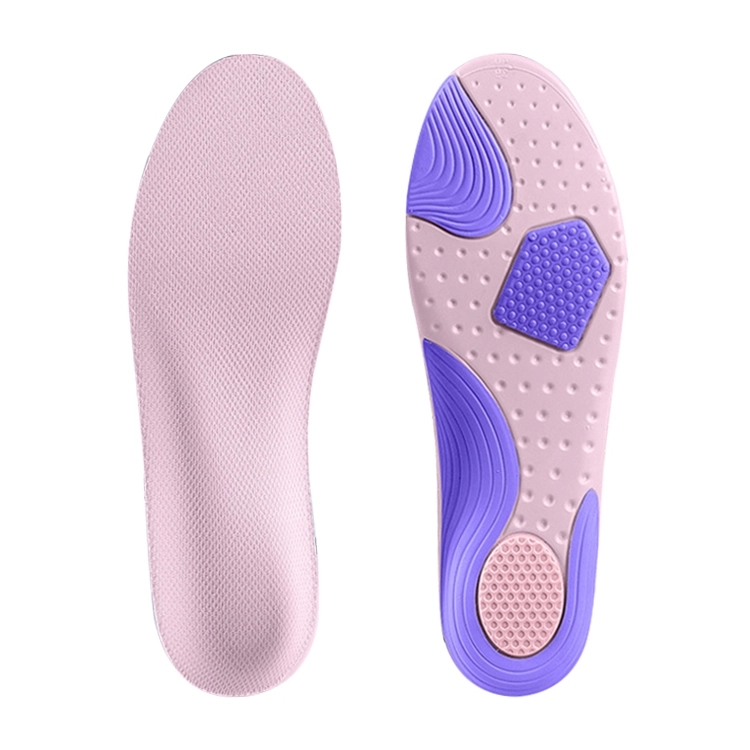
Experience – factory background and track record
We prioritized manufacturers with at least 8–10 years in insoles or orthopedic supports, stable export history, and evidence of long‑term cooperation with global brands or medical distributors. We also reviewed whether they run their own workshops (cutting, lamination, molding, gluing, packaging) instead of relying mainly on sub‑contractors. [ensun]
Expertise – technical depth in orthotic arch support
Shortlisted factories must have clear specialization in orthotic or functional arch support insoles, not only generic foam insoles. We checked material systems (EVA, PU, PORON, TPU, carbon, ETPU), multi‑layer constructions, availability of different shore hardness, and capability to design medial / lateral posting, metatarsal pads, and U‑heel cups. [alibaba]
Authoritativeness – position in the industry cluster
We cross‑checked public listings, industry directories and export platforms to ensure the manufacturers are recognized players in China's insole clusters around Dongguan, Xiamen, Ningbo, etc., and not purely trading companies. Presence in professional reports or industry media, and cooperation with known brands, also strengthened their authority. [insolemaker]
Trust – compliance, transparency and service model
We looked for ISO 9001 or related certifications, plus proof of testing for relevant markets (such as REACH, CE‑related chemical safety for materials). Trust indicators included: clear MOQ and lead time, openness to factory audits, responsiveness in communication, and willingness to provide samples and technical data before large orders. [insoles.en.alibaba]
For procurement managers, understanding core technical elements makes supplier evaluation more objective.
- Base and cushioning materials – Mid‑ to high‑grade EVA and PU foams with defined density and shore hardness are standard, often combined with PORON or memory foam top layers for impact absorption. [foam-well]
- Arch support structures – Thermoplastic materials like TPU, PP or PA, as well as carbon‑fiber or composite shells, are commonly used to create semi‑rigid or rigid arch supports. [futuremarketinsights]
- Functional design features – Heel cups for stability, metatarsal pads, forefoot cushioning zones, medial posts for over‑pronation and lateral reinforcements for supination are typical in advanced orthotic models. [alibaba]
- Cover materials – Mesh, velour, microfiber or antibacterial fabrics enhance moisture management and comfort while providing brandable surface areas. [foam-well]
- Compliance and safety – Although CE and RoHS are more typical for electronics, buyers often request RoHS‑style chemical tests (heavy metals, certain restricted substances) and REACH compliance for insole materials used in the EU. [lansilglobal]
A technically competent factory should be able to specify foam density, shore hardness range, arch stiffness, and test norms used (e.g., compression set, rebound) for each proposed insole solution. [foam-well]
> Note: Information below is summarized from public sources such as company sites, B2B platforms and industry directories as of 2025–2026 and should be re‑verified before contracting. [ensun]
3BU Technology, founded in 2012 in Dongguan, operates a 5,000㎡ workshop with over 100 skilled workers and more than 12 years of insole manufacturing experience. The company has accumulated know‑how by serving world‑class insole brands such as Sidas, Footlogstics and VKTRY, focusing on OEM/ODM for individual insole brands rather than mass commodity products. [foam-well]
From a buyer's perspective, 3BU is particularly attractive for small and mid‑sized brands that need deeper engineering support and lower starting quantities. The factory offers:
- Free insole design based on sketches or images, optimized by their engineering team.
- Free insole samples of catalogue models for quality checking.
- Very competitive mold fees (around 250 USD per EVA/PU set) with refund mechanisms once production volume reaches agreed targets. [foam-well]
3BU positions itself as a fast‑moving supplier: sample molds can be prepared in about 7 days, and typical mass production for most insole projects is ready to ship in about three weeks. The company maintains a full quality control system refined through cooperation with demanding international brands, making it suitable for buyers that value responsiveness and flexible customization over extremely high volumes. [foam-well]
Foamwell is a large‑scale insole producer with around 17 years of experience and production sites in China and Southeast Asia, supplying more than 150 countries and an annual capacity reportedly around 100 million pairs. The company focuses on multi‑layer constructions with diverse top layers, EVA/PU/ETPU bases and TPU/carbon arch supports, positioning itself as a high‑volume partner for global footwear brands. [foam-well]
Foamwell emphasizes in‑house lab testing, sustainable practices and can support complex OEM/ODM projects with multiple price tiers per market. For buyers needing consolidated sourcing for sport, comfort and orthotic insoles under one umbrella supplier, this factory is a strong candidate. [foam-well]
S‑King is a custom insole manufacturer with more than 13 years of experience on B2B platforms, specializing in heated insoles, orthotic and sports insoles, and other foot‑care products. They are often ranked among leading shoe parts factories on export platforms, reflecting active global business. [insoles.en.alibaba]
Their strength lies in diverse product categories and the ability to integrate heating components with arch support for cold‑climate markets. For sourcing managers targeting outdoor, ski or winter footwear brands, S‑King's combined electronics and insole experience can reduce the need to coordinate multiple suppliers. [insoles.en.alibaba]
This manufacturer focuses on shoe pads and footwear raw materials, offering OEM/ODM capabilities for insoles with ISO 9001:2015 certification. Located in Wenzhou, an established footwear cluster, the company benefits from integrated upstream materials and extensive export experience. [made-in-china]
For orthotic arch support projects, they are best suited to cost‑optimized, medium‑spec products where buyers provide detailed technical drawings or existing samples. Their strength is scalable capacity rather than design‑driven R&D.
Jiuhui Industrial is listed as a manufacturer of insoles and foot‑care products with OEM, ODM and own brand operations, and holds ISO 9001:2015 certification. Their portfolio covers various insole types, including models explicitly marketed as high arch support for flat feet and plantar fasciitis relief. [made-in-china]
Given their ISO quality system and experience with both own brands and OEM, Jiuhui is suitable for buyers seeking a balance between price and documented process control. It is particularly relevant for private‑label insoles sold via e‑commerce channels.
These Ningbo‑based companies focus on body support and foot‑care products with OEM/ODM models and ISO 9001:2015 certifications, supplying insoles among a broader orthotic portfolio. Their geographic position within Zhejiang's health‑tech cluster helps them access materials and related rehabilitation components. [made-in-china]
They are appropriate for buyers that want to bundle insoles with braces, supports and other orthotic accessories under one supplier group. Technical discussions are smoother when coordinating multiple SKUs for medical channels.
Wonderfu is primarily a rehabilitation equipment manufacturer producing prosthetics and orthotic braces, but also involved in orthotic‑related products. While not a pure insole specialist, their deeper understanding of clinical orthotics can be valuable for medical‑grade projects requiring integration with other rehabilitation devices. [made-in-china]
For sourcing managers in the medical device sector, this supplier is worth considering when insoles are part of a larger orthotic solution rather than a standalone consumer product.
Runtong operates mainly as a trading company supplying shoe insoles and accessories, relying on a network of partner factories. Although not a manufacturer, they can be useful for buyers needing multi‑category sourcing without wanting to manage numerous factories directly. [made-in-china]
However, trading structures can add layers between the buyer and the production floor, so it is important to clarify which specific factory produces orthotic arch support models and to insist on visiting or auditing that production site.
Ideastep is positioned as a B2B custom orthotic insole specialist with a strong focus on export markets, as highlighted in industry articles comparing Chinese manufacturers and local suppliers. They emphasize custom orthotic solutions, supporting various materials and structures tailored to podiatrist or brand specifications. [aideastep]
For buyers needing more clinical‑oriented designs or cooperation with podiatric channels, Ideastep's positioning and communication suggest relatively mature technical support and export service.
Industry directories and B2B platforms list dozens of additional Chinese insole manufacturers, including companies in Dongguan, Xiamen, and Qingdao that produce orthotic and sports insoles at different quality levels. Some of these specialize in safety shoe insoles, diabetic insoles or women's orthotic insoles, reflecting the segmentation of the domestic market. [alibaba]
When considering these additional suppliers, buyers should apply the same evaluation framework outlined in this article, especially for factories that do not yet have extensive international references.
Below is a simplified summary based on publicly available information; always confirm directly with suppliers.
Manufacturer | Location / Cluster | Experience (years) | Typical Positioning | Indicative Strengths | Likely MOQ* | Certifications / Notes |
|---|---|---|---|---|---|---|
3BU Technology | Dongguan, Guangdong | 12+ foam-well | Flexible R&D‑driven OEM | Fast sampling, supports small brands | Often a few hundred pairs for custom projects (to confirm) | Established QC, supports world brands foam-well |
Foamwell Sports Technology | Guangdong / multi‑country | ≈17 foam-well | High‑volume, multi‑site OEM | Huge capacity, in‑house lab | Often 3,000–10,000 pairs per style (to confirm) | Internal lab, sustainability focus foam-well |
S‑King Insoles Limited | Dongguan, Guangdong | Heated & orthotic insoles | Electronics + insole integration | Typically 500–2,000 pairs depending on product (to confirm) | Recognized export factory on B2B platform insoles.en.alibaba | |
Wenzhou Future Shoe Material | Wenzhou, Zhejiang | 10+ (est.) made-in-china | Shoe materials & insoles | ISO 9001, cost‑effective | Suited to mid‑to‑large orders (to confirm) | ISO 9001:2015 certified made-in-china |
Dongguan Jiuhui Industrial | Dongguan, Guangdong | 10+ (est.) made-in-china | Insole & foot‑care OEM | ISO 9001, e‑commerce suitable models | Flexible, depending on model (to confirm) | ISO 9001:2015, OEM/ODM made-in-china |
\*MOQs above are indicative assumptions based on typical industry practice and should be verified during negotiation.
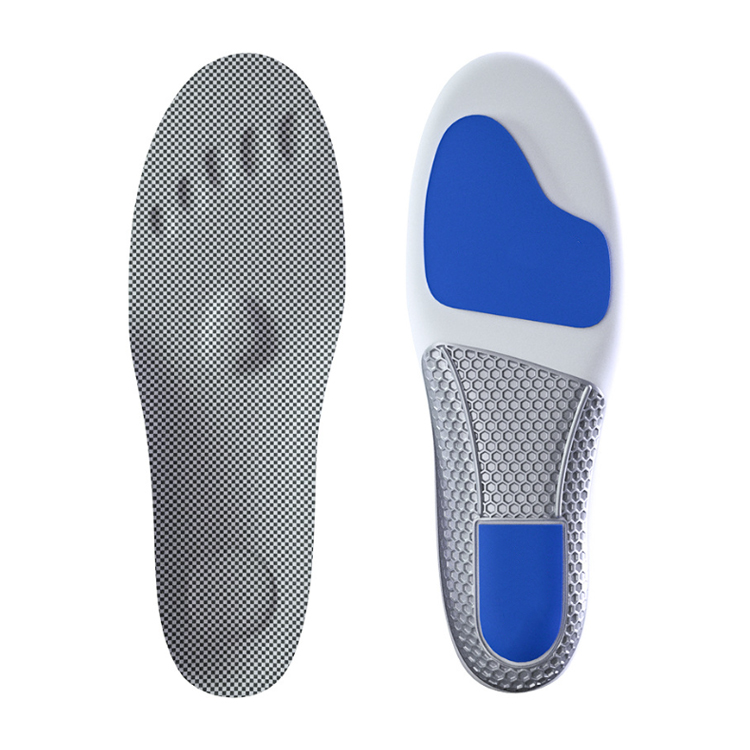
- Request the Chinese business license and check the registration scope to ensure it includes manufacturing, not just trading. [seller.alibaba]
- Confirm factory address via satellite maps and ask for internal photos or videos with timestamps to prove actual production capability. [seller.alibaba]
Do not accept certificates at face value. Use this verification approach:
- Ask for high‑resolution scans of ISO 9001 (and other) certificates with certificate numbers and issuing bodies. [seller.alibaba]
- Use the IAF CertSearch database or the issuing body's website to confirm validity, accreditation, and scope of the certificate. [seller.alibaba]
- Make sure the scope covers "insole" or footwear components, not unrelated products. [lansilglobal]
A reliable orthotic insole factory should:
- Provide CAD drawings or 3D models of your custom arch support insole before mold cutting.
- Explain material and hardness options, and suggest different shore ratings for forefoot, midfoot and heel zones.
- Share test results (compression, rebound, durability) or at least internal QC criteria.
Factories like 3BU that offer free design optimization and quick mold sampling can significantly shorten development cycles for new ranges. [foam-well]
- Always start with golden samples signed and sealed by both parties; these should reflect final materials, hardness, and surface finishing.
- For complex orthotic projects, consider a small pilot run (e.g., 200–300 pairs) to test real‑production consistency before placing a large PO.
- Clarify Incoterms (FOB, CIF, DAP) and ask the supplier or forwarder for estimated shipping times and documentation for your market. [alibaba]
- For EU markets, request third‑party test reports (e.g., REACH‑related chemical tests for insole materials), especially if products will be marketed as "medical" or "orthopedic". [lansilglobal]
Pain point 1: Material downgrading between sample and bulk order
Some buyers receive excellent EVA/PU hardness and rebound in samples but find bulk goods feel softer or cheaper. This usually happens when suppliers switch to lower‑grade foam to protect margin after price pressure. An effective countermeasure is to define minimum density and shore hardness in the contract and to conduct pre‑shipment inspections that include hardness tests.
Pain point 2: Over‑promised production capacity
A factory might claim a monthly capacity that assumes full machine utilization but, in reality, shares lines with other customers. To avoid delivery delays, ask for detailed line‑capacity breakdowns and recent production records for similar orders, and phase POs instead of placing a single large one.
Pain point 3: Hidden tooling and mold ownership issues
In this segment, molds for EVA or PU insoles are relatively inexpensive, but disputes still arise over who owns them. Clarify in writing that molds paid by you are your property, and specify conditions for transferring them to another factory if needed; companies like 3BU explicitly structure mold‑fee refunds and ownership, which simplifies this aspect. [foam-well]
Pain point 4 (internal tip rarely publicized): "Shared last, different insert"
In some OEM projects, factories use a shared base last or shell for multiple customers and only change the top cover or color. This can lead to very similar arch profiles across different "brands" and limit differentiation. If you need proprietary biomechanical performance, insist that the factory designs a unique arch profile and confirm via 3D measurement that your model is not identical to stock designs.
In addition to standard checks, experienced sourcing managers for orthotic insoles often apply a few quiet rules:
- Walk‑test rule – During factory visits, they ask staff to bring random pieces from ongoing production, not display samples, and literally walk in them in the workshop to feel consistency. Inconsistent hardness between left and right insoles is a red flag.
- Glue‑smell indicator – Strong, irritating glue odor in the lamination area may indicate outdated adhesives or poor ventilation; this can raise questions about VOC levels and long‑term odor in finished insoles.
- Operator turnover check – They ask how long line leaders and QC supervisors have been with the factory; frequent changes usually compromise process stability.
- SKU discipline – A factory listing hundreds of SKU types but unable to show standard operation procedures and QC records for each line is often focused on catalog volume instead of controlled production.
Factories used to working with demanding global brands, like 3BU and several others in this list, generally perform better under these unspoken "tests" thanks to their established systems and stable teams. [insoles.en.alibaba]
China remains a central hub for orthotic arch support insoles, offering a broad spectrum of manufacturers from huge, multi‑site groups like Foamwell to agile, R&D‑focused partners like 3BU Technology. By applying structured evaluation criteria, verifying certifications rigorously, and using insider checks on materials and process stability, procurement managers can significantly reduce sourcing risks and secure stable long‑term partners. [aideastep]
If you are a brand owner, wholesaler or footwear producer planning to develop or upgrade your orthotic arch support insole line, it is worth shortlisting a mix of large‑scale and flexible factories and running parallel sampling. For buyers seeking fast development support, responsive communication and OEM/ODM flexibility for small and mid‑sized brands, contacting 3BU Technology to discuss your technical brief and sample roadmap can be a practical next step. [foam-well]
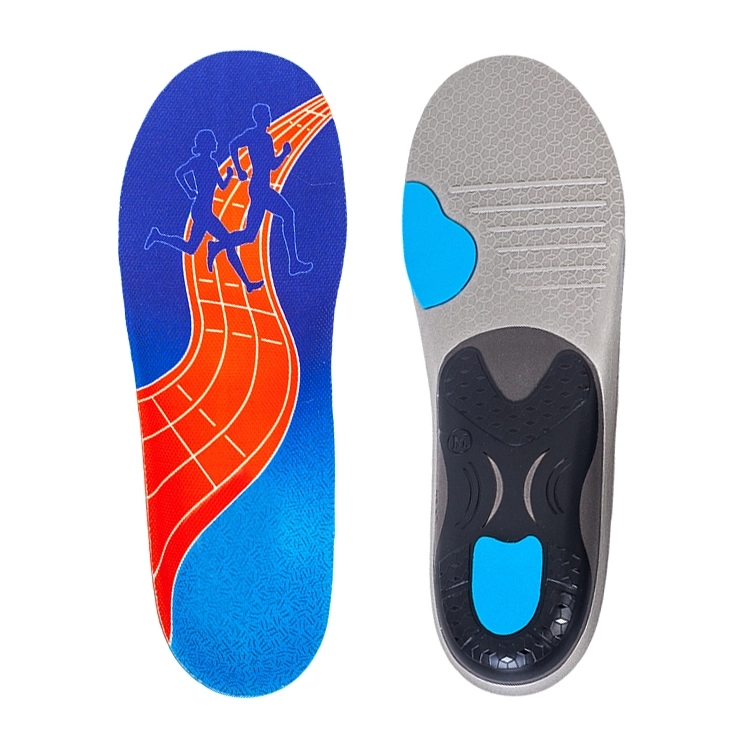
1. How can I confirm a Chinese factory's ISO 9001 certificate is still valid and not forged?
Request a clear scan of the certificate, including the certificate number and issuing body, then verify it via the issuing body's website or the IAF CertSearch database. Check the expiry date, scope of certification, and whether the certification body is IAF‑accredited; discrepancies are warning signs. [seller.alibaba]
2. What is a reasonable development timeline for a new orthotic arch support insole?
For experienced factories, 3D design and CAD confirmation may take about 3–7 days, initial mold and first samples around 7–10 days, and standard mass production 3–4 weeks after sample approval, depending on complexity and order size. Complex projects with carbon‑fiber or multi‑density constructions may require additional iterations. [foam-well]
3. How do I specify technical requirements to avoid "soft" or unstable arch support?
Define target arch stiffness, foam density and shore hardness in your technical specification, and request the supplier to confirm the material grades and thicknesses in writing. Consider asking for mechanical test data on maximum deformation under load for the arch shell and including these parameters in quality agreements. [foam-well]
4. For EU markets, what compliance documentation should I ask for if the insoles are sold as comfort rather than medical devices?
At a minimum, request test reports demonstrating absence of restricted substances under REACH‑type standards for the materials used and ensure labeling and packaging comply with your national consumer‑product rules. If making orthopedic or medical claims, additional regulatory pathways may apply and should be evaluated with specialized regulatory consultants. [lansilglobal]
5. How can smaller brands negotiate MOQs with larger Chinese factories?
Smaller brands can often reduce effective MOQ by sharing base constructions with other clients but customizing top covers, packaging and branding, especially at flexible factories like 3BU. Another approach is to start with regional‑market SKUs only and gradually expand; showing a realistic growth plan makes factories more willing to accept smaller initial orders. [foam-well]
- China insole manufacturers directory (orthotic category) – [Made‑in‑China: Orthotic Insole Manufacturers] [made-in-china]
- Global and regional orthopedic/orthotic insole market data – [Future Market Insights orthopedic insole report], [Foot orthotic insoles market report] [researchandmarkets]
- China orthotics insoles segment analysis (women's market) – [Women orthotics insoles market in China] [linkedin]
- Chinese manufacturer license and certification verification guide – [Lansil Global quality standards article] [lansilglobal]
- ISO 9001 verification and supplier vetting for Chinese manufacturers – [Alibaba B2B ISO 9001 guide] [seller.alibaba]


