
Views: 222 Author: Edvo Publish Time: 2025-12-01 Origin: Site


Content Menu
● Understanding Orthotic Inserts
● Why Shoe Fit Changes With Orthotic Inserts
● General Rule: Same Size or Half Size Up?
● Factors That Influence Sizing Adjustments
>> Type and Thickness of Orthotic
>> Upper Material and Flexibility
● How to Choose Shoes for Orthotic Inserts
● Step-by-Step Fitting Process
● How to Measure Foot and Insole Length
● Trim-to-Fit Versus Fixed Size Orthotics
● Full-Length vs Three-Quarter-Length Inserts
● Common Fitting Problems and Their Solutions
● Activity Type and Usage Scenarios
● Children, Growth, and Orthotic Sizing
● When Wider Shoes Are Better Than Longer Shoes
● Practical Guidelines You Can Apply
● FAQs
>> 1. Do I always need a bigger shoe for orthotic insoles?
>> 2. Can I use orthotics with any shoe type?
>> 3. How do I measure for orthotic compatibility?
>> 4. How often should I check my shoe fit with orthotics?
>> 5. Are wider shoes better than bigger sizes?
Choosing the right shoe size when using orthotic inserts is critical for comfort, foot health, and the performance of the orthotic device. Many people assume they must always go up a full size, while others try to squeeze a thick insert into a standard shoe and end up with pain or rubbing. In reality, the correct approach depends on the type of orthotic for shoes construction, and the shape and volume of the foot.
This article explains when you need a different shoe size, how to test fit correctly, and what can go wrong if the fit is not adjusted. It also offers practical tips for different shoe styles, activity levels, and age groups so that orthotic inserts and footwear work together rather than against each other.
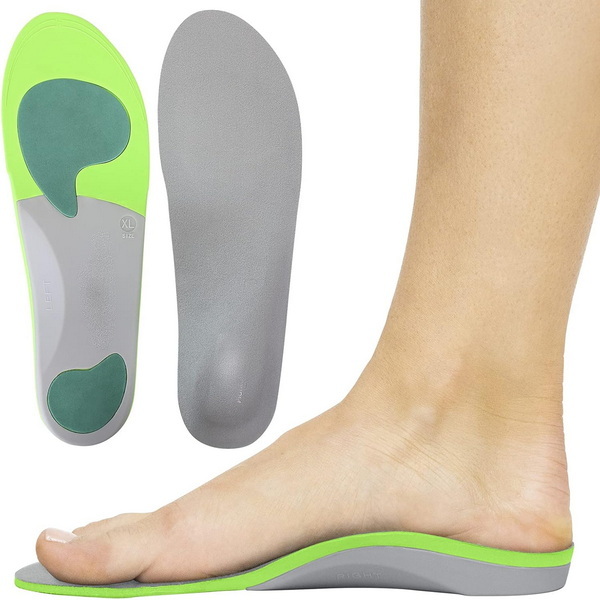
Orthotic inserts are supportive devices placed inside shoes to improve alignment, cushion impact, and redistribute pressure under the foot. They may be custom-made or prefabricated, and come in various profiles such as full-length, three-quarter length, or heel-only designs. Some models are rigid and corrective, while others are softer and focus on comfort or shock absorption.
These inserts are used for conditions such as plantar fasciitis, flat feet, high arches, overpronation, supination, forefoot pain, and general fatigue from prolonged standing or walking. The shape, thickness, and material of an orthotic insert determine how much space it occupies inside the shoe and, therefore, how much adjustment in shoe size might be necessary.
A standard shoe is designed around an internal “last” that assumes a certain foot shape and space for a thin factory insole. When an orthotic insert is added, the volume inside the shoe changes. If the original insole is not removed or if the orthotic is significantly thicker, the foot can be lifted upward and pushed forward, making the shoe feel shorter and tighter.
Even when the original insole is replaced, a dense orthotic that maintains its thickness under load may reduce free space around the toes and over the instep. This is why some users feel cramped even though the length of the shoe on paper has not changed. In other cases, a low-profile orthotic fits so closely to the original liner thickness that no size change is needed at all.
In many situations, the recommended starting point is to keep the same shoe size when using orthotic inserts, especially when the factory insole is removed and replaced one-to-one by the orthotic. For most full-length prefabricated inserts designed for everyday shoes or running shoes, this approach works well because the insert shape closely follows common footwear sizing.
However, there are clear situations where choosing a half size or even a full size larger is sensible:
- When the orthotic is noticeably thicker than the original insole.
- When the arch support is very pronounced and elevates the midfoot significantly.
- When the foot is already high-volume or wide and lacks extra room.
- When the shoe has a low, shallow upper or narrow toe box.
In those cases, a slightly larger shoe size or a wider width variant prevents excess pressure on the toes, top of the foot, and sides of the forefoot. The key is to avoid both excessive tightness and excessive looseness.
Several interacting factors determine whether sizing up is necessary:
Rigid, corrective orthotics and high-cushion insoles typically occupy more vertical and sometimes horizontal space inside the shoe. Softer, slim-profile insoles designed mainly for cushioning often mirror the thickness of stock insoles more closely. The thicker and more structured the orthotic, the more you may need to consider a larger or wider shoe.
Feet that are naturally wide, have a high instep, or swell during the day have less spare room for inserts. In such cases, even a moderate orthotic can cause tightness. Conversely, narrow or low-volume feet sometimes tolerate orthotics in the same shoe size without any discomfort, especially if the original insole is removed.
Shoes with deep heel cups, higher toe boxes, and removable insoles are more orthotic-friendly. Running shoes, walking shoes, and many work shoes fall into this category. Fashion shoes, pointed dress shoes, and certain casual slip-ons often have tighter internal volumes and lighter, glued-in footbeds that are not meant to be removed. In these shoes, orthotic use is more challenging and may require a different size or style.
Soft mesh, knit fabrics, or supple leather uppers can adapt to small increases in foot and orthotic volume, while stiff synthetic or heavily structured uppers provide less give. In flexible uppers, some people can stay with their normal size, whereas in rigid designs, sizing up or choosing a different model is sometimes the only realistic option.
Selecting the right shoe type is often more important than focusing on the number on the size label. For orthotic use, look for footwear with:
- A removable factory insole or footbed.
- Enough depth to accommodate the orthotic without compressing the toes.
- A stable heel counter to hold the rearfoot securely.
- A midsole that is not excessively soft and unstable.
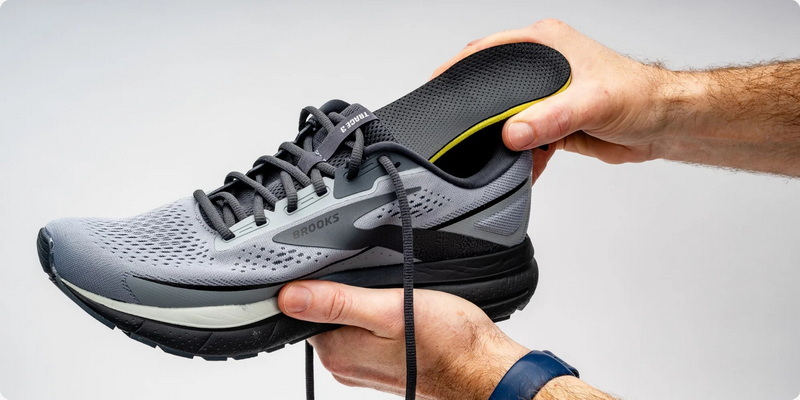
Once you identify a suitable model, compare your usual size with a half size larger. Fit the orthotic inside, remove the original insole if needed, and try both on your feet. Pay attention to the feeling around the toes, across the ball of the foot, and over the instep. There should be no sharp pressure points or excessive looseness.
A practical fitting process helps you decide whether you need a different shoe size:
1. Put on your usual socks or hosiery, the same thickness you intend to wear with those shoes.
2. Remove the stock insole from the shoe if the orthotic is full-length.
3. Place the orthotic inside the shoe, making sure the heel sits fully back and the insert lies flat.
4. Put on the shoes and lace or fasten them as you normally would.
5. Stand and walk on a firm surface, paying attention to pressure under the arch, heel, and toes.
6. Check that your longest toe still has comfortable clearance from the end of the shoe.
7. Assess whether the shoe feels more snug than usual, the same, or slightly looser.
8. Repeat these steps with a half size up if you suspect the original size is too tight.
If the orthotic seems to ride too high, push the heel backward into the heel cup with your hand before you put the shoe back on. This prevents the insert from sliding forward and making the shoe feel short.
Measuring both your foot and your insole helps to choose between borderline sizes. To measure your foot, place it on a sheet of paper, stand naturally, and mark the heel and the tip of the longest toe. Measuring the distance between these points with a ruler gives your functional foot length. Repeat for the other foot in case there is a difference.
To measure the insole or orthotic, place it on a flat surface and measure from the back of the heel cup to the furthest point in the forefoot area. Ideally, the orthotic length should closely match the shoe's internal length, with only a small margin to avoid bunching or curling at the front. If the orthotic is trim-to-fit, cut small amounts from the front only, testing fit frequently rather than trimming too much at once.
Trim-to-fit orthotics are designed with extra length at the forefoot so users can tailor them to different shoe shapes. This design is especially useful when the shoe size is correct in terms of length, but the toe shape is more pointed or narrow than the standard insole pattern. By trimming just the forefoot area, the insert can slide smoothly into the shoe without folding.
Fixed-size orthotics, especially custom-made devices or rigid prefabricated models, must match the shoe size and shape more precisely. Users typically cannot cut these without compromising their structure. For that reason, paying attention to shoe length, width, and internal shape is even more important when using fixed-size orthotics.
Full-length inserts replace or cover the entire insole area from heel to toe. They provide continuous support and cushioning but also create the greatest volume change inside the shoe. When using full-length orthotics, most people remove the original insole and often can stay in their usual shoe size, as long as the shoe has enough depth.
Three-quarter-length inserts extend from the heel to just behind the toes, leaving the forefoot area free. They often work well in dress shoes, loafers, and other styles where the insole is fixed or the toe box is narrow. Because they do not occupy space in the front of the shoe, they sometimes allow users to continue with their existing shoe size even when the footwear is relatively shallow.
Several recognizable problems show when the shoe and orthotic combination is not ideal:
- If the heel slips out of the shoe while walking, the footwear may be too long or too shallow in the heel. Tighter lacing, adding a thin heel grip, or trying a smaller or narrower size can help.
- If the toes feel cramped or hit the front of the shoe, the length may be too short with the orthotic installed. Moving to a half size larger or a shoe with a roomier toe box can relieve this.
- If the top of the foot feels pinched, especially across the laces area, the overall volume is insufficient. A larger size, a wide-width option, or a deeper shoe model may be necessary.
- If the arch support feels too far forward or backward, the orthotic and shoe size may not match your foot properly. In some cases, a different orthotic size or shoe brand with a different last will align better.
Addressing these issues early helps avoid blisters, calluses, and long-term stresses on joints up the kinetic chain such as the ankles, knees, and hips.
The right shoe size for orthotics can also depend on how and where you use them. For high-impact sports, long-distance walking, or standing all day at work, even small fit problems become more noticeable. In such conditions, a slightly larger or wider shoe that offers more space for swelling and motion can be beneficial.
For occasional or low-impact wear, such as short outings or office use, some people tolerate a snugger fit. Nonetheless, the basic rules of toe clearance, absence of pinching, and stable heel hold still apply.
Children's feet grow quickly, so shoe and orthotic fit must be monitored more frequently. When a child uses orthotic inserts, periodic checks are especially important because outgrown shoes can mask the benefits of the device and lead to new problems. Parents should check:
- Whether there is still enough toe space when the orthotic is inside the shoe.
- Whether the child complains about rubbing, pressure, or tired feet.
- Whether the orthotic sits properly and does not curl or buckle.
A small amount of extra length can be acceptable for children who are still growing, but over-sizing shoes to “grow into” them can reduce stability and cause tripping. Balancing a modest growth allowance with proper fit is the goal.
Sometimes the main issue is not the length of the shoe but its width. In those situations, moving to a wide or extra-wide variant in the same length can be more effective than choosing a longer but still narrow model. A wider shoe can make room for both the orthotic and the forefoot without extending the toe too far out in front of the foot.
Users with broad forefeet, bunions, or high-volume orthotics often find that width adjustments provide comfort without creating the feeling of wearing oversized footwear. Many athletic and walking shoe brands now offer multiple width options precisely for this reason.
Putting all of these points together, some practical, easy-to-apply guidelines are:
- Start by selecting footwear designed to accept orthotics, especially with removable insoles and a stable structure.
- Try your regular size first, installing the orthotic in place of the original liner for full-length models.
- If the shoes feel uncomfortably tight, experiment with a half size larger or a wider width, not only a longer length.
- For high-volume or rigid orthotics, expect to need more space and plan for this when shopping.
- Reevaluate fit regularly, particularly if your activity level changes or if the shoes or orthotics show signs of wear.
Listening to your body is essential. Persistent hot spots, numbness, or fatigue indicate that something in the fit, including shoe size, may need adjustment.
There is no single answer to what difference in shoe size you should account for when using orthotic inserts, because the optimal size depends on the type of orthotic, the shoe design, and the individual foot. Many people can stay in their usual shoe size when they replace the stock insole with a well-matched full-length orthotic and choose a shoe model with enough depth. Others, especially those using thicker or more corrective devices or those with high-volume feet, benefit from going up by half a size, a full size, or choosing a wider width. The best strategy is to combine careful measurement with practical try-on tests and to adjust until the combination of shoe and orthotic feels secure, spacious enough, and supportive during real-world use.
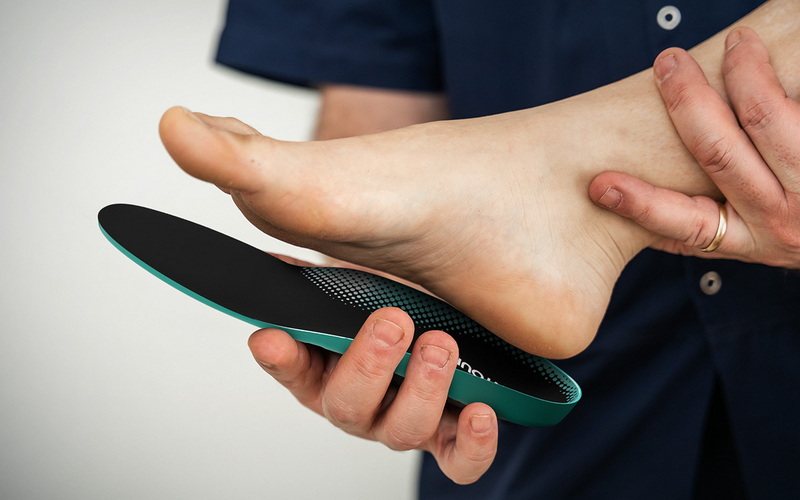
No. Many people can stay with their existing shoe size when they remove the original insole and replace it with a full-length orthotic that has a similar thickness. A larger shoe is usually only necessary when the orthotic is thicker, the shoe is shallow, or the foot is already wide or high-volume.
Not all shoes are suitable for orthotics. Models with removable insoles, adequate depth, and stable construction work best. Very narrow, pointed, or shallow shoes often do not provide enough space, and attempting to force an orthotic into them can cause discomfort or even damage the shoe.
Measure your foot while standing to capture its functional length, and measure the orthotic from heel to front edge. Compare these measurements with the internal length of your shoe. The orthotic should lie flat without curling, and your longest toe should still have safe clearance once everything is in place.
Check your combination of shoes and orthotics whenever you buy new footwear, whenever you feel new discomfort, and periodically if you use them daily. Since shoes and inserts compress and wear over time, what once was a perfect fit can gradually become too loose or misaligned.
If the main pressure is on the sides of the foot rather than the toes, a wider shoe in the same length is often a better solution than simply going longer. Wider shoes can create room for both the forefoot and the orthotic without causing an overly long toe box that feels clumsy or unstable.


