
Views: 222 Author: 3BU Technology Publish Time: 2026-06-17 Origin: Site


Content Menu
● Understanding Achilles Tendinitis and Why Insoles Matter
● How Insoles Help Achilles Tendinitis (Expert View)
● Top Insole Types for Achilles Tendinitis (Consumer Landscape 2026)
>> 1. Best Overall – Full‑Length Orthotic Insoles
>> 2. Best for Work and Hiking Boots – High‑Volume Boot Insoles
>> 3. Best Heel Lifts – Targeted Achilles Off‑Loading
>> 4. Best Firm Orthotic – Precision‑Molded Medical Insoles
>> 5. Best Non‑Shoe Support – Compression Foot Sleeves
● Feature Overview: What Each Product Type Offers
● Expert Section: How We Engineer Achilles‑Focused Insoles at 3BU Technology
● Practical Usage Tips for End Users
● OEM Opportunities for Brands, Wholesalers and Manufacturers
● How 3BU Technology Supports Your Achilles Insole Projects
● Action Steps: How to Choose and Design Insoles for Achilles Tendinitis
● Call to Action: Partner with 3BU for Achilles‑Focused OEM Insoles
● FAQ: Insoles and Achilles Tendinitis
Achilles tendinitis (or Achilles tendinopathy) is an overuse injury where the tendon that connects the calf muscles to the heel becomes irritated, painful and sometimes thickened. This tendon is critical for walking, running, jumping and standing on your toes, so even mild inflammation can quickly affect everyday movement and sports performance. [ncbi.nlm.nih]
Modern treatment guidelines emphasize conservative management first, including activity modification, eccentric loading exercises, and changes to footwear such as appropriate insoles or heel lifts to reduce tendon stress and improve biomechanics. When properly designed, orthotic insoles and heel lifts can redistribute pressure, provide heel cushioning, correct overpronation and slightly reduce the demand on the Achilles with each step. [footlogics-orthotics]
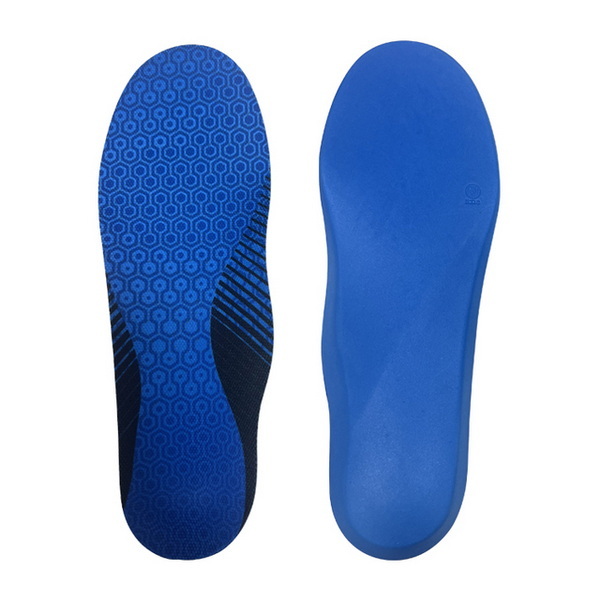
From an R&D and manufacturing perspective, an insole that supports Achilles recovery typically focuses on four technical pillars. [ncbi.nlm.nih]
- Heel cup geometry
A deep, stable heel cup helps center the calcaneus (heel bone), collect natural fat pad cushioning under the heel, and reduce shear forces on the tendon insertion. [superfeet]
- Arch support and rearfoot control
Overpronation can twist the heel and increase strain on the Achilles; firm but not harsh medial arch support helps keep the foot in a more neutral position. [ncbi.nlm.nih]
- Heel elevation and impact absorption
Slightly raising the heel shortens the tendon moment arm and reduces peak tensile loading, while energy‑absorbing foams reduce impact shock travelling up through the tendon. [footlogics-orthotics]
- Material engineering and durability
Multi‑layer constructions using EVA, PU, gels, and occasionally carbon‑fiber reinforcement allow manufacturers to tune stiffness, rebound, and longevity for specific use cases such as hiking boots or work footwear. [footlogics-orthotics]
At 3BU Technology, our orthotic insole projects for Achilles‑focused products typically combine a deep heel cup, medial posting, EVA/PU dual‑density structure, and optional detachable heel lifts so brands can serve both prevention and recovery markets in one platform design.
Below we summarize a well‑known 2026 consumer guide that lists five popular product types for Achilles tendinitis, then interpret them from a manufacturer's perspective. [reddit]
A typical "best overall" Achilles insole, such as the Powerstep Pinnacle, combines medical‑grade arch support, a firm heel cup and dual‑layer cushioning in a full‑length format. These designs are meant to drop directly into walking shoes, work shoes or casual footwear and deliver all‑day support without major shoe modification. [reddit]
From an OEM perspective, this category is ideal for brands targeting wide‑audience retail lines: walking, everyday comfort, and light sports. The core engineering challenge is balancing support stiffness vs. step‑in comfort, which can be tuned through shell thickness, material durometer and top‑cover selection.
Boot‑specific models such as Superfeet Green use a spacious, high‑volume profile with a deep heel cup and high‑density foam, optimized for work boots, hiking boots and other rugged footwear. They emphasize impact protection and posture alignment during long hours of standing, walking or carrying loads. [reddit]
In manufacturing, this segment requires careful last and size grading to ensure fit inside bulkier boots while maintaining sufficient rigidity for heavy users. 3BU frequently designs reinforced rearfoot shells and thicker top‑foams for this market, as brands often prioritize durability and anti‑fatigue performance over ultra‑soft cushioning.
Heel lifts like the OrthoSole range provide localized elevation under the heel, typically from 4 mm up to around 15 mm, to reduce strain on the Achilles tendon. They can be worn alone or layered under a full‑length insole for combined cushioning and height. [reddit]
This category is a powerful tool for early‑stage tendinitis and leg‑length discrepancy cases, but it also carries technical nuance: excessive lift height can alter gait and load the forefoot, so OEM designs must be validated with real‑use testing and clear usage guidance. [ncbi.nlm.nih]
Firm orthotic products such as Salford Blue Firm are cast from real feet to create precise heel and arch contours, then produced in durable, minimally compressible materials. They stabilize the foot, control overpronation and maintain a neutral rearfoot position, which indirectly reduces torque on the Achilles. [reddit]
For orthotic brands, this segment sits closest to clinical podiatry. As a manufacturer, 3BU supports such projects with CAD modeling, 3D foot‑scan data integration and multi‑density shells where forefoot areas may be slightly more forgiving while rearfoot structures remain firm.
Sock‑style products like the OrthoSleeve FS6 provide targeted compression around the Achilles and midfoot, extending support to moments when users are barefoot at home or even sleeping. They do not cushion the heel, but they help manage swelling and provide proprioceptive feedback to protect the tendon. [reddit]
Although 3BU focuses on insole manufacturing, we often work alongside brands that combine compression sleeves and orthotic insoles into one coordinated product ecosystem, creating more holistic solutions for Achilles care.
| Product type | Main benefit for Achilles pain | Typical use cases |
|---|---|---|
| Full‑length orthotic insoles | Arch support + heel cupping | Everyday shoes, light sports, work shoes (reddit) |
| Boot‑focused insoles | Impact absorption + stability | Hiking boots, safety boots, high‑impact work (reddit) |
| Heel lifts | Reduced tendon strain | Early tendinitis, leg‑length discrepancy (reddit) |
| Firm orthotic insoles | Motion control + alignment | Medical, corrective, overpronation control (reddit) |
| Compression foot sleeves | Compression + 24/7 support | At home, sleeping, under socks with shoes (reddit) |
This table reflects common consumer product positions as of 2026, and it shows why a complete Achilles solution portfolio often includes more than one insole format. [reddit]
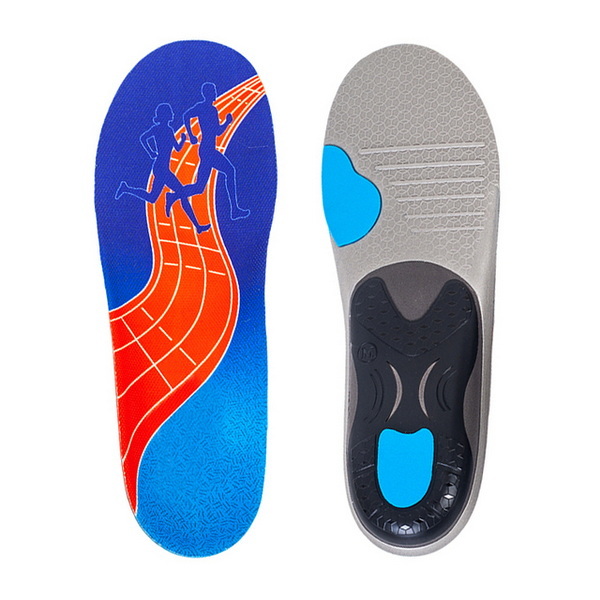
As a leading orthotic insole manufacturer founded in 2012 in Dongguan, China, 3BU Technology operates a 5000㎡ modern workshop with more than 100 skilled workers and over 12 years of experience serving international insole brands. We have delivered OEM and ODM projects for global names such as Sidas, Footlogics and VKTRY, covering sports, medical and lifestyle product lines.
When we co‑develop Achilles‑oriented insoles with overseas clients, we typically follow a structured process:
1. Foot and user scenario analysis
- Review clinical guidance on Achilles tendinopathy, including the role of eccentric exercise and footwear adaptation. [footlogics-orthotics]
- Define target users (e.g., runners, warehouse workers, hikers, elderly) and their weight, activity level and footwear types.
2. Biomechanical design
- Design CAD shell shapes that integrate a deep heel cup, rearfoot posting and controlled arch support, tuned by durometer and thickness.
- Define optimal heel lift range (often 4–8 mm) and decide whether to integrate it or make it a separate accessory. [ncbi.nlm.nih]
3. Material selection and layering
- Combine EVA, PU, gel and sometimes carbon fiber to balance shock absorption, support and durability.
- Add breathable top‑covers and anti‑odor treatments for long‑hour usage in work boots or sports shoes.
4. Prototype validation and user feedback
- Produce small‑batch samples for wear testing by staff, clinicians or pilot customers, focusing on comfort, stability and perceived Achilles relief.
- Refine geometry, hardness and fit based on real feedback to avoid arch irritation or excessive heel elevation.
5. Mass production and quality control
- Use automated machinery plus manual finishing to ensure shape accuracy across size ranges.
- Inspect each batch for hardness, resilience and dimensional precision, especially in high‑load heel and arch zones.
This workflow enables global partners to convert their concepts for Achilles pain relief into scalable, high‑quality insole products that can serve retail, e‑commerce and medical channels.
Even the best insole design will underperform if end users wear it incorrectly or pair it with unsuitable footwear. Based on clinical guidance and field experience, brands can educate customers with simple recommendations: [footlogics-orthotics]
- Start gradually
Advise users to wear new orthotic insoles for a few hours per day at first, then increase usage over a week to allow soft tissues to adapt. [ncbi.nlm.nih]
- Match insole to shoe volume
Boot‑type insoles usually require higher‑volume footwear; very tight dress shoes may need thinner, low‑profile models. [reddit]
- Combine with evidence‑based exercise
Encourage users to follow eccentric heel‑drop protocols and calf stretches under professional guidance, as these have been shown to reduce Achilles pain and support tendon remodeling. [footlogics-orthotics]
- Replace insoles on schedule
Depending on materials and usage intensity, orthotic insoles typically last 12–24 months before performance begins to decline.
By integrating these usage tips into packaging, instruction leaflets, product pages and blog content, brands can improve outcomes and reduce returns, while building trust around their Achilles‑focused product lines.
If you are a footwear brand, distributor or factory looking to expand into Achilles‑supportive products, the current market offers several high‑value opportunities. [reddit]
- Segmented product lines
Develop separate SKUs for everyday use, work boots, running/hiking and post‑injury recovery, each tuned with different shell stiffness and heel geometry.
- Modular systems
Offer full‑length insoles that can be combined with detachable heel lifts, allowing retailers to configure solutions in‑store based on user symptoms.
- Co‑branded medical ranges
Collaborate with podiatrists or physiotherapists to create "clinic‑recommended" Achilles insoles, leveraging clinical credibility and content marketing around tendinopathy care. [mayoclinic]
- Localized product storytelling
Tailor copy, packaging and educational content for different markets (e.g., EU, North America, Japan), addressing local sports habits, work cultures and footwear norms while keeping the same core insole platform.
With its R&D capability, international partnerships and flexible order support, 3BU Technology is positioned to act not only as a factory, but as a design and development partner for such Achilles‑focused insole projects.
As a global OEM/ODM orthotic insole manufacturer, 3BU Technology offers several advantages for brands focusing on Achilles tendinitis solutions.
- Comprehensive product range
We produce medical orthotics, sports insoles, everyday comfort insoles, work boot insoles and fully custom designs, allowing clients to build integrated product ladders for different user groups.
- Advanced design tools
CAD modeling, 3D foot scanning and rapid prototyping help quickly validate arch height, heel cup depth and heel lift configuration for Achilles relief.
- Strict quality standards
Materials such as EVA, PU, gel and carbon fiber are selected and tested according to international safety and performance standards.
- Flexible OEM integration
We support small test orders as well as large‑scale production, with customized packaging and branding to match your market positioning.
If your brand plans to launch or update an insole line targeting Achilles pain, plantar fasciitis and general heel issues, consolidating them on a shared modular platform can significantly reduce development and tooling costs — and this is precisely where 3BU's experience with global insole brands becomes valuable.
For product managers and buyers, the following step‑by‑step checklist can guide your Achilles insole roadmap.
1. Define your primary user
- Runners, hikers, industrial workers, or general consumers with heel pain?
- Each group may need different cushioning levels, stiffness and shoe‑volume compatibility. [reddit]
2. Choose the insole format
- Full‑length orthotics for everyday and sports usage.
- Boot‑volume insoles for heavy‑duty work and hiking.
- Heel lifts as accessories, plus optional compression sleeves from partner brands. [reddit]
3. Set biomechanical targets
- Decide your arch support profile, rearfoot posting and desired heel lift range.
- Align these targets with current clinical recommendations for Achilles tendinopathy. [ncbi.nlm.nih]
4. Collaborate on R&D with your OEM
- Share your brand requirements, target markets and price points with 3BU Technology.
- Co‑create prototypes, test them with real users, and iterate until fit, comfort and perceived relief are optimized.
5. Plan your go‑to‑market content
- Build educational landing pages and blog posts explaining how Achilles tendinitis develops and how your insoles help, referencing up‑to‑date medical sources. [mayoclinic]
- Include clear usage guidelines, replacement timing and warnings to consult healthcare professionals for severe or persistent symptoms.
By combining evidence‑based design, clear user education and a strong manufacturing backbone, your Achilles‑focused insole line can stand out in an increasingly competitive global market.
If you are planning your next Achilles, heel pain or sports recovery insole project, now is an ideal time to upgrade both technology and user experience. With a modern 5000㎡ facility, experienced R&D team and proven collaborations with leading international brands, 3BU Technology can help you move from initial concept to mass production with confidence.
Whether you need a private‑label version of a top‑selling Achilles insole type or a completely new design tailored for your market, our team can support material selection, structural design, prototyping, testing and packaging. To discuss your Achilles insole roadmap, you can reach out to 3BU Technology and start co‑developing products that truly support your customers' long‑term foot health.
1. Can insoles alone cure Achilles tendinitis?
Insoles rarely "cure" Achilles tendinitis by themselves, but they can reduce mechanical stress on the tendon, improve foot alignment and support recovery when combined with rest, eccentric exercises and professional care. [mayoclinic]
2. How much heel lift is safe for Achilles pain?
Most conservative guidelines recommend a small heel elevation (often around 4–8 mm) to reduce tendon loading, but the ideal height depends on individual anatomy and should be evaluated by a clinician when symptoms are significant. [footlogics-orthotics]
3. Are firm or soft insoles better for Achilles tendinitis?
Firm orthotic shells provide stability and alignment, while softer top layers help with shock absorption and comfort; a well‑engineered Achilles insole usually combines both rather than being purely hard or purely soft. [reddit]
4. How long do orthotic insoles for Achilles tendinitis last?
Service life depends on materials and usage, but high‑quality orthotic insoles produced with EVA, PU or combined structures typically last 12–24 months under regular use before significant performance loss.
5. Can I use Achilles insoles in different shoes?
Many full‑length orthotics can be moved between shoes with similar volume, but boot‑style insoles may not fit tight dress shoes, and very thin footwear may need low‑profile or custom designs. [reddit]
1. StatPearls – *Achilles Tendinopathy* (clinical overview, conservative management and exercise recommendations).
https://www.ncbi.nlm.nih.gov/books/NBK538149/ [ncbi.nlm.nih]
2. Mayo Clinic – *Achilles tendinitis: Diagnosis & treatment* (treatment options, heel pads and exercise role).
https://www.mayoclinic.org/diseases-conditions/achilles-tendinitis/diagnosis-treatment/drc-20369025 [mayoclinic]
3. Footlogics – *Achilles Tendonitis* (importance of orthotic insoles, heel lifts and eccentric exercises).
https://footlogics-orthotics.com/achilles-tendonitis/ [footlogics-orthotics]
4. Superfeet – *Achilles Tendonitis Explained | Insoles for Achilles Pain* (role of supportive insoles and RICE principles).
https://www.superfeet.com/blogs/foot-health-podiatry/achilles-tendonitis-explained [superfeet]
5. ShoeInsoles.co.uk – *Top 5 Insoles for Achilles Tendinitis 2026* (example consumer products and user feedback).
https://www.shoeinsoles.co.uk/blog/top-5-insoles-for-achilles-tendinitis.html [reddit]
6. 3BU Technology – *Customized Orthotic Insole Manufacturer* (company capabilities, materials and OEM process).
https://www.insolemaker.com/orthotic-insole.html [insolemaker ]


