
Views: 222 Author: 3BU Technology Publish Time: 2026-06-10 Origin: Site


Content Menu
● Why Accurate Insole Measurement Really Matters
● Tools You Need Before You Start
● Step‑by‑Step: How to Measure Your Foot for Insoles
>> Step 2: Measure Foot Length
>> Step 4: Compare Your Measurements to Size Charts
● How to Measure an Existing Insole for Replacement
>> Step 2: Measure Insole Length
>> Step 3: Measure Insole Width
>> Step 4: Check Thickness and Arch Profile (Advanced)
● Common Mistakes to Avoid When Measuring Insoles
● OEM and Brand Perspective: Why Measurement Standards Matter
● Case Example: From User Measurements to OEM Production
● Practical Insole Measurement Checklist (User‑Friendly)
● Advanced Tips: Matching Insoles to Shoe Types and Use Cases
● Recommended Insole Measurement Table (Example)
● Why Partner with an Experienced OEM Insole Manufacturer
● Call to Action: Turn Accurate Measurements into Better Products
● Frequently Asked Questions (FAQ)
Getting insole measurement wrong doesn't just mean mild discomfort – it can lead to chronic pain, misalignment, and costly product returns for brands and manufacturers alike. This guide walks you through how to measure insoles for shoes accurately, combining hands‑on user tips with OEM manufacturing insight from a leading Chinese insole producer, 3BU Technology. [insolemaker]
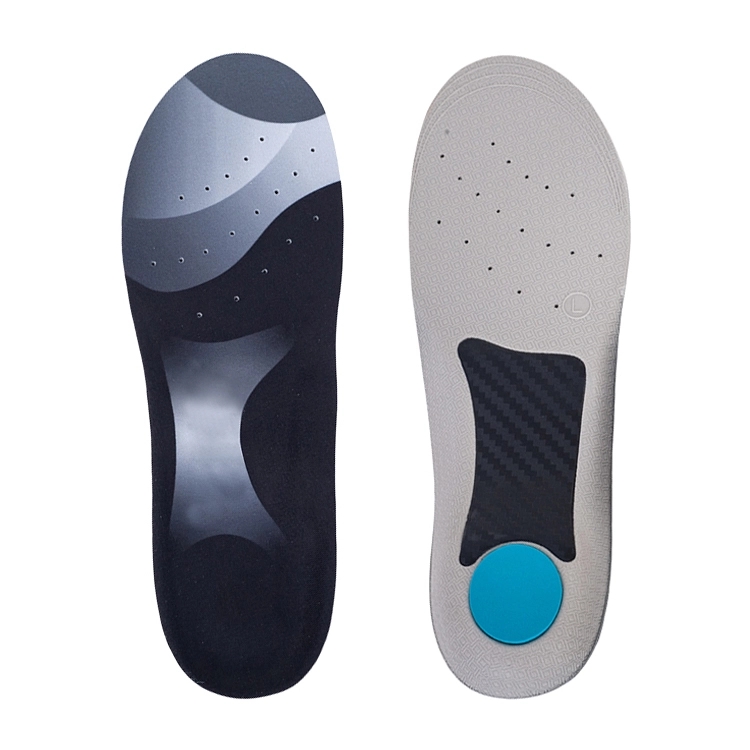
Accurate insole measurement is the foundation of comfort, alignment, and performance. When length or width is off, pressure shifts to the wrong areas of the foot, leading to hot spots, arch strain, or knee and back issues over time. [fitmyfoot]
For end users, precise measurement means:
- Better overall fit and fewer blisters or pressure points. [footonboot]
- Reduced risk of misalignment and overuse injuries. [alineinsoles]
- Greater confidence when buying shoes or insoles online. [bestshoesreviews]
For brands, wholesalers, and OEM buyers, it also means:
- Lower return rates and higher customer satisfaction. [slickplan]
- More consistent fit across product lines and regions. [insolemaker]
- Clearer communication between your design team and manufacturing partners. [aideastep]
As an OEM insole manufacturer, 3BU Technology often starts projects by aligning on measurement method and tolerances with clients before any samples are produced, because a 1–2 mm difference repeated across thousands of pairs quickly becomes a costly problem. [insolemaker]
You don't need lab equipment to measure insoles precisely, but you do need to be consistent. [insolemaker]
Basic tools for consumers and testers:
- Flexible tape measure or ruler (inches or centimeters) for length and width. [alineinsoles]
- A4 or letter‑size paper for tracing your feet. [insolemaker]
- Pen or sharp pencil to capture the outline accurately. [orthofeet]
- Flat, hard surface like a floor or tabletop to avoid distortion. [bestshoesreviews]
Additional tools for brands and OEM teams:
- Digital caliper or precision ruler for thickness and heel cup depth. [aideastep]
- Standardized size charts and grading rules (EU/US/UK/CM). [fitmyfoot]
- Sample log sheets to record measurements across sizes and batches. [slickplan]
Always measure in one consistent unit (preferably millimeters) and record both feet—most people have a small but important size difference between left and right. [orthofeet]
Measuring your foot correctly gives you a reliable baseline before comparing to insole sizes. [alineinsoles]
This creates a visual reference of your foot shape and length. [insolemaker]
1. Place a sheet of paper on a hard, flat surface. [alineinsoles]
2. Stand on the paper with equal weight on both feet. [orthofeet]
3. Hold a pen straight up (perpendicular to the paper) and trace around your foot. [orthofeet]
4. Repeat on the other foot and label each outline. [insolemaker]
Pro tip: Ask someone else to trace for you—most people under‑trace the heel or toes when they lean down themselves. [orthofeet]
Foot length is measured from heel to the longest toe, not necessarily the big toe. [alineinsoles]
- Using a ruler or tape measure, measure from the back of the heel to the tip of your longest toe on the tracing. [insolemaker]
- Record this length for each foot in millimeters or centimeters. [footonboot]
- Use the larger length when selecting an insole or shoe size. [fitmyfoot]
Width is often ignored—but it plays a big role in comfort. [footonboot]
- Identify the widest part of the foot, usually around the ball area. [alineinsoles]
- Measure straight across the widest points on your tracing. [bestshoesreviews]
- Again, use the larger width between your two feet. [fitmyfoot]
Most insole brands provide length‑based size charts and sometimes width guidance. [fitmyfoot]
- Match your foot length and width to the closest size on the brand's chart. [fitmyfoot]
- If you sit between sizes, many experts recommend buying the larger size and trimming the insole to match your shoe. [bestshoesreviews]
- For OEM projects, brands often specify heel‑to‑toe length in millimeters for each size to avoid confusion between regional size systems. [aideastep]
If your shoe has a removable insole, measuring it directly is often the fastest and most accurate approach. [bestshoesreviews]
- Gently pull the insole out from heel to toe to avoid tearing or stretching. [footonboot]
- Lay it flat on a table or other even surface. [bestshoesreviews]
- Place your ruler or tape along the centerline of the insole. [orthofeet]
- Measure from the very tip of the toe to the back of the heel. [footonboot]
- Record this overall length, and note if the toe shape is rounded, pointed, or square, as this affects how it fits in different shoe lasts. [fitmyfoot]
- Find the widest part of the insole, typically under the ball of the foot. [insolemaker]
- Measure straight across this point. [footonboot]
- For wider feet or work boots, width can be more important than length in avoiding side pressure. [sprinsole]
For performance or orthotic insoles, thickness and arch height matter as much as length and width. [insolemaker]
- Use a caliper or stack the insole next to a ruler to estimate overall thickness at heel and forefoot. [aideastep]
- Note whether the arch is low, medium, or high, and where the highest point sits relative to the heel. [sprinsole]
- If you're replacing with a similar product, aim to match these dimensions to avoid tightness or heel slippage. [bestshoesreviews]
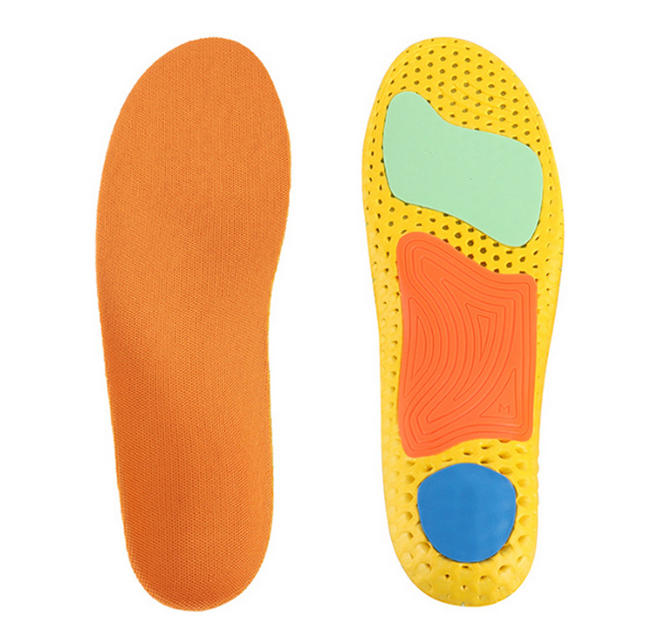
Even small errors can lead to significant fit problems. [footonboot]
Frequent mistakes include:
- Ignoring width: Many people only check length, ending up with insoles that are too narrow or too wide. [alineinsoles]
- Using worn‑out shoes as a template: The internal length and shape change as shoes age. [footonboot]
- Skipping the tracing step: Without a footprint outline, you're guessing at shape compatibility. [orthofeet]
- Measuring late in the day only: While feet are slightly larger at day's end, it's safer to confirm measurements at both morning and evening if you spend long hours on your feet. [sprinsole]
- Mixing units: Switching between inches and centimeters creates confusion and ordering mistakes. [bestshoesreviews]
For OEM buyers, another common mistake is relying solely on generic size charts without confirming real measurements from your target market's feet and shoes. [aideastep]
From a manufacturing standpoint, insole measurement is not just a consumer step—it's a quality standard. [aideastep]
In a typical OEM insole project:
- Brands specify size runs (e.g., EU 36–46 or US M6–M14) and target markets. [insolemaker]
- Manufacturers like 3BU Technology convert these into precise millimeter measurements for heel‑to‑toe length, ball width, and sometimes arch position. [aideastep]
- Both sides agree on tolerances (e.g., ±1 mm in length, ±0.5 mm in thickness) to ensure batch consistency. [aideastep]
This collaboration ensures that when a customer measures their own insole at home, their result aligns with the size they receive from the brand. [fitmyfoot]
Here is a simplified example of how user measurements translate into OEM decisions. [fitmyfoot]
User feedback pattern:
- Many users with work boots report needing a slightly wider insole for 8–12 hour shifts on concrete floors. [sprinsole]
- Measurements show foot width at the ball area consistently 2–3 mm wider than standard size charts. [sprinsole]
OEM response:
- The brand and manufacturer agree to create a "wide fit" insole line, adding extra width in the forefoot while keeping heel width stable to avoid slip. [insolemaker]
- Testing includes users measuring their feet and comparing to the new size chart to validate real‑world fit before full‑scale production. [insolemaker]
This kind of loop—from measurement to design to feedback—is what reduces returns and builds reputation in B2B and B2C markets. [slickplan]
Use this quick checklist before ordering or replacing insoles:
1. Trace both feet and measure length and width. [insolemaker]
2. Record measurements in one unit (mm or cm). [insolemaker]
3. Measure your current insole, if removable, for length and width. [bestshoesreviews]
4. Compare to the brand's size chart, rounding up if you are between sizes. [alineinsoles]
5. Check your activity type (running, work, casual) and shoe style (boot, sneaker, dress) when choosing insole type and thickness. [sprinsole]
Printing this checklist and storing it with your purchase history makes future insole buys much easier and more accurate. [fitmyfoot]
Different shoes and activities place different demands on insoles. [sprinsole]
Running and training shoes
- Prioritize shock absorption and arch support. [sprinsole]
- Slightly thicker insoles are acceptable, but measure both shoe volume and insole thickness to avoid tightness. [sprinsole]
Work boots and safety shoes
- Focus on long‑duration comfort and stability for hard surfaces. [insolemaker]
- Wider forefoot and firm heel cup reduce fatigue and improve alignment. [insolemaker]
Casual and fashion shoes
- Low‑profile insoles are often necessary to preserve shoe fit. [bestshoesreviews]
- Accurate heel‑to‑toe length ensures the insole doesn't buckle or move. [orthofeet]
Orthotic and medical use
- Measurements should be done under professional guidance (podiatrist or orthotist). [orthofeet]
- OEM medical insoles rely on detailed measurements: arch height, heel cup depth, and pressure distribution data. [aideastep]
Use this sample format to record your measurements and share them with suppliers or OEM partners.
| Item | Left Foot | Right Foot | Notes |
|---|---|---|---|
| Foot length (mm) | Measure heel to longest toe (alineinsoles) | ||
| Foot width (mm) | Widest part at ball area (alineinsoles) | ||
| Insole length (mm) | Existing shoe insole (insolemaker) | ||
| Insole width (mm) | Widest insole point (insolemaker) | ||
| Heel thickness (mm) | If known/measured (aideastep) | ||
| Forefoot thickness (mm) | If known/measured (aideastep) | ||
| Shoe type | Running, work boot, casual, etc. (sprinsole) |
Keeping this format standardized makes life easier for both end users and OEM partners. [slickplan]
If you're a brand owner, wholesaler, or shoe manufacturer, insole measurement accuracy is only as good as your production partner's processes. [insolemaker]
Experienced OEM manufacturers typically offer:
- Engineering support to convert regional sizes into precise millimeter specifications. [aideastep]
- Prototyping and fit testing based on real user measurements and field feedback. [insolemaker]
- Material and structure customization (arch profile, heel cushioning, forefoot flexibility) to match your footwear line. [sprinsole]
- Consistent quality control, checking length, width, thickness, and density across batches. [aideastep]
3BU Technology, as a leading Chinese insole manufacturer, works with international brands to develop OEM solutions that integrate precise measurement standards, performance materials, and market‑specific size ranges—so your customers enjoy a consistent, comfortable fit wherever they buy. [insolemaker]
If you're an individual user, start by measuring your feet and existing insoles today—you'll immediately feel the difference in comfort and fit once you buy based on real dimensions rather than guesswork. [alineinsoles]
If you're a brand, distributor, or manufacturer, consider partnering with a specialist OEM like 3BU Technology to:
- Audit your current size charts and measurement standards. [slickplan]
- Develop aligned insole sizing across regions and product lines. [aideastep]
- Prototype and test new comfort solutions tailored to your customers' real‑world measurements. [sprinsole]
Accurate insole measurement is the small technical detail that protects your brand reputation and your customers' feet.
1. Do I need to measure both feet, or is one enough?
You should always measure both feet because most people have a small difference in length or width between left and right. Use the larger measurement to choose insole size so you avoid tightness or pressure on the bigger foot. [insolemaker]
2. Should I measure my feet or my existing insole?
Ideally, do both. Measuring your feet gives a baseline for any future shoe or insole purchase, while measuring an existing insole helps you replace it with a similar product that matches your favorite fit. [alineinsoles]
3. How do I know if I should size up or down when between two insole sizes?
When your measurements fall between sizes, many experts recommend choosing the larger size and trimming the insole to fit your shoe. This avoids toe crowding and allows you to fine‑tune the fit at home. [orthofeet]
4. Does insole thickness matter as much as length and width?
Yes—especially in performance, work, or orthotic insoles, thickness affects how your foot sits inside the shoe. Too thick, and the shoe may feel tight; too thin, and you lose cushioning and support, so it's important to check heel and forefoot thickness when replacing insoles. [fitmyfoot]
5. How often should I re‑measure my feet and insoles?
Feet can change over time due to age, weight, injury, or activity level, so re‑measuring at least once a year is a good practice. If you stand all day at work or train intensively, checking every six months helps ensure your insoles still match your current needs and foot dimensions. [insolemaker]
1. ALINE Insoles – "Insole Measurement: How to Measure Insoles for Shoes?"
<https://alineinsoles.com/blogs/news/insole-measurement-how-to-measure-insoles-for-shoes> [alineinsoles]
2. Insolemaker – "How to Measure The Insole of a Shoe?"
<https://www.insolemaker.com/how-to-measure-the-insole-of-a-shoe.html> [insolemaker]
3. FitMyFoot – "The Ultimate Insole Buying Guide"
<https://fitmyfoot.com/blogs/footprints/the-ultimate-insole-buying-guide> [fitmyfoot]
4. Foot On Boot – "How to Measure Insole of Shoe: Quick & Accurate Guide"
<https://footonboot.com/how-to-measure-insole-of-shoe-2/> [footonboot]
5. Best Shoes Reviews – "How to Measure Insole of a Shoe for Perfect Fit and Comfort Every Time"
<https://bestshoesreviews.com/how-to-measure-insole-of-a-shoe/> [bestshoesreviews]
6. Orthofeet – "How to Measure Insoles for Shoes?"
<https://www.orthofeet.com/blogs/news/insole-measurement> [orthofeet]
7. Sprinsole – "The Ultimate Guide to Comfort: Best Insoles for Manufacturing & Assembly Line Workers"
<https://sprinsole.com/blogs/news/the-ultimate-guide-to-comfort-best-insoles-for-manufacturing-assembly-line-workers> [sprinsole]
8. Insolemaker – "Best Insoles for Long Hours at Work: Expert Guide for Brands, Distributors and Manufacturers"
<https://www.insolemaker.com/best-insoles-for-long-hours-at-work-expert-guide-for-brands-distributors-and-manufacturers.html> [insolemaker]
9. Aidestept – "OEM Orthotic Insoles Manufacturing: How the Process Works"
<https://www.aideastep.com/oem-orthotic-insoles-manufacturing-how-the-process-works/> [aideastep]
10. Slickplan – "SEO Content Strategy 2026: 6-Step Framework + Template"
<https://slickplan.com/blog/seo-content-strategy> [slickplan]


