
Language
Views: 222 Author: 3BU Technology Publish Time: 2026-05-26 Origin: Site


The best shoe insoles for sports combine evidence-based design, sport-specific support, and reliable manufacturing so athletes can perform better and stay injury-free. As a China-based OEM insole manufacturer working with global brands, we see firsthand how the right insole transforms both athletic performance and product success for sports brands. [insolemaker]
Sports insoles are no longer "nice-to-have" accessories; they are performance equipment that can change how an athlete moves, recovers, and competes. From our experience supporting world-class insole brands with R&D and OEM manufacturing, we know that the best shoe insoles for sports must balance biomechanical support, energy return, comfort, and durability—not just add a layer of foam. [openpr]
In this guide, we will walk through how to choose the best sports insoles for running, basketball, soccer, and multi-sport training, while also sharing practical insights for brands, wholesalers, and manufacturers who want to develop their own high-performance insole lines. [rei]
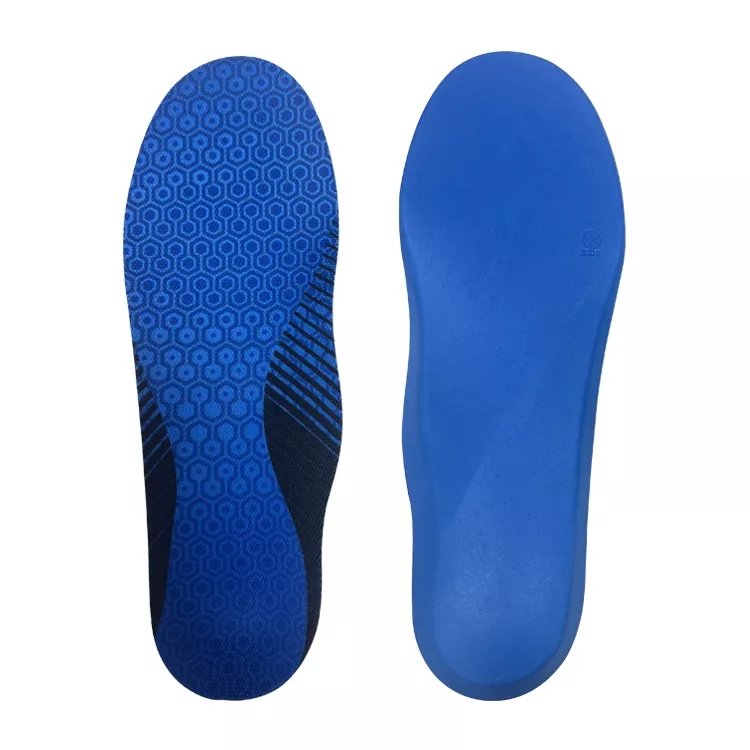
Well-designed sports insoles act as an interface between the foot and the shoe, helping the foot function more efficiently under load. They can enhance comfort, protect joints, and support natural alignment during repetitive or high-impact movements. [einpresswire]
Key functions of quality sports insoles:
- Shock absorption: Reduces impact on ankles, knees, hips, and lower back during running, jumping, and sudden stops. [rei]
- Arch support: Helps control overpronation or supination, which can otherwise contribute to plantar fasciitis, shin splints, or knee pain. [rei]
- Pressure redistribution: Spreads load more evenly across the foot, easing hot spots and reducing blister risk. [rei]
- Stability and alignment: Supports better foot and lower-limb alignment, which can improve balance and movement efficiency. [openpr]
- Comfort and fatigue reduction: Provides cushioning and a more tailored feel, allowing athletes to train longer with less discomfort. [rei]
For sports brands, these performance benefits translate into higher perceived product value, better reviews, and stronger loyalty from athletes who feel the difference under their feet. [einpresswire]
The best shoe insoles for sports are not "one-size-fits-all"; they must match the athlete's foot type, sport, and shoes. Before recommending or designing an insole, we always start with the fundamentals below. [insolemaker]
Knowing your arch type is the first step to selecting a properly supportive sports insole. [rei]
- Flat feet / low arches: Often need more structured medial arch support and motion control to reduce overpronation. [rei]
- Neutral arches: Typically benefit from balanced cushioning and moderate support suitable for multi-sport use. [rei]
- High arches: Usually require greater cushioning and shock absorption to compensate for reduced natural pronation and load sharing. [rei]
A simple wet-foot test on a piece of paper can give a rough idea, but brands increasingly rely on 3D scanning and digital gait analysis to design more precise arch profiles. [openpr]
Different sports create different stresses on the foot. Best shoe insoles for sports should be tuned accordingly. [openpr]
- Running: Needs strong heel cushioning, forefoot rebound, and guidance for repetitive straight-line motion.
- Basketball: Demands lateral stability, impact protection for jumps, and responsiveness for quick cuts.
- Soccer / cleat sports: Require low-profile designs that fit tight boots while still providing stability and stud-pressure relief.
- Cross-training / gym: Benefits from versatile support that handles squats, jumps, and multidirectional movement.
An excellent insole that does not fit the shoe is a poor solution. Thicker insoles can crowd the toe box or lift the heel too much, especially in performance footwear. [rei]
When choosing or designing sports insoles, check:
- Shoe type: running shoe, court shoe, cleat, or training shoe.
- Volume: how much extra space is available inside once the original insole is removed.
- Replaceable footbed: whether the original insole can be taken out and swapped.
Below, we build on the existing product recommendations in the original article and expand them with expert context, so athletes and product managers understand not just "what is good" but why it works. [rei]
Running is a high-impact, repetitive sport, making shock absorption and alignment crucial. Runners often look for insoles that reduce joint stress, minimize fatigue, and provide consistent support over long distances. [openpr]
Well-regarded running insole features typically include:
- Deep heel cup for stable rearfoot positioning.
- Firm midfoot support to limit overpronation.
- Responsive forefoot cushioning for better energy return.
The original article highlights options like Aline Running Insoles, Superfeet Green, Currex RunPro, and Powerstep Pinnacle, which are known in the market for combining support and durability. For OEM brands, this category is ideal for integrating advanced materials like EVA/PU hybrids, gel inserts, or even carbon-fiber reinforcement to create a premium line. [insolemaker]
Basketball requires explosive power, frequent jumping, and rapid lateral movements that can stress ankles, knees, and feet. The best shoe insoles for sports in basketball must deliver vertical shock absorption and strong side-to-side stability. [einpresswire]
Key design priorities:
- Cushioned heel and forefoot for landings.
- Reinforced midfoot for anti-roll stability.
- Grippy top cover to prevent foot slippage inside the shoe.
The original article's picks—such as Aline Basketball Insoles, Sof Sole Athlete, and Dr. Scholl's Sport Insoles—tend to emphasize cushioning, gel-based impact absorption, and flexible arch support suitable for various players. For brand owners, adding anti-bacterial top fabrics and moisture-wicking layers can further differentiate basketball-focused insoles in a crowded market. [insolemaker]
Soccer, rugby, and similar cleat sports are played in tight-fitting boots and involve constant sprints, direction changes, and ball control. Here, low-volume insoles that do not alter ball feel or boot fit are essential. [rei]
What works best:
- Slim-profile design to fit under cleat boards.
- Targeted cushioning under heel and forefoot to reduce stud pressure.
- Balanced arch support that stabilizes without feeling "bulky."
The original article highlights Aline Cleat Insoles, Spenco Polysorb Cross Trainer, and CURREX SoccerPro as solid options that blend stability, cushioning, and breathability for field sports. OEM brands can focus on thin, high-resilience foams and lightweight structural inserts to combine comfort with a minimalist feel. [einpresswire]
From a manufacturer's and brand strategist's perspective, the sports and athletic insoles market presents a strong growth opportunity. Recent analyses show the global sports and athletic insoles market is expected to grow from roughly USD 4.3–10.6 billion around 2026 to between USD 8.4–16.9 billion by the mid‑2030s, with a compound annual growth rate of around 7 percent. [einpresswire]
Growth drivers include:
- Rising global participation in running, fitness, and organized sports. [openpr]
- Increasing awareness of foot health and injury prevention among amateurs and professionals.
- Rapid innovation in materials, such as carbon fiber, memory foam, and advanced gels. [einpresswire]
- Adoption of AI, 3D foot scanning, and sensor technologies for personalized fit. [openpr]
For overseas brands and wholesalers, partnering with an experienced OEM insole manufacturer allows you to leverage these trends quickly—without building your own production lines. [insolemaker]
From our work as a dedicated OEM/ODM insole manufacturer in Dongguan, China, we see that "best shoe insoles for sports" is not about one universal model, but about alignment between product design, athlete needs, and brand positioning. [insolemaker]
A high-performance sports insole typically integrates:
- Advanced materials: EVA, PU, gel, carbon fiber, or thermoplastic components to balance cushioning, support, and weight. [insolemaker]
- Biomechanical design: Heel cups, arch profiles, and forefoot contours shaped using CAD and, increasingly, 3D scanning data. [insolemaker]
- Consistency in production: Tight control over hardness, density, and rebound characteristics across batches. [insolemaker]
At 3BU Technology, for example, modern workshops of around 5000㎡ and more than 100 skilled workers support efficient R&D, sampling, and mass production for international sports insole brands. [insolemaker]
Working with a specialized insole manufacturer allows brands to:
- Launch sport-specific lines (running, basketball, soccer, hiking) with tailored constructions. [insolemaker]
- Use private-label designs, custom colors, and branded packaging to build identity and shelf appeal. [insolemaker]
- Scale from small test runs to large orders as demand grows, without compromising quality. [insolemaker]
Because an experienced OEM has already solved common issues—such as arch collapse after wear-in, delamination, or poor fit in popular shoe categories—brands can move faster and reduce development risk. [insolemaker]
Whether you are choosing a pair for personal use or specifying requirements for an OEM project, evaluation should go beyond basic comfort.
When you try or buy sports insoles, pay attention to:
1. Fit in your shoe: Ensure the insole lies flat without buckling; your toes should not feel cramped.
2. Immediate comfort: Mild firmness is normal, but there should be no sharp pressure points.
3. Support during movement: Test with sport-specific motions (short runs, jumps, lateral cuts).
4. Foot fatigue after use: Notice how your feet and lower legs feel after 30–60 minutes of activity.
If an insole supports your arch, reduces impact, and remains comfortable across a full training session, it is likely a good match for your foot and sport. [rei]
For product managers, purchasing teams, and distributors, assessing an OEM partner and insole design should include:
- Material specification: foam type, density, hardness, and top cover fabric. [insolemaker]
- Structural features: heel cup depth, arch height options, metatarsal pads, or carbon plates. [insolemaker]
- Sampling process: ability to iterate quickly on design and thickness based on feedback. [insolemaker]
- Certification and standards: compliance with international safety and quality benchmarks. [einpresswire]
Working closely with the manufacturer's R&D team to test prototypes in real sports scenarios is one of the most reliable ways to ensure that marketing claims align with on‑field performance. [insolemaker]
The table below summarizes popular insole types and where they fit best.
Insole type | Main benefit | Best for sports |
|---|---|---|
Cushioned foam insoles | Soft comfort and basic shock absorption rei | Casual running, light training rei |
Structured arch-support insoles | Motion control and alignment rei | Distance running, court sports rei |
Low-profile cleat insoles | Stud-pressure relief in tight boots rei | Soccer, rugby, field sports rei |
Carbon-fiber performance insoles | Energy return and propulsion openpr | Sprinting, high-performance running |
Smart sensor insoles | Gait data and injury monitoring openpr | Elite training, sports tech applications |
If you are an athlete, your next step is to test the right insoles in your actual sport shoes, paying attention to comfort, stability, and fatigue over multiple sessions. A small change underfoot can lead to faster times, improved control, and fewer injuries. [rei]
If you are a brand owner, wholesaler, or shoe manufacturer, now is the ideal time to expand your catalog with sport-specific insoles designed around your target customers. As a dedicated OEM/ODM insole manufacturer with over a decade of experience, 3BU Technology partners with global brands to develop custom sports insoles—from initial concept and CAD design through sampling, mass production, and packaging. [insolemaker]
Talk to our insole engineering team to create your next high-performance sports insole line and bring better comfort, support, and performance to your athletes worldwide. [insolemaker]
1. Do I really need special insoles for sports, or are my shoe's originals enough?
Sports shoes include basic insoles, but they are often designed to be lightweight and generic rather than supportive. Upgrading to purpose-built sports insoles can significantly improve shock absorption, support, and comfort, especially for high-volume training. [openpr]
2. How long do sports insoles usually last?
Lifespan depends on training volume and materials, but many sports insoles perform well for about 300–500 hours of use before cushioning and support begin to degrade. Runners may find that replacing insoles roughly as often as their shoes maintains consistent comfort and protection. [einpresswire]
3. Can sports insoles help prevent injuries?
While no insole can guarantee injury prevention, well-designed insoles can reduce excessive pronation, cushion impact, and improve alignment, which may lower the risk of common overuse injuries like plantar fasciitis or shin splints. However, they should complement—not replace—good training habits and appropriate footwear. [einpresswire]
4. Are custom or semi‑custom insoles always better than off‑the‑shelf models?
Custom and semi‑custom insoles created from 3D scans or pressure data can provide extremely precise support, but high-quality off‑the‑shelf sports insoles are often sufficient for many athletes. The best choice depends on your budget, foot complexity, and performance goals. [openpr]
5. What should brands look for when choosing an OEM sports insole manufacturer?
Key factors include proven experience with sports insoles, modern production facilities, clear material specifications, robust quality control, and the ability to support both small trial orders and large-scale production. Requesting prototypes, performance testing, and references from existing clients helps ensure you are working with a reliable partner. [insolemaker]
1. REI Co‑op. "How to Choose Insoles or Shoe Inserts – Expert Advice." [Link]. [rei]
2. Future Market Insights / Sports & Athletic Insoles Market Reports (2026–2036 growth projections). Example summary: "Sports and Athletic Insoles Market to Surpass USD 8.4 Billion" (2026 analysis).[Link]. [openpr]
3. EIN Presswire. "Sports & Athletic Insoles Market to Reach US$16.9 Billion by 2033." [Link]. [einpresswire]
4. 3BU Technology – Orthotic Insole OEM/ODM Information. "Orthotic Insole" product and manufacturing overview. [Link]. [insolemaker]
5. 3BU Technology – Company Profile. "About Us – 3BU – Eva Insole." [Link]. [insolemaker]
6. 3BU Technology – Custom Insole Manufacturing Services. "Custom Eva Insole, Customized PU Insole – China Manufacturers." [Link]. [insolemaker]
7. 3BU Technology. "Top 10 Best Arch Insoles Manufacturers in China – 3BU." [Link]. [insolemaker]


