
Language
Views: 222 Author: Edvo Publish Time: 2025-10-16 Origin: Site


Content Menu
>> Key Features of Orthotic Insoles
>> Key Features of Arch Supports
● The Main Differences Between Orthotic Insoles and Arch Supports
● When Should You Choose an Orthotic Insole?
● When Are Arch Supports Enough?
● Can Orthotics and Arch Supports Be Used Together?
● OEM & Custom Orthotic Insole Manufacturing
>> Our OEM Customization Capabilities
● Common Foot Problems Solved by Insoles
● How to Choose Between Orthotic Insole and Arch Support
● Foot Health and the Role of Proper Insoles
● Benefits of Partnering With a Leading Insole Manufacturer
● FAQs
>> 1. What is the main difference between orthotic insoles and arch supports?
>> 2. Can I use orthotic insoles in any type of shoe?
>> 3. How long does it take to get used to orthotic insoles?
>> 4. Are orthotic insoles worth the investment?
>> 5. How often should I replace my insoles?
As foot health awareness grows worldwide, many people are beginning to understand the importance of proper footwear and supportive insoles. However, confusion often arises over two common terms: orthotic insoles and arch support insoles. Are they the same thing, or do they serve different purposes? Let's dive deep into their structure, function, and benefits to help you make the right choice for your feet.
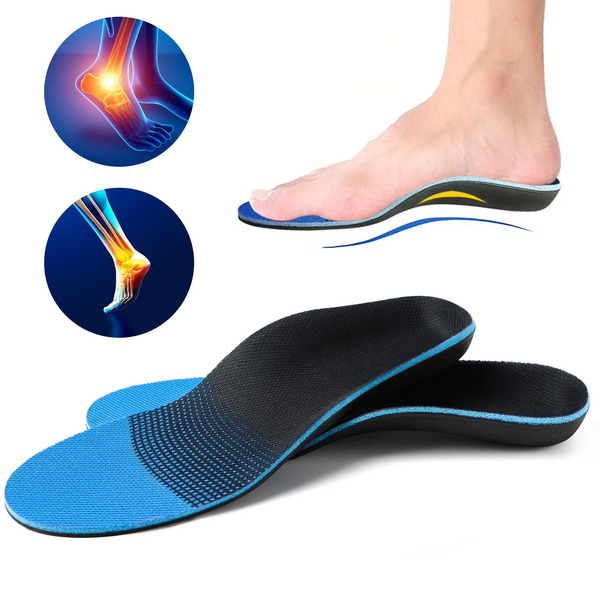
An orthotic insole is a customized or semi-custom insert designed to correct abnormalities and improve foot function. Unlike regular insoles that offer comfort alone, orthotics are medical-grade products often recommended by podiatrists to address specific structural issues such as flat feet, plantar fasciitis, heel pain, and overpronation.
- Custom Fit: Tailored to match the unique shape of an individual's foot for maximum support.
- Biomechanical Correction: Helps realign the foot posture and improve gait efficiency.
- Pain Relief: Reduces strain in the heels, arches, knees, and lower back.
- Durability: Made from robust materials like EVA, polyurethane, or carbon fiber that withstand daily use.
Orthotic insoles often include multiple layers of cushioning and structural components. The top layer provides comfort and sweat absorption, while the mid-layer stabilizes the arch and heel. The bottom layer maintains the correct positioning inside the shoe to support proper biomechanics.
Arch supports are devices designed to maintain the natural curve of the foot's arch. They are usually prefabricated and focus mainly on cushioning and stability without medical-grade correction.
- General Support: Keeps the arch stable and reduces fatigue.
- Readily Available: Found in soft gel cushions, memory foam inserts, and firm plastic modules.
- Affordable: Typically much cheaper than custom orthotics.
- Comfort Enhancement: Improves everyday comfort for users with mild discomfort or occasional pain.
Arch supports come in varying shapes and densities to fit different arch heights—low, neutral, or high. Choosing the right one depends on your foot type, shoe style, and the level of activity.
While both orthotics and arch supports aim to improve foot comfort, their functions differ significantly.
| Feature | Orthotic Insole | Arch Support |
|---|---|---|
| Purpose | Corrects biomechanical issues and provides medical-grade correction | Offers comfort and mild support to the arch |
| Customization | Fully or semi-custom, made to fit the individual’s foot shape | Usually one-size-fits-most design |
| Support Level | Provides targeted support for multiple foot areas | Focuses primarily on the arch |
| Material | Often rigid or semi-rigid for corrective strength | Usually softer foam, silicone, or gel |
| Price Range | Higher, due to medical-grade design and fabrication | More affordable and widely available |
Essentially, orthotic insoles are like “prescriptions” for your feet, whereas arch supports are “general supplements” that make footwear more comfortable.
Orthotic insoles are best for people who experience chronic discomfort or medically diagnosed foot conditions. They can dramatically improve mobility and reduce pain for individuals with:
- Plantar fasciitis
- Flat feet or collapsed arches
- Heel spurs
- Overpronation or supination
- Knee and lower back pain
- Foot imbalance from injury or aging
If you regularly experience pain while standing, walking, or exercising, visiting a podiatrist to get custom orthotics is a wise investment. Many orthotic models include heel cups and metatarsal pads that help stabilize the ankle and distribute body weight evenly.
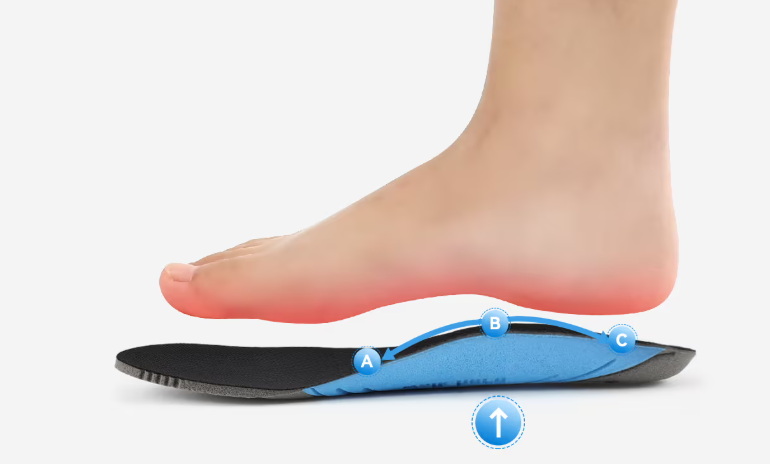
For individuals without severe foot conditions, arch supports can be an excellent, affordable option. They work well for:
- Mild to moderate arch pain relief.
- Everyday comfort enhancement at work or home.
- Reducing tiredness from long hours of standing.
- Light athletic use in running, walking, or cross-training shoes.
Arch supports are ideal for people who seek temporary relief rather than medical correction. They are easy to insert, remove, and replace depending on shoe type or comfort preference. Some models are even designed for high heels, dress shoes, and sandals.
In specific cases, the two can be combined. For instance, within a shoe that has removable padding, a podiatrist might add an arch cushion under a semi-rigid orthotic to increase comfort. However, using both simultaneously without professional supervision may cause improper foot positioning or excessive elevation inside the shoe.
The correct approach is to let a qualified professional assess your gait and pressure points before layering multiple inserts.
As a leading Chinese insole manufacturer, we specialize in OEM services for foreign brands, wholesalers, and footwear producers seeking premium footcare solutions. Our manufacturing expertise covers both orthotic-style insoles and ergonomic arch support designs for global markets.
- Custom footbed molds for different demographics.
- High-quality materials: EVA, PU, latex, cork, memory foam, and environmentally friendly gel.
- Private label branding and unique designs for distributors.
- Adjustable softness and thickness tailored to customer specifications.
- Bulk production and international logistics solutions.
We integrate advanced CAD software and production technologies to ensure every insole delivers stability and lasting comfort. Whether you represent a professional orthotic brand or a mass-market footwear company, we can support your entire product development process—from design sketch to packaging and export.
1. Plantar Fasciitis Relief: Orthotic insoles align the heel and midfoot, reducing tension on the plantar fascia ligament.
2. Flat Feet Correction: Custom orthotics restore the natural arch to prevent inward rolling of the feet.
3. Heel Spur Pain Reduction: Cushioning materials absorb shock and relieve joint stress.
4. Overpronation/Underpronation Correction: Guides feet into neutral walking patterns to protect ankles and knees.
5. Lower Back and Hip Pain Relief: Improves full-body alignment by balancing foot posture.
Insoles are not only functional; they contribute directly to posture balance and long-term musculoskeletal health.
Selecting between orthotic insoles and arch supports mainly depends on your specific condition, activity level, and budget.
- Choose Orthotic Insoles if you have consistent pain, alignment issues, or need professional correction.
- Choose Arch Supports if you want extra cushioning or moderate support for day-to-day comfort.
If you're uncertain, start with arch supports first. Should discomfort persist, switch to custom orthotics after professional assessment. Always test the insert for fit and stability to ensure it doesn't alter your shoe size or balance.
Proper maintenance extends the life of your insoles and ensures sustained performance.
- Remove insoles after daily use to let shoes air out.
- Rinse gently with mild soap and water for non-leather models.
- Avoid dryer heat or direct sunlight exposure to prevent warping.
- Replace every 6–12 months depending on intensity of usage.
- Store in a cool, dry area when not in use.
Maintaining cleanliness is crucial not only for durability but also for hygiene, as insoles absorb moisture and odor during long hours of wear.
Healthy feet are the foundation of overall body mobility. Poor support can lead to chain reactions—affecting ankles, knees, hips, and spine. Orthotic insoles enhance alignment by redistributing body weight efficiently, whereas arch supports help maintain balance and reduce muscle strain during walking.
Developing good foot care habits—regular stretching, proper shoe selection, and using insoles suited to your needs—can prevent chronic conditions later in life. For active individuals, the right insole can improve athletic performance by enhancing shock absorption and minimizing fatigue.
When you work with our company, you benefit from a full production ecosystem designed for efficiency, customization, and quality assurance.
- OEM & ODM Customization: From design artwork to finished product, tailored to your brand vision.
- Technical Excellence: Precision molding and ergonomic shaping for superior comfort.
- Strict Quality Control: Testing for resilience, compression recovery, and long-term wearability.
- Global Market Experience: We cooperate with leading brands across Europe, North America, and Asia.
Our production merges traditional craftsmanship with modern automation, ensuring consistency for both medical-grade orthotics and lifestyle insole ranges.
While orthotic insoles and arch supports both enhance foot comfort, they differ in their functions and overall purpose. Orthotics are corrective solutions designed to treat foot misalignments and chronic pain, while arch supports provide general comfort by sustaining the arch shape. Understanding this distinction is essential for end-users and especially for footwear brands developing insole products.
As a top Chinese manufacturer offering OEM services, we create insoles that combine innovation, support, and style. Whether your customers need full orthotic correction or casual arch cushioning, we provide reliable footcare solutions that meet international standards in performance and comfort.
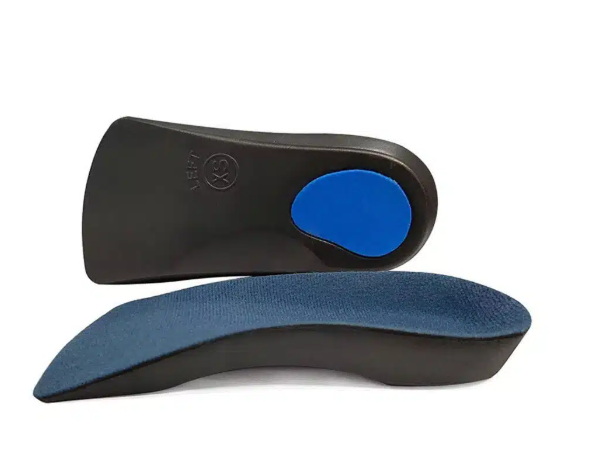
Orthotic insoles are medical-grade products designed to correct specific foot alignment issues, while arch supports provide general comfort and mild stability for the arch.
Most orthotic insoles fit best in athletic, orthopedic, or casual shoes with removable insoles. Some may need trimming to fit perfectly inside tighter footwear styles.
It usually takes one to two weeks for the feet to fully adjust. Gradual daily wear helps achieve maximum comfort and proper alignment.
Yes. Although more expensive than standard inserts, orthotics deliver personalized long-term relief from chronic pain and improve mobility.
Regular arch supports typically last 6–8 months, while premium orthotic insoles can last up to two years depending on daily use and material quality.


