
Views: 222 Author: 3BU Technology Publish Time: 2026-05-31 Origin: Site


As an OEM insole manufacturer working with global brands, I've seen first-hand how PU and EVA behave very differently once they leave the lab and go into real workers' boots and performance shoes. On paper, both materials offer cushioning and shock absorption, but when you focus on arch support height retention under heavy load, PU normally wins by a clear margin. [insolemaker]
From daily production tests and feedback from brands in safety, work and outdoor segments, PU-based insoles usually hold their original thickness and shape for the full life of the shoe, while EVA formulations tend to flatten and lose support earlier, especially at the arch and heel. In this article, we will break down the material science, field performance, lab testing approach and OEM design options so that brand owners, wholesalers and manufacturers can choose the right chemical composition for long-lasting arch support. [insiteinsoles]
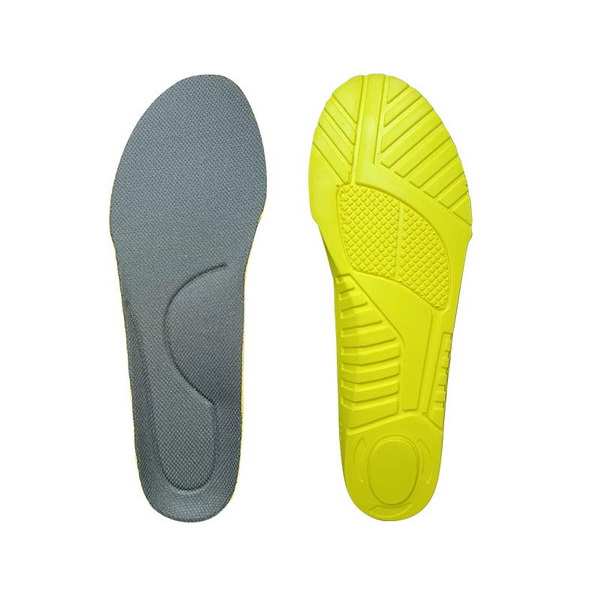
- PU (polyurethane): More durable, resilient structure, strong resistance to compression set and deformation. [aybroad]
- EVA (ethylene-vinyl acetate): Lightweight, cost-effective, comfortable cushioning but prone to faster compression and thickness loss over time. [footmasterinsole]
A typical pattern we see in OEM projects is:
- Work boots, safety shoes, industrial footwear → PU or PU-foam core to ensure long-lasting arch support under heavy, repetitive loading. [insiteinsoles]
- Running, fashion and budget footwear → EVA or EVA blends to keep the shoe light and affordable, accepting shorter support life as a trade-off. [aideastep]
Dimension | PU (Polyurethane) | EVA (Ethylene-Vinyl Acetate) |
|---|---|---|
Compression set (long-term flattening) | Low – retains thickness longer under heavy use aideastep | Higher – tends to flatten faster aideastep |
Arch support height retention | Strong over full shoe life insiteinsoles | Noticeable drop over time, especially under heavy load insiteinsoles |
Durability | High; suitable for safety and work footwear aideastep | Moderate; more suitable for light to medium use aideastep |
Weight | Heavier aideastep | Very lightweight aideastep |
Cost | Higher material cost aideastep | Cost-effective for mass volume models aideastep |
Best use cases | Work/safety, industrial, anti-fatigue, high-load insiteinsoles | Running, lifestyle, budget, low–medium duty aideastep |
In materials science for insoles, compression set describes how much a foam fails to return to its original thickness after being compressed for a period of time. A lower compression set means the material springs back closer to its original height, even after thousands of steps or hours of standing. [sorbothane]
- PU foams typically show better compression-set performance than EVA, which is why poured or molded PU is widely used when brands want long-lasting structural support rather than just soft cushioning. [footmasterinsole]
- EVA is known for good initial cushioning, but its cell structure can collapse progressively under loading, which shows up on the foot as a flattening arch and reduced heel thickness. [aybroad]
From a user's perspective, this is exactly when someone says: "The insole felt great when new, but after a few months my arch feels like it is sinking." In many of our OEM cases, this feedback is linked to high-EVA content formulations in heavy-duty footwear categories. [aideastep]
Under heavier loads – such as workers wearing safety shoes 10–12 hours per day, or heavier users carrying tools and equipment – two things happen:
- The repeated high pressure speeds up cell wall fatigue in EVA foam, increasing permanent deformation. [insiteinsoles]
- The arch region, which already takes concentrated load, loses height faster, reducing alignment and support for the plantar fascia and midfoot. [upstep]
By contrast, poured or high-quality PU maintains a more stable internal structure under the same conditions, preserving the original arch profile longer and delaying that "flattened insole" feeling. [footmasterinsole]
From OEM collaboration with safety and work-boot brands, our engineering team sees a clear trend:
- PU insoles in industrial and safety shoes typically keep usable support for the life of the outsole, provided the density and hardness are correctly specified. [insiteinsoles]
- EVA-based insoles in the same category often require mid-life replacement to maintain arch height, especially in high-weight or high-mileage users. [footmasterinsole]
Several safety footwear studies and manufacturer insights note that PU is favored for long working hours on hard surfaces, precisely because it offers stable cushioning and shape support with minimal deformation. EVA is often reserved for lighter duties or as a top layer for comfort rather than as the primary structural core. [aybroad]
A common pattern we see:
1. A brand uses an EVA insole in a safety shoe line to keep weight and cost low.
2. After 3–6 months, heavy-use customers report arch collapse, heel pain or "bottoming out."
3. The brand runs a redesign project and switches to a PU or PU-foam core with targeted arch reinforcement.
4. Warranty returns and complaints for support loss drop significantly after the switch.
Although exact numbers depend on formulation, the direction of change is consistent: moving from EVA to PU improves arch support retention under heavy load. [insiteinsoles]
PU foams used in insoles are typically engineered with a more stable, resilient cell structure, which makes them resistant to permanent deformation under long-term stress. This resilience allows PU to: [footmasterinsole]
- Maintain consistent arch curvature over time.
- Provide reliable heel cupping and midfoot support throughout the shoe's service life. [insiteinsoles]
In poured PU designs, the foam can be precisely controlled in density and hardness, which enables fine-tuning of arch height and firmness by zone – for example, firmer under the arch and heel, softer under the forefoot. [footmasterinsole]
EVA's copolymer structure offers excellent lightweight cushioning and energy return at the start. It is widely used in running and casual shoes because: [aideastep]
- It reduces overall shoe weight.
- It is highly moldable and cost-efficient. [aybroad]
However, when exposed to repeated heavy loading, EVA's cells can collapse and lose elasticity faster than PU, leading to higher compression set. This is why many technical footwear developers recommend replacing EVA-based insoles at least once during the life of a shoe for heavy users. [insiteinsoles]
As a specialized OEM insole manufacturer, 3BU Technology follows a structured test flow to evaluate how well different compositions maintain arch support height under load. [insolemaker]
Typical test steps include:
1. Baseline 3D measurement
We scan the fresh insole to capture exact arch height, heel thickness and midfoot curvature.
2. Simulated loading cycles
Using compression and flex-testing machines, we simulate thousands of steps and static standing loads representative of real work conditions.
3. Post-test dimensional check
We re-measure arch height and heel thickness to quantify any loss in structural support.
4. User field trials with selected prototypes
We provide test insoles to target users (e.g., warehouse workers, construction crews) and collect subjective feedback regarding arch support and fatigue.
Across multiple projects, PU-based prototypes consistently show lower height loss and better perceived support compared with EVA prototypes under the same test cycles. [footmasterinsole]
Beyond simply choosing PU vs EVA, our R&D team can tune:
- Foam density and hardness (Shore A/C) for each zone.
- Hybrid constructions combining PU cores with EVA top layers for comfort and branding.
- Additional TPU arch shells or heel stabilizers to further lock in arch height under heavy loads. [footmasterinsole]
For brands targeting demanding work environments, we typically recommend PU or PU-foam as the main structural layer, with EVA or other foams used selectively where weight and feel are critical. [insiteinsoles]
Choose PU-based insoles as your core material when:
- Your end users carry heavy loads or stand/walk for long shifts on hard surfaces.
- You need arch support height to remain stable throughout the shoe life.
- Your brand positions itself around premium durability, anti-fatigue and safety.
PU insoles are particularly suited to:
- Safety and industrial footwear.
- Military, tactical and logistics applications.
- Work boots for construction, warehousing and manufacturing. [insiteinsoles]

Choose EVA-based insoles or EVA-rich blends when:
- Lightweight feel is a central selling point, such as in fast-paced running or minimalist footwear.
- The expected duty cycle is light to moderate, and users replace footwear more frequently.
- Cost constraints favor a more economical material, accepting shorter support life as a trade-off. [aideastep]
In many of our projects, the best solution is a hybrid:
- PU or PU-foam core under the arch and heel.
- EVA or soft foam top layer for immediate step-in comfort, branding, and moisture management. [footmasterinsole]
From a user-experience perspective, the difference between EVA and PU shows up as a timeline of comfort and support:
- Month 1–2: Both EVA and PU feel comfortable; EVA may even feel softer and bouncier initially.
- Month 3–6 under heavy use: EVA users begin to notice reduced arch support, heel bruising or more fatigue, especially if body weight or workload is high. [insiteinsoles]
- Later months: PU users still experience consistent arch support height, while EVA users either replace the insoles or the entire shoe to regain comfort. [footmasterinsole]
This timeline is crucial for brand owners targeting professional or industrial users: reduced arch support is not just a comfort issue – it impacts productivity, fatigue and even long-term foot health. [upstep]
To improve UX and reduce confusion, we recommend that brands:
- Clearly highlight "PU core for long-lasting arch support" or similar claims in product pages and packaging when using PU.
- Provide replacement guidance when using EVA-based insoles (e.g., "replace insole every 4–6 months for best support under heavy use").
- Use comparison diagrams on product pages to show arch height retention differences between PU and EVA under heavy loads.
3BU Technology has over a decade of experience in R&D and production of custom insoles for global brands, including performance and safety footwear leaders. Our team supports OEM and ODM partners with: [insolemaker]
- Material selection (PU, EVA, PU foam, hybrids) based on target use, load level and price point. [insiteinsoles]
- Structural design of arch profiles, heel cups and metatarsal pads tuned to different foot types and applications.
- Rapid sampling and iteration to validate arch support height retention before mass production. [insolemaker]
We work closely with brand product managers and developers to balance durability, weight, cost and comfort, ensuring that the final insole aligns with your market positioning.
If you are planning or updating an insole program:
1. Define your primary use case and load profile
Safety, work, outdoor, running, lifestyle – and typical daily hours of use.
2. Decide your priority: durability vs weight
If arch support retention under heavy load is non-negotiable, lean toward PU-based solutions.
3. Request PU–EVA comparative prototypes
Ask your OEM partner (or 3BU Technology) to provide at least two prototypes: one PU core and one EVA core, both with the same arch design.
4. Run in-house or field tests
Measure or at least visually inspect arch height after several weeks of test wear. Collect user feedback on support and fatigue.
5. Lock in final specification and scale production
Once you see the real-world difference, finalize density, hardness and construction for your production order.
If your target customers stand, walk or carry loads for long hours, choosing PU-based or hybrid insole constructions can dramatically improve arch support height retention and user satisfaction over time. As a dedicated OEM/ODM insole manufacturer, 3BU Technology can help you design, test and scale insole programs that match your market positioning while balancing durability, weight and cost. [insolemaker]
To discuss a specific project or request PU vs EVA comparison samples, you can reach out to 3BU Technology and start optimizing your next insole line for real-world heavy-load performance. [insolemaker]

In most heavy-load scenarios, yes, PU maintains arch support height longer than EVA, thanks to its lower compression set and more durable foam structure. However, final performance still depends on exact density, thickness and construction choices. [aideastep]
For very light users or occasional wear, a high-density EVA may be acceptable, but it typically cannot match PU for long-term arch stability in industrial or safety environments. Many brands therefore shift to PU or hybrid designs once complaints about flattening appear. [footmasterinsole]
Yes, this is a common high-performance solution: PU or PU-foam under the arch and heel for structural support, and EVA or soft foam as a comfort and branding top layer. This combines the durability of PU with the lightweight feel and aesthetics of EVA. [insiteinsoles]
There is no universal number, but many footwear experts recommend replacing EVA-based insoles at least once during the life of the shoe if used heavily. If users start reporting more fatigue or arch discomfort, it is usually a sign that EVA has compressed and lost height. [insiteinsoles]
You can work with your OEM partner to run compression and cyclic loading tests, then measure arch height before and after testing using 3D scanning or precise dimensional tools. A controlled side‑by‑side comparison between PU and EVA versions will make the performance difference visible and quantifiable. [footmasterinsole]
1. Aideastep – "Comparison between PU insole and EVA insole." [Link] [aideastep]
2. Aideastep – "Best Materials for Durable Pre-Fabricated Insoles." [Link] [aideastep]
3. 3BU Technology – "About Us – 3BU – Eva Insole." [Link] [insolemaker]
4. Aybroad – "EVA 与 PU 的区别 – Custom Insole Manufacturer." [Link] [aybroad]
5. INSITE – "Balancing Weight and Durability in Athletic Insole Materials." [Link] [insiteinsoles]
6. Footmaster Insole – "PU vs EVA vs PU Foam vs Gel: Choosing the Right Insole Material for Safety Shoe Manufacturers." [footmasterinsole]
7. Upstep – "Best Materials for Orthotics: How and Why Orthotic Materials Differ." [Link] [upstep]
8. Sorbothane – "What's the Best Material for Insoles?" [Link] [sorbothane]
9. 3BU Technology – "Product Knowledge – 3BU – Eva Insole." [Link] [insolemaker]


