
Views: 222 Author: 3BU Technology Publish Time: 2026-06-05 Origin: Site


Heavy-duty arch support insoles represent a critical intersection of biomechanical engineering and material science, specifically designed to withstand forces 67% greater than standard footwear experiences with every step. For individuals weighing over 250 lbs, conventional insoles—typically rated for 130-170 lbs—fail rapidly due to premature compression set, arch collapse, and material fatigue. As a leading Chinese insole manufacturer (3BU Technology) specializing in OEM services for international brands, wholesalers, and manufacturers, we've engineered multi-density polyurethane (PU) solutions that address this critical market gap through strategic material layering, density optimization, and biomechanical load distribution. [facebook]
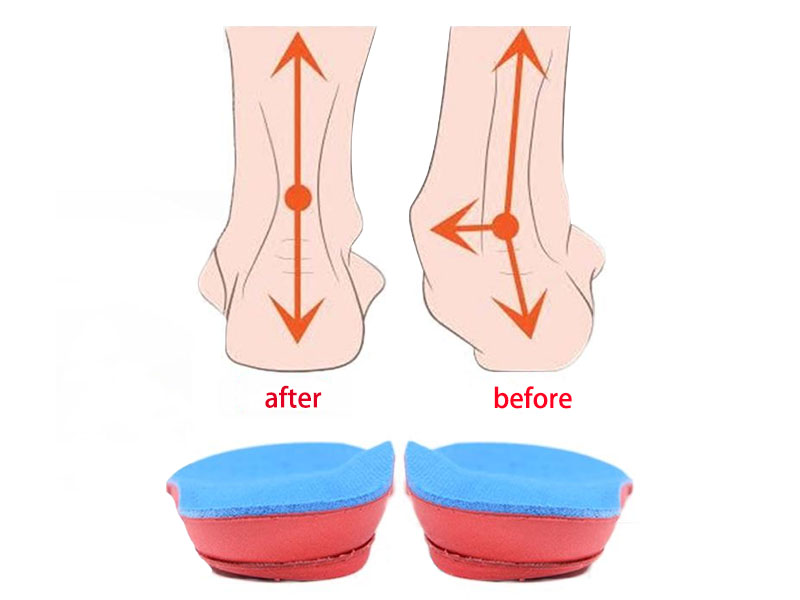
The fundamental problem facing users over 250 lbs isn't simply increased weight—it's the exponential increase in plantar pressure and cyclic loading that standard insoles cannot withstand. Research demonstrates that obese individuals (BMI 30-40 kg/m²) experience time-dependent foot structural degradation under repeated hyper-loading, with arch indices dropping below the 0.21 diagnostic threshold for normal arches within just 1,000 loading cycles at 1,000N forces. This accelerated structural failure necessitates a paradigm shift from comfort-focused design to durability-engineered support systems. [pubmed.ncbi.nlm.nih]
Standard foam compression failure occurs because conventional single-density materials lack the hierarchical structure needed to manage both impact absorption and long-term shape retention. At 250 lbs, each footstrike generates approximately 2.5-3x body weight during gait transitions—potentially exceeding 750 lbs of instantaneous force. This crushing load causes standard open-cell foams to exceed their elastic limit, resulting in permanent deformation (compression set) that eliminates arch support within weeks rather than months. [pubmed.ncbi.nlm.nih]
Multi-density PU architecture solves this through strategic material zoning: firm, high-density polyurethane (115-125 kg/m³) in the medial arch region provides structural integrity and prevents collapse, while softer zones (35-45 kg/m³) in the heel and forefoot absorb impact without bottoming out. This biomimetic approach mirrors the foot's natural architecture—rigid bone structure for support, surrounded by adipose tissue for cushioning. [alibaba]
The core innovation in heavy-duty insole design lies in creating functional density gradients that respond appropriately to varying pressure zones. Based on our manufacturing experience and materials testing data, optimal multi-density configurations typically employ three distinct zones:
1. High-density arch core (115-140 kg/m³): This zone provides the structural backbone, resisting compression under cyclic loading exceeding 1,000N. Materials in this range demonstrate tensile strength >2.5 kg/cm², elongation >110%, and critically, compression set <5% after 10,000 cycles. [cnjjfule.en.made-in-china]
2. Medium-density transition zones (60-90 kg/m³): Surrounding the arch core, these buffer zones prevent abrupt hardness transitions that create pressure hotspots. This gradient approach reduces peak plantar pressure in medial forefoot and rearfoot regions by distributing loads across larger surface areas. [pmc.ncbi.nlm.nih]
3. Impact-absorbing base layer (35-50 kg/m³): The lowest layer prioritizes shock absorption using ultralight PU formulations that achieve equivalent cushioning at 30% lower density through advanced cell structure engineering. [insiteinsoles]
For users over 250 lbs, poured polyurethane foams demonstrate superior long-term performance compared to compression-molded alternatives. Poured PU creates a more uniform cellular structure with controlled density and greater resilience, maintaining compression set resistance under repeated loading. The manufacturing process involves pouring liquid PU mixtures into precision molds, allowing for: [insiteinsoles]
- Uniform cell distribution: Eliminates weak zones that initiate catastrophic failure
- Controlled crosslink density: Polyether polyol functionality (f) ≥2.8 ensures adequate network stability under thermal and mechanical stress [kabondfoam]
- Integrated multi-density bonding: Single-pour processes can create density transitions without delamination risks inherent in adhesive-bonded assemblies
Industry data reveals that optimized poured PU systems maintain residual deformation below 7% after 100,000 compression cycles—significantly outperforming the 10% limit required by ISO 3385:2021 automotive seating standards. This translates to insoles that retain structural integrity for 6-12 months of daily use in heavy-duty applications, compared to 4-8 weeks for standard foams. [kabondfoam]
Compression set—the percentage of permanent deformation remaining after load removal—represents the single most important predictor of insole lifespan for heavy users. Standard flexible foams exhibit compression set values exceeding 30% deviation from baseline when subjected to high-temperature/high-humidity aging conditions (40°C/95% RH), particularly when molecular weight of polyols falls below 200 g/mol. [kabondfoam]
To combat this, heavy-duty PU formulations incorporate:
- High-functionality polyether polyols: Using grafted polyether with f≥2.8 and controlled ethylene oxide (EO) end-capping (<20% primary hydroxyl content) minimizes hydrophilic segment failures under heat and humidity [kabondfoam]
- Optimized TDI/MDI index: Maintaining isocyanate index between 90-110 ensures balanced –NCO/–OH molar ratios, preventing dangling chain ends that fragment the crosslink network [kabondfoam]
- Extended curing protocols: Foams with density >30 kg/m³ require minimum 24-hour cure cycles to prevent residual monomer plasticization effects that compromise load-bearing capacity [kabondfoam]
Research into arch support biomechanics reveals that support height exerts more significant effects than width on center-of-pressure (COP) dynamics and pressure redistribution. For heavy users, we've found optimal arch heights ranging from 20-28mm (measured from insole base to arch peak), with specific recommendations based on user weight: [pmc.ncbi.nlm.nih]
- 250-300 lbs: 20-24mm arch height
- 300-350 lbs: 24-26mm arch height
- 350+ lbs: 26-28mm arch height with reinforced TPU heel cups
Higher arch supports systematically alter COP velocities during loading response and propulsion phases, while shifting peak pressure from medial forefoot/rearfoot to the medial arch region where high-density materials can safely manage loads. This redistribution reduces localized stress concentrations that cause diabetic ulceration and chronic pain in obese populations. [pmc.ncbi.nlm.nih]
Arch width, conversely, shows minimal effects on tested biomechanical variables. However, from a material durability perspective, wider arch platforms (40-55mm medial-lateral dimension) distribute compressive forces across larger volumes of high-density PU, reducing stress per unit volume and extending compression set resistance. [pmc.ncbi.nlm.nih]
Multi-density PU alone cannot provide sufficient arch support for users exceeding 250 lbs—rigid skeletal structures are essential. Industry best practices incorporate:
- TPU (thermoplastic polyurethane) heel cups: Semi-rigid cups cradle the calcaneus, providing vertical stability and preventing lateral heel collapse [archsupportcare]
- Carbon fiber or nylon arch plates: Embedded within the PU matrix, these plates prevent catastrophic mid-stance arch flattening under peak loads
- Poron® heel pads: Medical-grade urethane foams with exceptional energy return properties cushion heel strike without permanent deformation [archsupportcare]
These hybrid constructions combine the best properties of multiple material classes: PU provides conforming cushioning, while engineering polymers deliver structural integrity.
Feature | Multi-Density PU | EVA Foam | Gel Insoles | Memory Foam |
|---|---|---|---|---|
Weight capacity | 250-400+ lbs | 130-200 lbs | 150-220 lbs | 130-180 lbs |
Compression set @ 10K cycles | <7% | 15-25% | 10-18% | 20-35% |
Lifespan (heavy use) | 6-12 months | 2-4 months | 3-6 months | 1-3 months |
Arch support rigidity | High (customizable) | Low-Medium | Low | Very Low |
Temperature stability | Excellent (-20 to 80°C) | Good | Poor (hardens <5°C) | Fair (softens >35°C) |
Manufacturing scalability | High (moldable) | Very High | Medium | High |
Cost per unit (OEM) | 3.50−8.00 | 1.20−3.00 | 4.00−12.00 | 2.00−5.00 |
This comparison reveals why multi-density PU has become the gold standard for bariatric and heavy-duty applications: no competing technology offers comparable durability at commercially viable price points. [insiteinsoles]

As an insole manufacturer serving international brands, we've identified five non-negotiable quality checkpoints for heavy-duty insole production:
1. Density verification: Each production batch requires destructive testing to confirm density targets (±3 kg/m³ tolerance). Deviations >5% compromise durability warranties.
2. Compression set testing (ASTM D3574): Pre-shipment sampling must verify <10% residual deformation after 22-hour compression at 50% deflection, 70°C. [kabondfoam]
3. Bond strength testing: Multi-density interfaces require peel strength >6 N/cm to prevent delamination under shear forces during gait.
4. Dimensional stability: Finished insoles undergo 48-hour conditioning at 23°C/50% RH, followed by dimensional inspection (±0.5mm tolerance on arch height).
5. Moisture resistance: Samples subjected to 40°C/95% RH for 72 hours must maintain <8% compression set increase to pass tropical climate suitability. [journals.sagepub]
For brands targeting the heavy-duty market segment, we offer:
- Density profiling: Custom density maps based on client-provided pressure distribution data
- Geometry optimization: FEA-validated arch profiles tailored to specific footwear types (work boots, athletic shoes, casual footwear)
- Surface treatments: Antimicrobial coatings, moisture-wicking top fabrics, and odor-control technologies [cnjjfule.en.made-in-china]
- Rapid prototyping: CNC-machined molds enable design iteration cycles <3 weeks from concept to sample
Clinical research on individually designed insoles for overweight users (implemented by manufacturers like 3BU Technology) demonstrates measurable improvements in multiple performance parameters: [pmc.ncbi.nlm.nih]
- Pain reduction: Visual Analog Scale (VAS) scores decreased significantly with continued insole use
- Weight management: Participants showed weight loss trends attributed to increased activity tolerance enabled by proper foot support
- Physical performance: 30-meter sprint times, vertical jump heights, and 12-minute Cooper run distances all improved, suggesting enhanced biomechanical efficiency [pmc.ncbi.nlm.nih]
However, it's critical to acknowledge limitations: even optimized insoles cannot fully prevent time-dependent foot structural changes in obese populations under repeated hyper-loading. The effectiveness of arch support diminishes progressively—our cadaveric foot studies show that while standard insoles fail to maintain arch indices after 1,000 cycles at 1,000N loads, reinforced insoles extend this to approximately 6,000 cycles before dropping below clinical thresholds. [pubmed.ncbi.nlm.nih]
This data underscores that insoles are supportive interventions, not permanent solutions—users over 250 lbs should replace heavy-duty insoles every 4-6 months depending on activity levels, even with premium multi-density PU construction.
Modern polyurethane chemistry enables increasingly sustainable heavy-duty insole production:
- MDI-based formulations: Transitioning from traditional TDI (toluene diisocyanate) to MDI (methylene diphenyl diisocyanate) reduces volatile organic compound emissions while maintaining mechanical properties [cnjjfule.en.made-in-china]
- Bio-based polyols: Incorporating renewable polyols derived from castor oil or soy can replace up to 30% of petroleum-based content without compromising compression set resistance
- Recyclability pathways: Glycolysis processes can break down polyurethane into reusable polyols, though contamination from multi-material assemblies remains a challenge
- Durability = sustainability: Extended product lifespan (6-12 months vs. 2-4 months for inferior alternatives) directly reduces replacement frequency and material throughput
At 3BU Technology, we're actively developing closed-loop manufacturing systems where production scrap and end-of-life returns are reprocessed into secondary applications (industrial padding, acoustic damping materials), minimizing landfill contributions.
Engineering effective arch support for users weighing over 250 lbs demands a comprehensive understanding of materials science, biomechanics, and manufacturing precision. Multi-density polyurethane technology—when properly formulated with density gradients from 35-140 kg/m³, optimized crosslink networks, and rigid reinforcement structures—delivers the durability and support that this underserved market segment desperately needs. [insiteinsoles]
As obesity rates continue rising globally, the demand for bariatric-rated footwear components will expand significantly. Brands and wholesalers seeking to capture this market must partner with manufacturers capable of delivering consistent quality across the five critical checkpoints: density verification, compression set performance, bond integrity, dimensional accuracy, and environmental stability.
At 3BU Technology, we've invested over a decade perfecting multi-density PU formulations specifically for heavy-duty applications. Our OEM/ODM services provide international partners with fully customizable solutions—from density profiling and geometry optimization to rapid prototyping and sustainable material sourcing. Whether you're developing work boots for industrial applications, athletic footwear for plus-size athletes, or therapeutic insoles for bariatric healthcare, our engineering team brings the materials expertise and manufacturing capacity to bring your vision to market.
Ready to discuss your heavy-duty insole project? Contact our technical sales team to schedule a consultation and receive sample sets demonstrating our multi-density PU capabilities. We offer MOQ flexibility for emerging brands and scalable production volumes up to 500,000 pairs monthly for established partners.
Q1: How often should users over 250 lbs replace their insoles?
Heavy-duty multi-density PU insoles typically require replacement every 4-6 months with daily use, compared to 2-4 months for standard insoles. Replacement frequency depends on activity intensity—industrial workers standing 8+ hours daily may need monthly replacements, while casual users might achieve 8-10 month lifespans. Visual inspection for visible arch flattening, heel cup deformation, or top fabric wear indicates replacement needs regardless of timeline. [aliexpress]
Q2: Can multi-density PU insoles be heat-molded for custom fitting?
Yes, many multi-density PU formulations can be thermoformed at temperatures between 80-120°C, allowing podiatrists and retailers to customize arch contours to individual foot geometries. However, heating above 85°C risks inducing thermal degradation of molecular chains, so professional heat-molding equipment with precise temperature control is essential. At 3BU Technology, we offer both pre-contoured designs and heat-moldable variants depending on client distribution channels. [kabondfoam]
Q3: What's the weight capacity difference between single-density and multi-density insoles?
Single-density insoles typically fail catastrophically between 200-250 lbs due to uniform compression throughout the structure, while properly engineered multi-density designs can support 350-400+ lbs by strategically placing high-density materials (115-140 kg/m³) in load-critical arch and heel regions. The weight capacity isn't merely about total density but strategic density placement—a 60 kg/m³ average density multi-layer insole outperforms a 90 kg/m³ single-density design through superior load distribution. [solbase]
Q4: Do heavy-duty insoles require specific footwear compatibility?
Yes, heavy-duty insoles require footwear with adequate volume and structural support. Shoes must provide: (1) removable factory insoles to accommodate the typically 6-8mm thickness of multi-density designs, (2) rigid heel counters that complement the insole's TPU heel cup, and (3) sufficient toe box depth to prevent volume displacement-induced toe crowding. Work boots, hiking boots, and athletic trainers with "ortho-friendly" designations typically meet these requirements, while fashion sneakers and dress shoes often lack necessary volume. [archsupportcare]
Q5: Are multi-density PU insoles effective for diabetic users over 250 lbs?
Multi-density PU insoles can reduce peak plantar pressures from 208.86 kPa to 160.02 kPa in diabetic populations, lowering ulceration risk. However, diabetic users over 250 lbs represent an extremely high-risk category requiring medical-grade custom orthotics rather than over-the-counter solutions. These should incorporate: (1) pressure-mapping-validated density profiles, (2) total contact design principles, and (3) continuous monitoring for hot spots during break-in periods. We recommend diabetic customers over 250 lbs consult certified pedorthists before using any insole product. [pmc.ncbi.nlm.nih]
1. National Center for Biotechnology Information (NCBI) - "Can an insole for obese individuals maintain the arch of the foot against repeated hyper loading?" https://pubmed.ncbi.nlm.nih.gov/31604431/
2. National Center for Biotechnology Information (NCBI) - "Effects of arch support doses on the center of pressure and peak plantar pressure distribution during running" https://pmc.ncbi.nlm.nih.gov/articles/PMC9719983/
3. INSITE Insoles - "Levation™ Poured PU Foams - Engineering Data and Applications" https://insiteinsoles.com/products/poured-pu/
4. Made-in-China - "Polyurethane Breathable Flexible Foam for Insole - Technical Specifications" https://cnjjfule.en.made-in-china.com/product/yBontFPGauUf/China-Polyurethane-Breathable-Flexible-Foam-for-Insole.html
5. Made-in-China - "Deodorized Insole Material Polyurethane Foam Technical Data" https://cnjjfule.en.made-in-china.com/product/tSgJILjMgPpq/China-Deodorized-Insole-Material-Polyurethane-Foam-for-Shoes.html
6. National Center for Biotechnology Information (NCBI) - "The effects of individually designed insoles on pes planus treatment" https://pmc.ncbi.nlm.nih.gov/articles/PMC7665030/
7. Kabond Foam - "Why Is Flexible PU Foam Prone to Compression Set? - Material Science Analysis" https://www.kabondfoam.com/blog-Industry-Knowledge-11933/Why-Is-Flexible-PU-Foam-Prone-to-Compression-Set-11930153.html
8. INSITE Insoles - "3 Foams, All the Comfort, Performance, and Support - Material Selection Guide" https://insiteinsoles.com/materials/3-foams-all-the-comfort-performance-and-support/
9. Solbase - "The Foundation - Weight Limit Analysis for Standard Insoles" https://solbase.co/products/solbase-foundation
10. Facebook/Solbase - "Insoles Built for 200-350 lbs Finally - Engineering Explanation" https://www.facebook.com/100087728100873/videos/975214325104686/
11. Arch Support Care - "8 Best Heavy Duty Insoles for Overweight Men 2026" https://archsupportcare.com/best-heavy-duty-insoles-for-overweight-men-2/
12. National Center for Biotechnology Information (NCBI) - "Design and Fabrication of Customised Diabetic Insoles - Pressure Reduction Data" https://pmc.ncbi.nlm.nih.gov/articles/PMC12649967/
13. SAGE Journals - "Endurance of Polyurethane Automotive Seating Foams under Varying Temperature and Humidity Conditions" https://journals.sagepub.com/doi/10.1177/0021955X0003600303
14. National Center for Biotechnology Information (NCBI) - "Biomimetic Orthopedic Footwear Advanced Insole Materials" https://pmc.ncbi.nlm.nih.gov/articles/PMC10452612/


