
Language


Content Menu
● Benefits of Using Heated Insoles
● Where To Get Heated Insoles?
>> 2. Local Sporting Goods Stores
>> 3. OEM/ODM Heated Insole Manufacturers
● What Makes Chinese Heated Insole Manufacturers Stand Out
>> Competitive Pricing and Cost Control
>> Comprehensive Customization Options
>> Strict Quality and Compliance Standards
>> Strong Export and Logistics Integration
● How To Choose the Right Supplier
● The Manufacturing Process of Heated Insoles
● Key Applications of Heated Insoles
● Innovations Shaping the Heated Insole Market
● The Future of Heated Insole Manufacturing in China
● Why Partnering With a Chinese Manufacturer is the Right Investment
>> 1. How long do heated insoles operate on a full charge?
>> 2. Are heated insoles comfortable for all-day wear?
>> 3. How should I clean my heated insoles?
>> 4. Do manufacturers offer custom branding for heated insoles?
>> 5. How can international buyers order heated insoles from China?
As temperatures drop and winter approaches, keeping feet warm becomes more than a matter of comfort—it becomes essential for health and performance. Heated insoles are now widely adopted as an innovative solution for maintaining warmth in harsh conditions. They are popular among outdoor workers, athletes, motorcyclists, skiers, and anyone who spends long hours in the cold. But for those seeking to purchase or manufacture them, the key question arises: Where to get heated insoles?
This article provides a complete guide on where to buy heated insoles, how to find reliable suppliers, and why China has become the world's most trusted OEM production base for heated insole manufacturing. Whether you are a wholesaler, brand owner, or private label entrepreneur, this guide will help you make smart purchasing decisions.

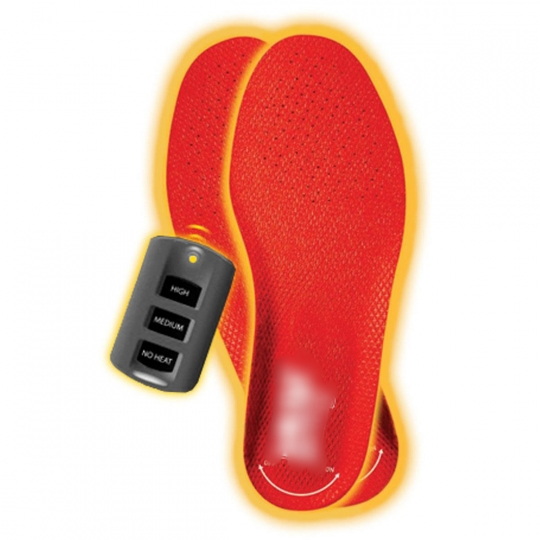
Heated insoles are specially designed shoe inserts equipped with built-in heating systems. They work through electric heating elements and rechargeable lithium batteries that distribute warmth evenly across the foot. These devices typically feature temperature control systems, allowing users to adjust the heat level according to environmental conditions.
Modern heated insoles use advanced materials such as carbon fiber or conductive threads, providing not only warmth but also flexibility and durability. Many versions are wireless, rechargeable by USB, and include smart control functions such as remote temperature settings, Bluetooth mobile app connections, or automatic temperature adjustment sensors.
The working principle of heated insoles is simple but efficient. A small electrical current passes through the carbon fiber or metal heating layer, converting energy into thermal output. Each pair usually has a built-in rechargeable battery placed near the heel or an external battery clip connected to the ankle area. Once powered on, the heating element produces gentle, even warmth without overheating.
Advanced models integrate smart thermostats that maintain consistent warmth without wasting power. They also include thermal insulation layers that prevent heat from escaping downward, keeping it concentrated around the sole where warmth is most needed. This balanced design ensures safety, comfort, and energy efficiency, making them perfect for long periods of use.
Wearing heated insoles provides a wide range of physical and practical benefits:
1. Constant warmth: They maintain an ideal temperature from toe to heel, which is critical in cold weather environments.
2. Improved blood circulation: Heat helps stimulate blood flow, reducing numbness and cold-related stiffness.
3. Reduced fatigue: By keeping feet warm, body energy loss decreases, allowing people to stay active longer.
4. Health protection: Heated insoles help prevent frostbite and reduce the risk of arthritis flare-ups caused by cold exposure.
5. Enhancement of footwear adaptability: They can fit into various shoe styles, from hiking boots to work safety footwear.
For outdoor workers, delivery drivers, and winter sports enthusiasts, heated insoles are not a luxury—they are a necessity that enhances safety and comfort in freezing temperatures.
When searching for where to buy heated insoles, the ideal source depends on your purpose—retailing, personal use, or OEM production. Let's explore the main purchasing channels and their advantages.
For individuals or small-volume buyers, online platforms such as Amazon, eBay, and Walmart are reliable and easy to access. These platforms offer different models—USB rechargeable, wireless control, or disposable toe warmers. Shoppers can read reviews and compare brands to find trustworthy products that match their budget.
However, the downside of buying from retail websites is limited customization options. Quality variation between lower-priced models is also common. For businesses intending to resell or develop their own product line, purchasing directly from the manufacturer offers far better long-term value.
Sporting goods chains and outdoor apparel shops often carry heated insoles from established brands. Customers can personally test comfort, flexibility, and heat output before purchasing. Some high-end stores even offer boot-fitting services that include integrating heated insoles into ski or hiking footwear.
This option is great for end-users but limited for commercial buyers because of retail pricing and branded restrictions. Retail stores rarely supply OEM or bulk-order customers.
For large-scale importers, brands, and retailers, OEM (Original Equipment Manufacturing) or ODM (Original Design Manufacturing) partnerships provide the best balance of cost, customization, and performance. In this model, a manufacturer produces heated insoles according to your specifications, design, and logo.
China has emerged as the global leader in heated insole manufacturing due to several advantages:
- Strong industrial supply chain integration.
- Advanced technology in small-scale battery systems.
- Skilled production teams experienced in footwear accessories.
- Competitive pricing and flexible order volume.
By cooperating with a Chinese manufacturer, you gain full control over design, branding, and packaging while maintaining affordability and consistent quality standards.
China's footwear accessory manufacturing ecosystem continues to evolve beyond standard production. Today's factories specialize in innovation-driven OEM services that meet the expectations of international clients.
Chinese suppliers benefit from large-scale raw material access and automated production equipment, allowing them to maintain low per-unit costs without compromising performance. This makes them ideal partners for bulk orders targeted at global markets.
Factories can design personalized heated insoles in various materials such as EVA foam, PU cushion, or memory foam combined with advanced heating systems. You can request different voltage settings, wireless connectivity functions, remote control systems, or Bluetooth app integration.
Private label services include branded packaging, logo printing, and color adjustments suitable for different market segments. This flexibility enables competitive product portfolios for retailers and importers.
Leading Chinese producers implement strict internal quality control to ensure temperature safety, heating consistency, and battery endurance. Many maintain international certifications, ensuring compliance with European and North American safety regulations. Every product batch undergoes repeated temperature calibration, waterproof testing, and durability checks before shipment.
Exporting is another strength of China's heated insole manufacturing sector. Suppliers provide complete global delivery solutions, from air freight and sea shipping to custom clearance and regional warehouse support. Clear communication, English-speaking teams, and after-sales services make cooperation smooth and efficient for foreign clients.
Choosing the right manufacturer determines your long-term brand reputation and product success. Consider the following points before signing any agreement:
- Experience & reputation: Select a supplier with proven expertise in heated elements and wearable tech.
- Material verification: Request detailed information about insulation and battery safety performance.
- OEM support system: The factory should offer engineering design, packaging development, and prototyping services.
- Technical consistency: Test sample batches for reliability and temperature control accuracy.
- After-sales response: Reliable suppliers provide continuous support even after delivery.
Establishing mutual trust through effective communication is essential. Before mass production, request prototypes and run small pilot tests to confirm final specifications.
Producing a functional, safe, and durable heated insole involves multiple steps that combine electronics, material science, and ergonomic design:
1. Concept and design phase: Designers create drawings based on user comfort, heating patterns, and voltage range.
2. Sample creation: Engineers build prototypes integrating all functional components for client evaluation.
3. Material selection: High-quality carbon fiber, thermal fabrics, and memory foam layers are prepared.
4. Assembly and lamination: Components are assembled into the correct shape, followed by heat sealing and waterproofing processes.
5. Battery integration: Rechargeable batteries are inserted securely, often with removable connectors for safety.
6. Quality control testing: Every pair undergoes multiple heat-cycle tests and mechanical stress assessments.
7. Packaging and shipping: The final step includes private label packaging, documentation, and logistics delivery.
Modern OEM systems rely heavily on automation and precision cutting equipment, ensuring consistency even for large quantity orders.
Heated insoles are not only for recreational use—they serve various practical industries worldwide:
- Outdoor work industry: Construction workers, delivery riders, or field engineers can stay comfortable in winter conditions.
- Sports and recreation: Used in skiing, snowboarding, hiking, and ice fishing, heated insoles improve endurance.
- Medical rehabilitation: They assist people with poor circulation, arthritis, or diabetic neuropathy by improving foot warmth.
- Footwear brands and e-commerce: Many global shoe brands integrate heated insoles as value-added accessories for premium collections.
These diverse applications make heated insoles a versatile and growing market category across healthcare, apparel, and consumer technology sectors.
The heated insole industry is experiencing rapid transformation through technology integration. Key trends include:
- Bluetooth app control: Users can adjust temperature directly from smartphones.
- Smart temperature regulation: Sensors automatically adjust heat according to body temperature and external conditions.
- Eco-friendly materials: Sustainable bio-foam and recyclable packaging reduce environmental impact.
- Longer battery life: High-density lithium polymer batteries now last over ten hours per charge.
- Slimmer insole profiles: New materials provide heating without increasing shoe tightness.
These innovations enhance user experience while supporting environmental responsibility—a priority for modern consumers.
China's future in heated insole production lies in technological creativity and green innovation. Factories are shifting from traditional manual assembly to AI-assisted design and smart automation, which maintains consistent product quality and traceability throughout production.
Manufacturers also focus on integrating energy-efficient heating systems that consume less power while maintaining high warmth levels. Additionally, the development of smart wearable connections—such as linking insoles to fitness apps or health monitoring platforms—will define the next generation of heated footwear accessories.
OEM manufacturers capable of merging comfort, technology, and environmental awareness will continue to lead the international marketplace.
Building a partnership with a qualified Chinese OEM factory provides strategic global advantages for brands looking to scale. Businesses receive direct access to advanced product design, cost savings, and professional engineering services, all under one supply chain system.
Working directly with a reliable manufacturer ensures:
- Faster lead times from prototype to mass production.
- Lower production risks through transparent quality testing.
- Exclusive product designs that establish your brand's unique positioning.
- Long-term cooperation that supports continuous innovation and market adaptation.
When determining where to get heated insoles that match brand standards, the choice becomes clear—partner with a trusted Chinese OEM supplier with full-service manufacturing capabilities.
Knowing where to get heated insoles goes far beyond simple purchasing; it involves understanding product technology, supply chain dynamics, and long-term business strategy. As customer demand for comfort and warmth grows, retailers and brands must secure reliable, innovative manufacturing partnerships.
By collaborating with China's experienced OEM heated insole producers, you can achieve a perfect balance between quality, affordability, and design flexibility. These partnerships open opportunities for global distribution, innovative feature integration, and sustainable production—all while aligning with evolving consumer preferences.
Whether for personal comfort, export trade, or brand reinforcement, heated insoles represent a smart investment in both function and innovation.

Typically, high-grade heated insoles work between six to ten hours on a single charge, depending on heat settings and ambient temperature.
Yes. They are built from soft, flexible foams and designed to maintain consistent warmth without creating pressure points, making them suitable for extended use.
Use a slightly damp cloth for cleaning. Avoid immersing them in water or machine washing. Always remove any detachable battery pack before cleaning.
Yes. OEM and ODM manufacturers can print logos, create custom-shaped insoles, and provide personalized packaging for brand identity.
Businesses can contact manufacturers directly through B2B platforms or trade shows, where suppliers offer customization options, quotations, and shipping arrangements.


