
Views: 222 Author: Edvo Publish Time: 2025-12-02 Origin: Site


Content Menu
● What Are Arch Support Inserts?
● Key Benefits Of Arch Support Inserts
● Who Typically Sells Arch Support Inserts?
● Types Of Arch Support Inserts
● How To Choose The Right Arch Support Inserts
● Comparing Main Selling Channels For Arch Support Inserts
● Why Brands Choose OEM Arch Support Insert Manufacturers
● Design And Material Considerations For OEM Arch Support Inserts
● How Arch Support Inserts Help Common Foot Conditions
● Overview Of Arch Support Insole Manufacturing
● Key Production Technologies Used In Arch Support Inserts
● Quality Control And Testing In OEM Insole Production
● Practical Tips For Retail Buyers Of Arch Support Inserts
● Practical Tips For Brands And Wholesalers Working With OEM Partners
● FAQ About Arch Support Inserts
>> 1. Are arch support inserts suitable for every type of foot?
>> 2. How long do arch support inserts usually last?
>> 3. Can arch support inserts help with knee or back pain?
>> 4. What is the difference between over‑the‑counter inserts and custom orthotics?
>> 5. Why do brands and wholesalers work with OEM arch support insert factories?
Arch inserts are sold not only by sports brands, pharmacies, clinics, and online retailers, but also by specialized OEM factories that design and manufacture private‑label insoles for international brands, wholesalers, and shoe producers. For companies that want to build or upgrade their own insole lines, cooperating with an experienced OEM partner is usually the most flexible and scalable option.
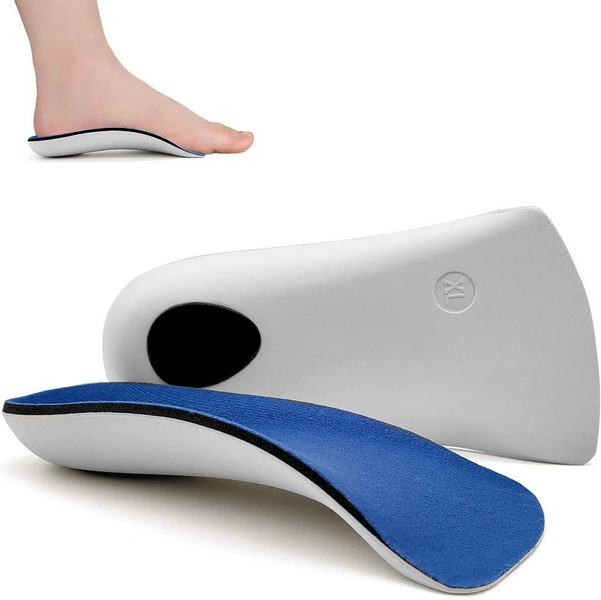
Arch support inserts are removable components placed inside footwear to support the natural curve of the foot, stabilize the midfoot, and improve pressure distribution from heel to forefoot. They are widely used in casual shoes, sports footwear, work boots, and even some sandals and safety shoes where long hours on hard ground require extra support.
These inserts come in prefabricated, semi‑custom, and fully custom forms, allowing different levels of personalization. Structure and rigidity vary from soft cushioning foam and gel to semi‑rigid and rigid shells that actively guide foot motion rather than simply absorbing impact.
Reliable arch support can transform the way shoes feel during walking, standing, and running by improving how the foot contacts the ground and how forces travel through the lower limb. When the arch is supported efficiently, many users experience less tiredness at the end of the day and more stable steps during movement.
Important benefits include improved weight distribution across the plantar surface, reduced collapse of the arch in people with flat or low arches, and more consistent heel positioning inside the shoe. With better alignment at the foot level, strain on the plantar fascia, Achilles tendon, and joints higher up the chain can be reduced, which may help manage or prevent a range of overuse problems.
Arch support products circulate through several main selling channels, each with its own strengths and target customers. Everyday consumers can choose simple ready‑made inserts from general retail, while patients with specific conditions or professional buyers often rely on more specialized suppliers.
Sportswear brands and athletic shoe companies provide performance‑oriented insoles that match their footwear categories, promoting integration with running, training, or court shoes. Pharmacies, supermarkets, and large e‑commerce platforms stock over‑the‑counter solutions aimed at quick self‑help for tired or mildly painful feet. Orthotic and podiatry clinics dispense or prescribe more technical devices, including custom orthoses based on foot assessments and impressions.
Dedicated insole shops and online retailers focus heavily on this category, offering extensive size runs, trim‑to‑fit options, and filters based on arch type, activity, and foot condition. In the background, OEM manufacturers design and produce large volumes of inserts that are then sold under various private labels worldwide, supplying both consumer brands and shoe factories directly.
Because feet, arches, and usage scenarios differ widely, the market offers a broad spectrum of insole styles tailored to different needs. Materials, construction, and rigidity work together to create varying support and comfort levels.[24][16]
Soft gel and foam inserts emphasize cushioning, step‑in comfort, and shock absorption for casual walking or standing, making them popular in daily footwear and light‑duty work shoes. Semi‑rigid or rigid orthotic inserts incorporate structured shells, posts, or reinforced arch zones that help limit excessive pronation and provide firmer guidance for the foot. Some models are tuned to low, neutral, or high arches, allowing more precise matching between insole profile and foot shape.
Medical‑grade custom orthotic insoles take personalization further by shaping the device around an individual foot impression or digital scan. These designs often combine tailored arch height, heel posting, and forefoot modifications to address specific biomechanical issues identified by clinicians.
Choosing the right insert starts with understanding the user's arch type, body weight, activity level, and shoe style. A simple footprint test or professional assessment can reveal whether the arch tends to be low, neutral, or high, which greatly influences which profile will feel natural and effective.[25][27][13][16]
Low arches or flat feet usually require firmer support and motion control to reduce inward rolling of the foot, while high arches benefit from cushioned designs that help absorb impact and fill space under the arch. Shoe volume also matters: high‑profile inserts suit roomy sneakers and work boots, whereas low‑profile designs fit better in business shoes, loafers, or narrow fashion footwear. Comfort testing inside the actual shoes is essential, as even technically correct support must feel stable and non‑irritating when worn for long periods.
Different buying channels serve different types of customers, from end users to professional buyers and brand owners.
| Seller type | Typical buyer focus | Customization level | Price level (general) | Main advantages |
|---|---|---|---|---|
| Sportswear brands | Athletes and active users | Model‑based designs | Medium to higher | Integrated with brand footwear, performance marketing, sport‑specific features. |
| Pharmacies & supermarkets | Everyday consumers seeking quick relief | Standard styles and sizes | Lower to medium | Easy access, simple selection, basic labeling on packaging. |
| Orthotic clinics | Patients with clinical diagnoses | High, often fully bespoke | Medium to higher | Professional assessment, tailored prescriptions, follow‑up adjustments. |
| Specialist insole retailers | Users wanting deeper fit and function optimization | Wide range of profiles and sizes | Medium | Detailed guidance, fitting tools, extensive catalog depth. |
| OEM insole manufacturers | Brands, wholesalers, shoe factories, private labels | Very high across design and look | Project‑based | Co‑development, private branding, bulk production and export capabilities. |
For a consumer looking for quick comfort, pharmacy or online options can be adequate, especially when symptoms are mild. For brands and wholesalers that want to control design and branding, an OEM partnership is more appropriate, allowing them to specify profiles, materials, and visual identity instead of reselling generic stock.
Brands that want differentiation in a crowded footwear and accessories market increasingly turn to specialized OEM factories for custom insole projects. Instead of relying on generic catalog items, they work with engineers and designers to shape unique profiles, multi‑layer constructions, and brand‑specific comfort systems.
Through OEM cooperation, companies can combine technical features such as contoured arches, deep heel cups, and targeted cushioning zones with marketing elements like custom colors, logos, and packaging. This approach supports consistent positioning across product families, from athletic lines focused on performance to lifestyle ranges focused on day‑long comfort. In addition, OEM partners with export experience help navigate compliance requirements and documentation for different regions, simplifying market entry.
In OEM projects, every design decision has both functional and commercial implications, so materials and construction must be chosen carefully. Substrate options such as EVA foam, PU foam, rubber, TPU, and TPR each offer different balances of cushioning, rebound, durability, and weight.
Support elements may include semi‑rigid or rigid shells made by injection or thermoforming, which are then laminated to softer layers for comfort. Top covers with breathable textiles, antimicrobial treatments, or moisture‑wicking fibers improve in‑shoe comfort and hygiene, particularly for sports or long work shifts. Some designs also integrate extra pads at the heel or forefoot using materials like PORON or gel to fine‑tune impact absorption in high‑load zones.
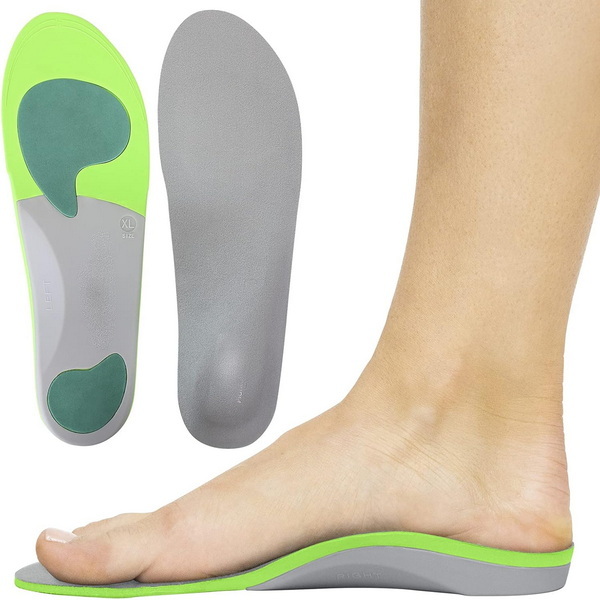
Although inserts are not a substitute for professional diagnosis, they are frequently used as part of conservative management plans for various foot and lower‑limb problems. Supportive insoles can help reduce strain on the plantar fascia in flat‑footed users, limit excessive inward rolling of the ankle, and distribute loading more evenly during walking.
People with occupations that demand long standing or walking on hard surfaces often report that structured insoles reduce end‑of‑day soreness and make basic shoes more tolerable. In sports contexts, arch support can contribute to more stable landings and push‑offs, potentially decreasing repetitive stress on tendons and joints when combined with suitable footwear and training habits. For complex or persistent symptoms, however, expert evaluation remains important to determine whether custom orthoses, exercises, or other interventions are required.
From an OEM perspective, arch support insole production is an organized sequence that begins with design and ends with packaging and shipment. The process typically starts with concept discussions, target market analysis, and the selection of key functional features such as level of support, cushioning, and breathability.
After this, engineers translate requirements into digital models and technical drawings, defining arch height, curvature, heel cup depth, and thickness distribution along the insole. Material choices are locked in based on performance and cost goals, and prototype samples are produced either by thermoforming, milling, or injection, depending on the construction. Feedback from fit and wear tests leads to fine adjustments before mass production begins.[5][8][9][2][4]
Several main technologies dominate insole manufacturing, each suitable for particular materials and design complexity. Cold forming and hot pressing are widely used for sheet materials like EVA and similar foams, where pre‑cut sheets are heated, shaped in molds, and then cooled under pressure.
Injection processes are common for components such as TPU shells or TPR bases, where molten material is injected into metal molds to create precise, repeatable shapes with integrated arch features. For high‑end or custom orthotics, CNC milling and digital machining of foam blocks can deliver intricate surface geometries tuned to an individual's foot scan or cast. Throughout these methods, additional steps such as laminating textiles, applying adhesive films, and trimming edges bring the insole to its final form.
Quality control is a critical part of OEM insole manufacturing because small variations in shape, hardness, or bonding can influence comfort and durability. Incoming materials are usually checked for density, thickness, and physical performance, while molds and machines are calibrated to maintain consistent dimensions from batch to batch.
Finished insoles may undergo visual inspection, hardness testing, flex and compression tests, and adhesion checks between layers to ensure that top covers and support structures remain firmly attached during use. Some advanced facilities combine digital scanning and measurement tools to verify arch height and curvature against design specifications, improving fit consistency across size runs.
For individual users, small practical steps can make insoles more effective and comfortable in daily life. Trying inserts inside the intended shoes and walking on different surfaces helps confirm whether the arch support feels centered, the heel is stable, and there are no pressure points at the edges.
Gradually increasing wear time allows the feet and lower legs to adapt to new support, particularly when moving from very soft insoles to firmer, more corrective designs. Inserts should be replaced once the cushioning compresses permanently, the layers separate, or the arch zone no longer feels supportive during use. If discomfort persists or pain worsens, seeking guidance from a healthcare professional is preferable to repeatedly switching products without assessment.
For brands and wholesalers, efficient cooperation with an OEM manufacturer starts with clear project definitions and realistic timelines. Defining target users, activities, and price brackets gives the factory a solid basis for recommending material blends and construction methods that fit both performance and budget.
Early in the project, it is wise to request several prototype options with different arch heights, densities, or shell designs and then carry out structured wear trials with real users. Feedback on comfort, support, heat buildup, and durability can guide final adjustments before tooling and full‑scale production. Confirming quality standards, certification requirements, minimum order quantities, and lead times in writing helps avoid misunderstandings and supports long‑term cooperation.
Arch support inserts reach consumers through many different channels, including sports brands, pharmacies, clinics, specialist retailers, and online platforms, ensuring that almost any user can find some form of support for everyday wear or sport. Behind these visible outlets, OEM insole manufacturers supply private‑label solutions for brands, wholesalers, and shoe factories, combining technical design skills, modern production technology, and export experience.
By understanding arch types, material choices, production methods, and channel differences, both end users and professional buyers can make better decisions about which arch support inserts to select or develop. Whether purchased off the shelf for quick comfort or created through a tailored OEM project, well‑designed arch support inserts play a central role in improving comfort, supporting posture, and protecting the lower limbs during daily life and sport.
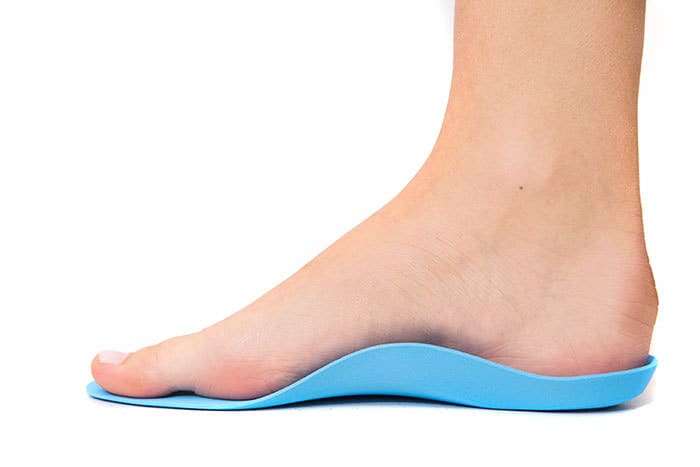
Many people with low, neutral, or high arches can benefit from appropriately matched arch support inserts, but no single model can suit everyone equally. Users with existing injuries or complex structural issues should obtain professional advice to choose inserts with the correct level of rigidity, posting, and cushioning.
Service life varies with materials, user weight, activity level, and environment, but most everyday products are intended for extended use before flattening or losing bounce. Individuals who exercise frequently or stand all day may need to replace their inserts more regularly to keep support and cushioning at a consistent level.
Because arch support inserts can improve foot alignment and reduce excessive pronation, they may indirectly lessen abnormal stresses that travel to the knees, hips, and lower back. In many non‑surgical management plans, clinicians combine supportive insoles with footwear changes, exercises, and habit adjustments rather than relying on any single measure alone.
Over‑the‑counter inserts are made in standard shapes and sizes for broad groups of users, focusing on general comfort and basic support. Custom orthotics are individually designed devices built from casts or scans of a specific person's feet and tailored to address defined biomechanical or medical issues, often under professional supervision.
Brands and wholesalers collaborate with OEM factories to create distinctive products, control branding, and optimize cost structures while leveraging the manufacturer's engineering and production expertise. Through this partnership, they can specify design details, materials, and packaging that reflect their market positioning while maintaining reliable quality and supply.


