
Views: 222 Author: 3BU Technology Publish Time: 2026-05-30 Origin: Site


Athletic insoles and performance insoles are engineered very differently once you zoom in on lateral stability vs linear speed, and choosing the wrong structure will quietly cap your athletes' potential. As an OEM insole manufacturer working with global brands, we see this every day in lab data, wear tests, and large‑volume production runs. [sciencedirect]
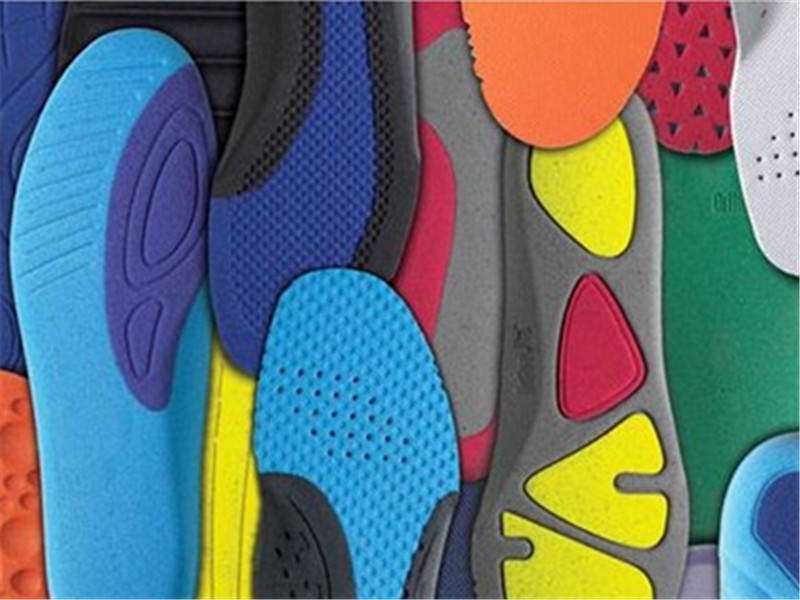
In real manufacturing and product briefs, "athletic insoles" usually describe general multi‑sport insoles designed for training, gym work, and everyday sport use. They are meant to be safe, versatile, and durable across different movements and footwear types. [jcinsoles]
By contrast, "performance insoles" typically refer to sport‑specific, outcome‑driven designs where the brief is clearly tied to speed, reactivity, or competition performance rather than just comfort. For example, a sprint spike insole optimized for forefoot stiffness and energy return is a performance product, not a generic athletic insert. [nature]
From an OEM perspective, we often treat "athletic" as the baseline platform and "performance" as the tuned variant built on more advanced materials, geometry, and testing methods. [insolemaker]
When you plan an insole line‑up, the first strategic split is usually between:
- Lateral movement sports: basketball, tennis, badminton, volleyball, padel, futsal.
- Linear speed sports: track sprinting, straight‑line running, tempo training, some field positions.
Research shows that insole structure and stiffness can significantly alter lower‑limb biomechanics, power generation, and agility performance. For example, changes in plate shape and stiffness in the foot–shoe complex have been shown to influence kinematics and ground reaction forces in runners. [pmc.ncbi.nlm.nih]
In practice:
- For lateral sports, the worst complaint is often "my ankles feel unstable when I cut or land."
- For linear speed, athletes care more about "toe‑off feels snappy" and "my stride feels efficient at pace."
Designing one insole to do both perfectly is almost impossible without trade‑offs, which is why clear segmentation matters for both performance and positioning. [frontiersin]
From my experience working with court‑sport brands, lateral‑focused athletic insoles prioritize frontal‑plane control and multi‑directional shock management: [ncbi.nlm.nih]
- Wider heel base for a broader contact area and lower center of pressure shifts during cutting. [ncbi.nlm.nih]
- Lateral and medial sidewall wrap (raised rim) to help "lock" the calcaneus and midfoot during aggressive side‑to‑side moves. [ncbi.nlm.nih]
- Textured or laterally wedged surfaces to influence ankle movement variability and reduce unwanted wobble in the frontal plane. [ncbi.nlm.nih]
- Moderate longitudinal stiffness to keep the foot adaptable for jumps, landings, and changes of direction. [sciencedirect]
A study on athletes with functional ankle instability showed that textured laterally wedged insoles improved consistency of ankle movement in the frontal plane, which is exactly what you want for safer lateral cuts. [ncbi.nlm.nih]
For linear‑speed performance insoles, the engineering brief shifts dramatically: [pmc.ncbi.nlm.nih]
- Higher forefoot stiffness to improve energy transfer during toe‑off, often through carbon‑fiber or composite elements. [frontiersin]
- Rockered or slightly curved forefoot geometry to shorten ground contact time and assist the roll‑over from mid‑stance to push‑off. [frontiersin]
- Targeted forefoot cushioning with high energy return, balancing comfort with rebound for repetitive straight‑line loading. [nature]
- Streamlined side profile, because lateral "walls" that are too aggressive can interfere with natural sagittal‑plane mechanics. [sciencedirect]
Recent studies on carbon‑fiber elements in footwear show measurable improvements in power generation and agility, highlighting how plate shape and midsole–insole interaction affect performance. [pmc.ncbi.nlm.nih]
Design Aspect | Athletic Insoles (Lateral Focus) | Performance Insoles (Linear Speed Focus) |
|---|---|---|
Primary movement plane | Frontal plane dominance (side‑to‑side) ncbi.nlm.nih | Sagittal plane dominance (forward propulsion) sciencedirect |
Heel design | Wider heel base, often with lateral flare for stability ncbi.nlm.nih | More neutral heel, tuned for smooth heel‑to‑toe transition sciencedirect |
Sidewall / rim | Raised lateral and medial walls for containment ncbi.nlm.nih | Minimal sidewall, more streamlined to reduce interference sciencedirect |
Forefoot stiffness | Moderate, more flexible in torsion ncbi.nlm.nih | High, often with plates or added stiffeners pmc.ncbi.nlm.nih |
Cushioning focus | Distributed impact absorption for jumps/landings ncbi.nlm.nih | Forefoot energy return for repeated toe‑off pmc.ncbi.nlm.nih |
Surface texture | May include textures or lateral wedge elements ncbi.nlm.nih | Generally smoother, with targeted grip at forefoot pmc.ncbi.nlm.nih |
Risk if mis‑used | Too soft or narrow → ankle roll in cuts ncbi.nlm.nih | Too stiff or aggressive → overuse stress in daily play sciencedirect |
In our OEM projects, we see brands repeatedly tuning three material levers rather than inventing an entirely new construction each season: [insolemaker]
1. Core foam (EVA, PU, E‑TPU, PEBA blends)
- Lateral athletic insoles often use slightly denser or multi‑density EVA/PU in the heel and lateral border to resist compression during cuts. [sciencedirect]
- Linear‑speed insoles may combine lightweight PEBA or E‑TPU in the forefoot for rebound with a more compliant heel for comfort during distance. [nature]
2. Plates and stiffeners
- Lateral insoles: shorter or U‑shaped stabilizers to anchor the heel and midfoot without over‑locking the forefoot. [sciencedirect]
- Performance speed insoles: full‑length or forefoot‑biased plates (carbon‑fiber, fiberglass, composite polymers) to increase lever arm and energy storage. [pmc.ncbi.nlm.nih]
3. Top cover & texture
- For lateral: high‑friction, sometimes textured surfaces help reduce in‑shoe slippage during sudden stops or direction changes. [ncbi.nlm.nih]
- For linear speed: smoother covers with strategically placed grip zones limit hotspots for long‑distance wear. [pmc.ncbi.nlm.nih]
Emerging research is also leveraging machine learning to predict compressive energy and optimize sole structures, which OEMs can apply to insole foam layout and thickness gradients. [nature]
In lateral‑dominant sports, unstable ankle mechanics can quickly lead to sprains and chronic instability. Studies show that textured and laterally wedged insoles can reduce ankle movement variability, effectively making lateral responses more predictable. [ncbi.nlm.nih]
From a UX and product‑feedback standpoint, athletes typically report:
- "I feel more locked‑in on side cuts."
- "Landings feel more controlled, less wobbly."
This matches the biomechanical aim: increase control in frontal‑plane motion without over‑constraining the foot. [ncbi.nlm.nih]
For linear speed, the focus switches to stride efficiency and energy economy.
- Research shows that changes in midsole/insole stiffness can increase power generation and agility by around 1–1.5%, which is huge at elite levels. [pmc.ncbi.nlm.nih]
- Footwear studies consistently find that sole stiffness and geometry influence running kinematics and performance, especially in the forefoot and ankle joint behavior. [frontiersin]
In athlete language, this becomes:
- "The shoe feels snappier off the toe."
- "At pace, I feel less energy loss with each stride."
In lab tests and field trials for international clients, a few consistent UX patterns show up: [insolemaker]
- Court athlete on a speed insole:
- Feels fast in straight lines but complains about heel slippage and ankle insecurity on lateral cuts. [ncbi.nlm.nih]
- Runner on a lateral athletic insole:
- Feels stable but notes the shoe is "dead" or "heavy" at tempo because the forefoot doesn't "snap back." [sciencedirect]
From a product‑page UX standpoint, your copy, icons, and visuals should clearly signal:
- "Built for lateral control" vs "Built for explosive toe‑off / straight‑line speed".
- Avoid promising both for a single SKU unless you truly have the test data and a hybrid structure to back it. [seo-day]

From a B2B and line‑planning perspective, here's how we guide partners: [jcinsoles]
1. Define the primary sport and movement pattern
- If 70%+ of use is court or field with heavy cuts and jumps → start with a lateral‑optimized athletic platform. [ncbi.nlm.nih]
- If the core use is running, sprinting, or straight‑line drills → design a performance insole with a speed‑focused forefoot. [pmc.ncbi.nlm.nih]
2. Decide your hero benefit
- "Reduce ankle rolls and improve control" → emphasize wide base, sidewall, and lateral wedge UI. [ncbi.nlm.nih]
- "Run faster with less fatigue" → emphasize plate, rebound compounds, and forefoot rocker. [frontiersin]
3. Segment by user level
- Recreational / training: more forgiving athletic insoles, softer densities, and simpler geometry. [jcinsoles]
- Competitive / elite: more aggressive performance structures, but with clear fit and break‑in guidance. [sciencedirect]
4. Back it with test data
- Even simple metrics such as walking speed improvements with insoles vs no‑insole conditions can support your claims. [sshr.ut.ac]
- Biomechanical lab insights (e.g., ankle variability, ground reaction forces) are powerful for B2B buyers when summarized visually. [sciencedirect]
To translate biomechanics into buying decisions, we often reduce the decision to three questions: [seo-day]
1. What is the dominant movement?
- Side‑to‑side with explosive stops and starts → choose the lateral athletic insole. [ncbi.nlm.nih]
- Straight‑line sprints, repeats, and long runs → choose the linear‑speed performance insole. [pmc.ncbi.nlm.nih]
2. What is the injury history?
- History of ankle sprains and instability → prioritize stability, base width, and lateral support structures. [ncbi.nlm.nih]
- History of overuse injuries (shin, calf) from high mileage → focus on energy return and controlled stiffness, not just maximal cushioning. [pmc.ncbi.nlm.nih]
3. What is the product promise?
- If your marketing headline is "All‑court control," design to that; if it is "Race‑day speed," the insole must reflect that with measurable stiffness and rebound differences. [seo-day]
For brands wanting to move beyond generic SKUs, there are several high‑value directions:
- AI‑assisted material optimization
- Recent work uses machine learning to predict compressive energy and optimize sole structures, allowing faster iteration on compound blends and thickness patterns. [nature]
- Sport‑specific plate shape testing
- New studies test different carbon‑fiber plate shapes and their impact on lower‑limb biomechanics in running, which can be translated into insole plate and shank designs. [frontiersin]
- Biomechanical validation as a selling point
- Footwear research showing improved performance metrics (e.g., ~1–1.5% improvements in power and agility) gives a solid foundation for performance claims when adapted responsibly. [pmc.ncbi.nlm.nih]
An OEM partner with both lab‑level development capability and mass‑production experience, like 3BU Technology, can bridge these emerging technologies with reliable supply for global brands. [insolemaker]
If you are a brand owner, wholesaler, or footwear manufacturer planning your next collection, the structural difference between athletic insoles for lateral control and performance insoles for linear speed is too important to leave to guesswork. [jcinsoles]
At 3BU Technology, we work with international partners to:
- Co‑develop sport‑specific insole structures for court, running, and hybrid models. [insolemaker]
- Run material and biomechanical validation to support your performance claims. [sciencedirect]
- Scale from prototype to mass production with consistent quality for global markets. [insolemaker]
Reach out to our OEM team to discuss your target sport, movement profile, and positioning, and we can help you design an insole architecture that your athletes — and your product pages — can confidently stand on. [seo-day]
1. Can one insole work for both lateral sports and linear speed?
It is possible to build hybrid designs, but you will always trade off some lateral stability or forefoot stiffness. For serious athletes, we recommend separate SKUs tuned to the dominant movement pattern. [frontiersin]
2. Are carbon‑fiber plates only for elite runners?
Not necessarily; studies show carbon‑fiber elements can benefit performance by improving power generation and agility, but the stiffness must be carefully matched to the user and sport. Overly stiff plates in everyday trainers can reduce comfort and increase strain risk. [frontiersin]
3. Do textured or wedged insoles really help ankle stability?
Evidence indicates that textured laterally wedged insoles can reduce ankle movement variability in the frontal plane, supporting more consistent joint control during lateral tasks. This is especially relevant for athletes with a history of ankle instability. [ncbi.nlm.nih]
4. How much performance gain can a speed‑focused insole really deliver?
Performance gains are modest in absolute numbers, but research has reported around 1–1.5% improvements in power and agility metrics from optimized insole/sole structures, which is substantial at competitive levels. [pmc.ncbi.nlm.nih]
5. What should brands prioritize first: comfort or performance?
For mass‑market training products, comfort and basic support should come first, with conservative performance tuning. For clearly positioned race‑day or pro‑level products, structured performance features can take priority, backed by biomechanical and wear‑test data. [jcinsoles]
1. Fong, Y. et al. "Acute Effects of Carbon Fiber Insole on Three Aspects of Sports Performance." Journal of Sports Science & Medicine, 2023. <https://pmc.ncbi.nlm.nih.gov/articles/PMC9966218/> [pmc.ncbi.nlm.nih]
2. Testing the effects of footwear on biomechanics of human movement. Heliyon / ScienceDirect. <https://www.sciencedirect.com/science/article/pii/S2405844025012514> [sciencedirect]
3. Machine learning‑based prediction of compressive energy in sole structures. Scientific Reports, 2025. <https://www.nature.com/articles/s41598-025-20864-3> [nature]
4. The effects of different carbon‑fiber plate shapes in shoes on runner biomechanics. Frontiers in Bioengineering and Biotechnology, 2025. <https://www.frontiersin.org/journals/bioengineering-and-biotechnology/articles/10.3389/fbioe.2025.1539976/full> [frontiersin]
5. Ko et al. "The Effect of Three Different Insoles on Ankle Movement Variability during Walking in Athletes with Functional Ankle Instability." Journal of Foot and Ankle Research. <https://www.ncbi.nlm.nih.gov/pmc/articles/PMC6621341/> [ncbi.nlm.nih]
6. "The Definitive Guide to SEO for Footwear Industry." SHV Media. <https://shvmedia.com/blogs/seo-guide-footwear-industry> [shvmedia]
7. "E‑E‑A‑T – Fundamentals and Best Practices 2025." SEO‑Day. <https://www.seo-day.de/wiki/on-page-seo/content-optimierung/e-e-a-t.php?lang=en> [seo-day]
8. "Top 10 Sports Insoles Manufacturers in China – 3BU." Insolemaker. <https://www.insolemaker.com/top-10-sports-insoles-manufacturers-in-china.html> [insolemaker]
9. Comparing the effect of wearing insoles on some motor performance. University of Tehran. <https://sshr.ut.ac.ir/article_83242_691b741af064bf5ca171a1d3b732663c.pdf> [sshr.ut.ac]
10. "Effective Marketing Strategies to Grow Your Insole Brand." JC Insoles Blog, 2024. <https://www.jcinsoles.com/post/marketing-strategies-for-your-insole-brand> [jcinsoles]
11. "E‑E‑A‑T for Technical Content: 2025 Best Practice Guide." QuickCreator. <https://quickcreator.io/blog/eeat-for-technical-content-2025-best-practice-guide/> [quickcreator]
12. "E‑E‑A‑T Optimization Guide for SEO in 2026." Singhai Technologies. <https://singhaitechnologies.com/blog/eeat-optimization-guide> [singhaitechnologies]


